手說
Hands' Voice
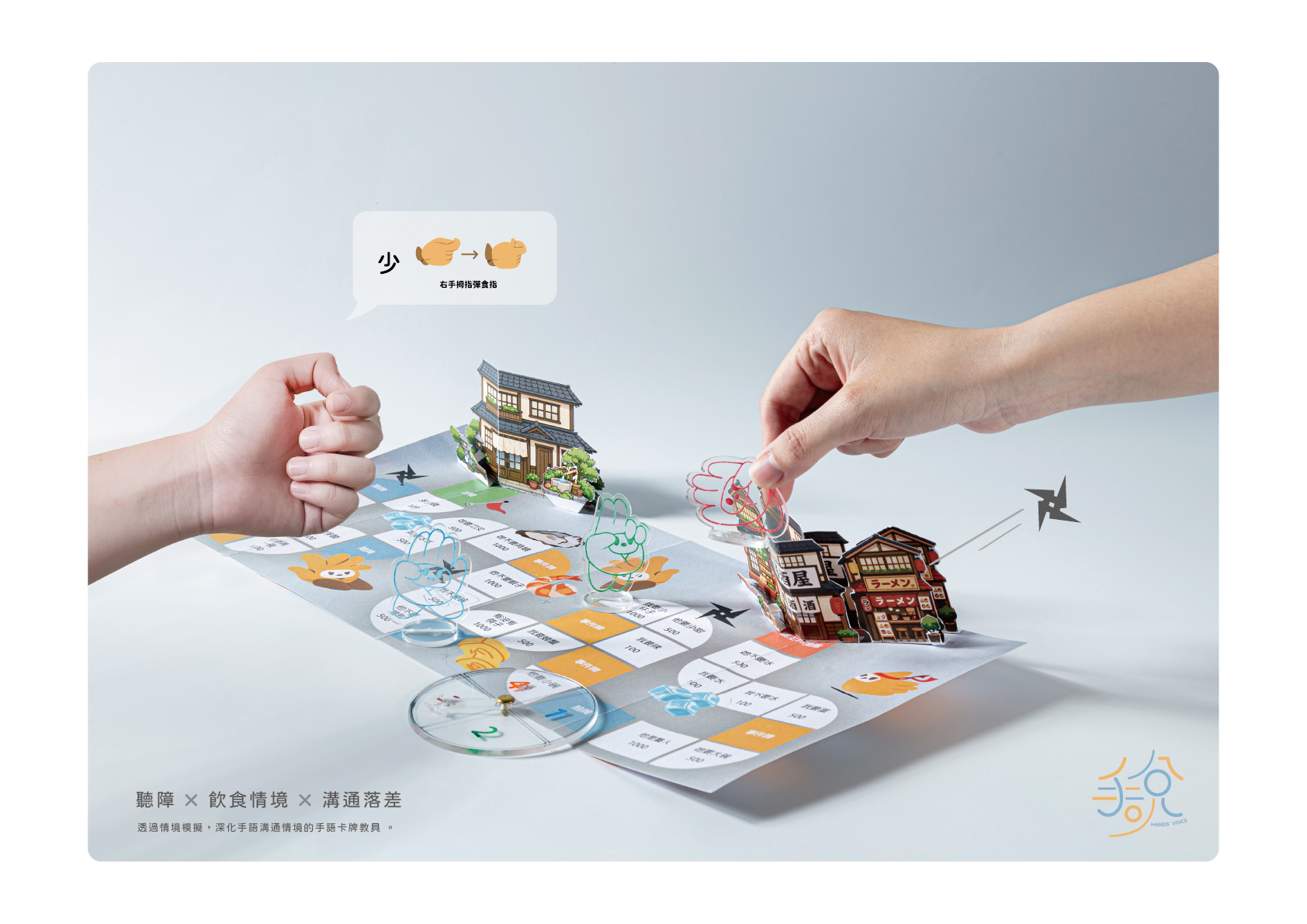
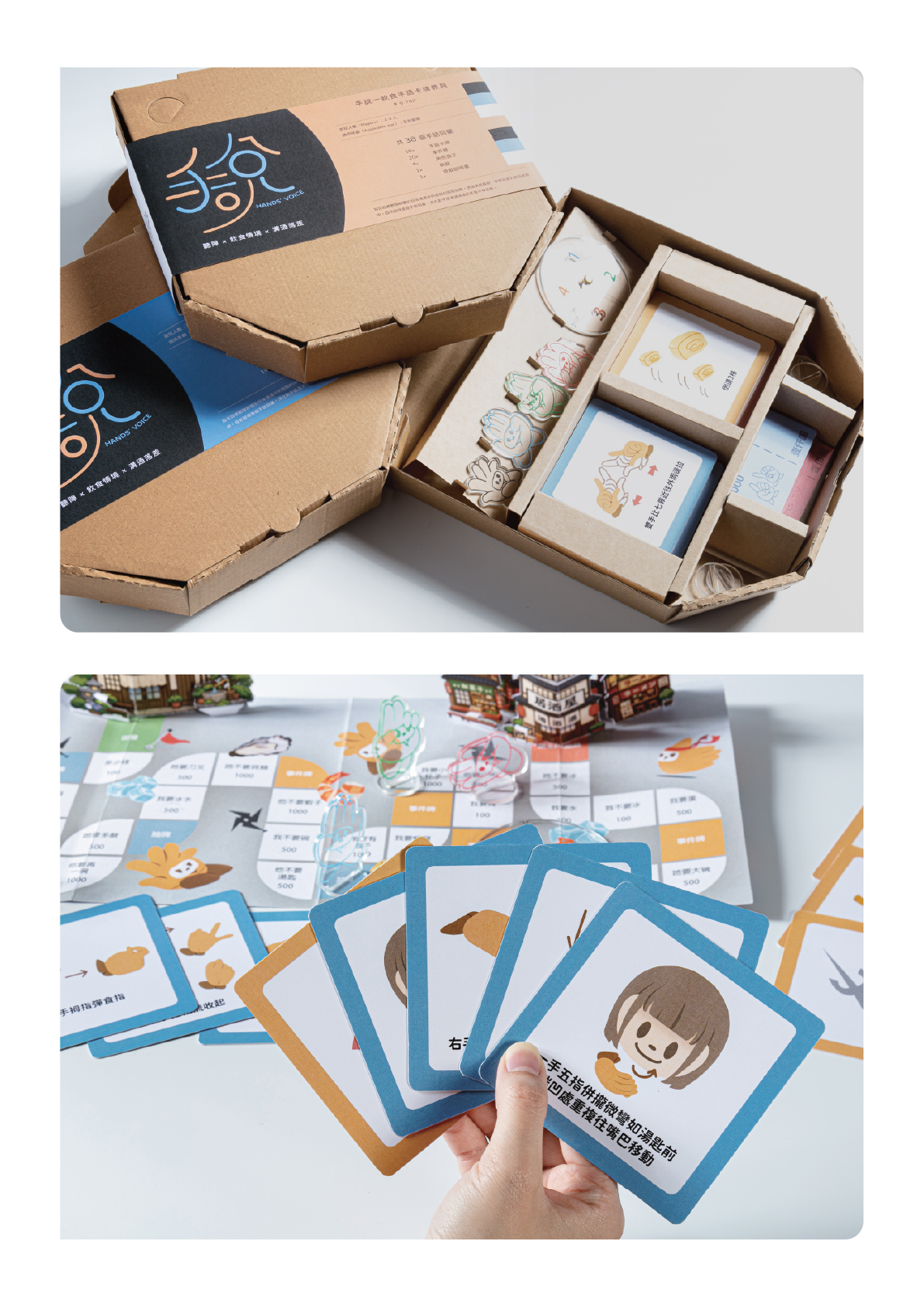
「手說」為一款飲食手語卡牌教具。
1. 設計動機與核心理念:台灣聽障人口已逾 13 萬,且因高齡化逐年增加。現有手語教材多偏向制式,大眾難以在日常生活中趣味學習。本教具以基本需求「飲食」為核心,透過遊戲化學習(Gamified Learning)模擬餐廳常見的溝通困境,如確認過敏原或特殊需求。旨在降低聽人與聽障者間的隔閡,打破因資訊不對稱造成的孤立,進而提升社會對聾人文化的尊重與包容。
2. 開發方法:本研究採用 ADDIE 教學設計模型,確保教具的實用性與專業度:
分析 (A):透過專家訪談與主題分析法,釐清大眾對手語的誤解與學習挑戰。
設計與發展 (D-D):規劃結合情境學習的遊戲機制,製作包含視覺識別系統、手勢清晰的卡牌原型。
執行與評估 (I-E):經由學習者實測,記錄其對手語圖示的理解度,並依據回饋修正圖像與詞彙,優化教學價值。
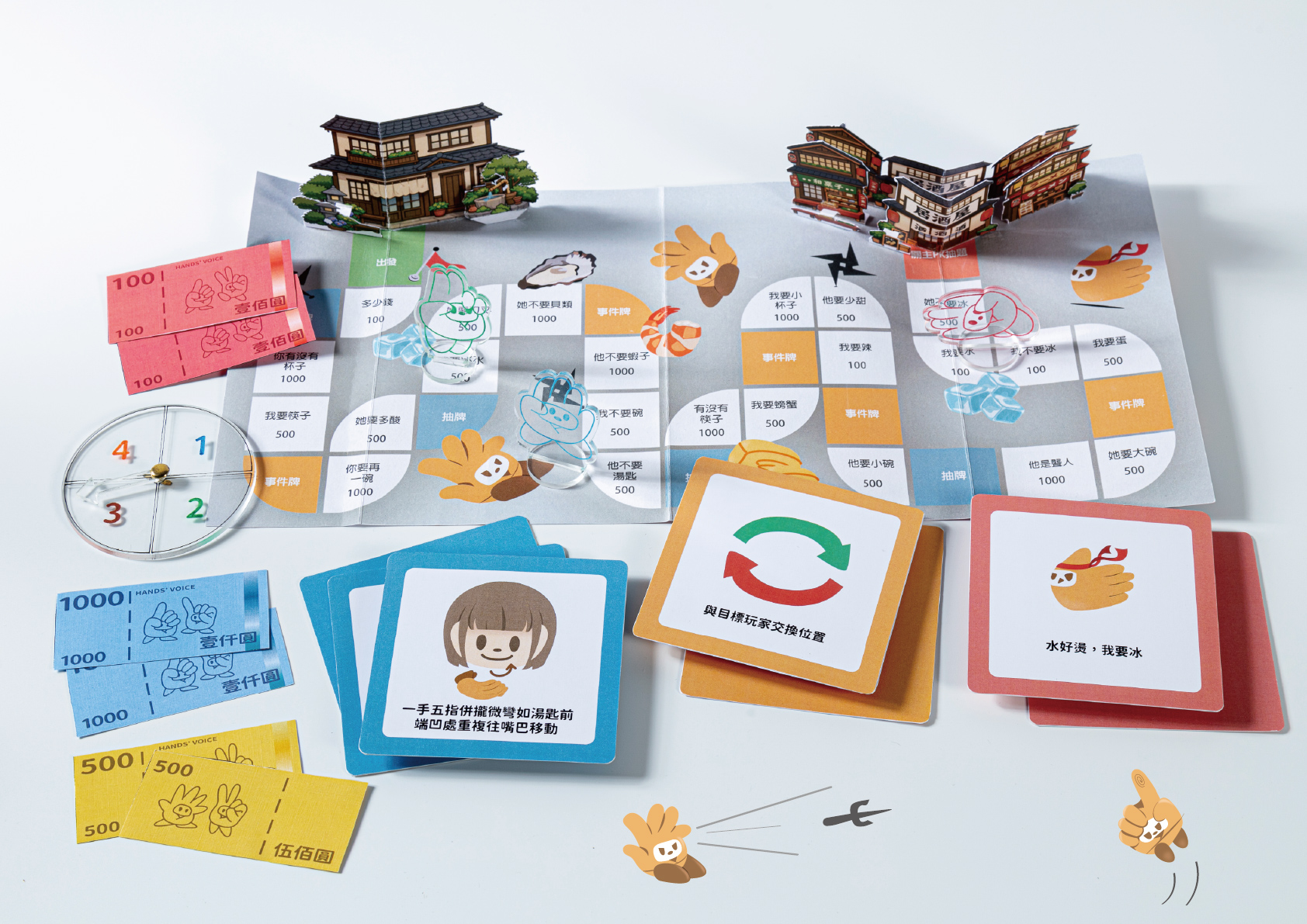
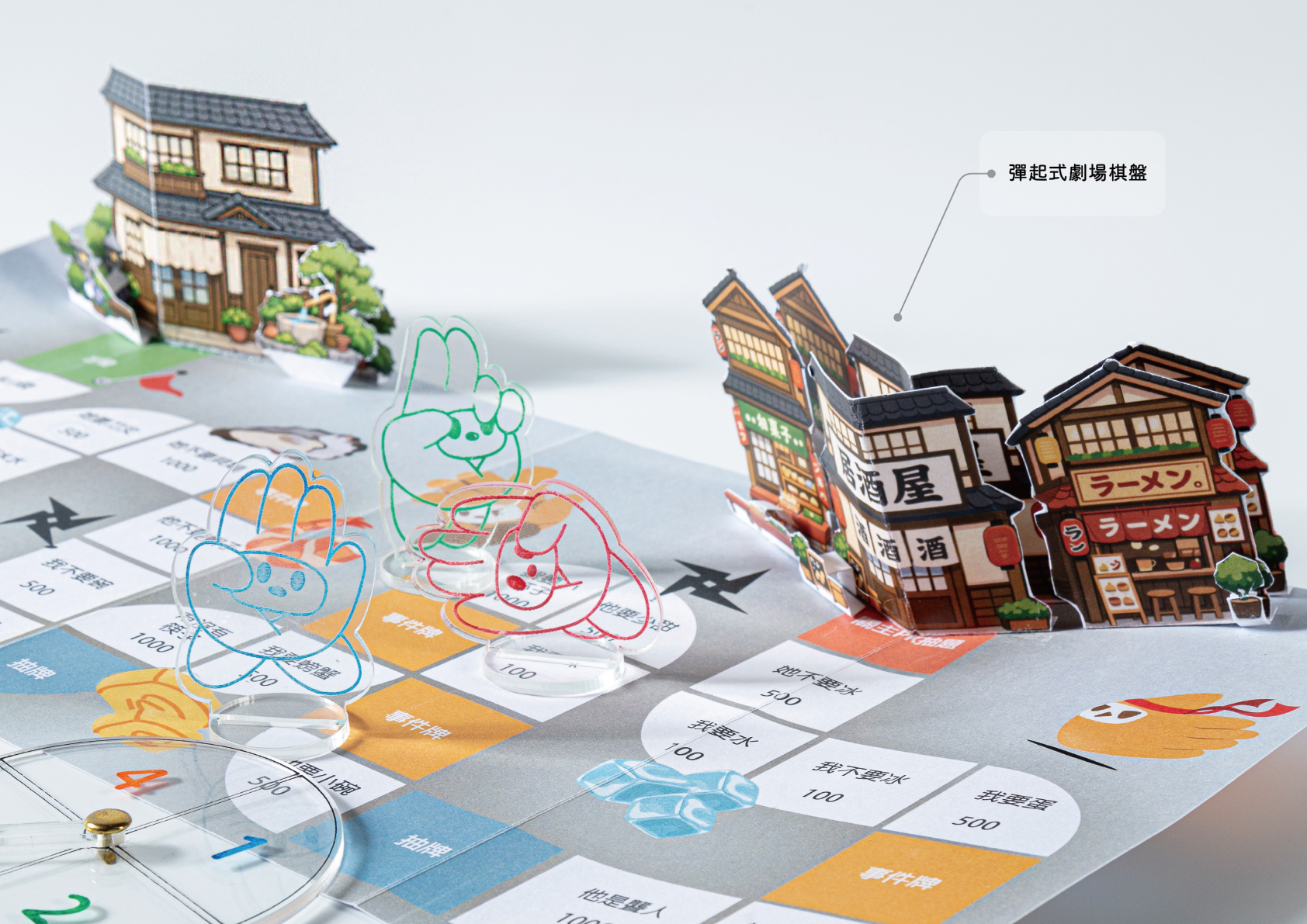
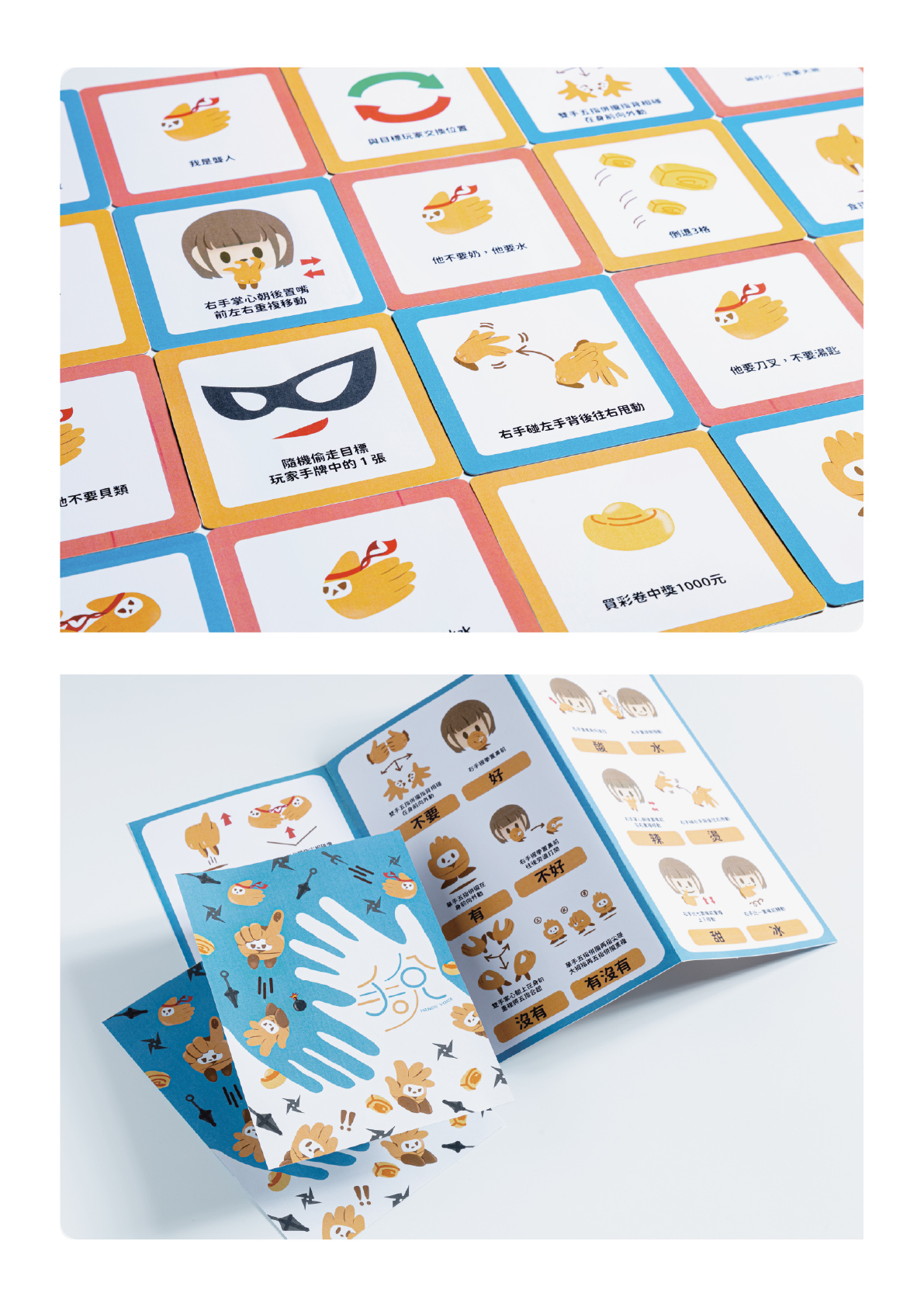
3. 教具組成與預期效益:教具包含 38 張手語牌、20 張事件牌、10 張 PK 牌及地圖轉盤等配件。 透過轉盤移動並使用對應手語牌回答飲食題目,在互動中自然習得日常手語。預期能有效提升大眾的參與意願,讓手語不再是少數人的專業語言,而是促進社會和諧的溝通橋樑。
Hands' Voice
1. Concept and Motivation: With 138,000+ hearing-impaired people in Taiwan, "Hands' Voice" targets "dining" scenarios to bridge communication gaps via gamified learning. By simulating restaurant interactions, it reduces information asymmetry and fosters social inclusion for the Deaf community.
2. Methodology (ADDIE Model): Developed via the systematic ADDIE model: Analysis identified learning barriers through expert interviews. Design & Development created a visual identity prioritizing linguistic integrity. Implementation & Evaluation refined the kit based on playtests to improve icon clarity.
3. Components and Benefits: The kit features 38 sign cards, 20 event cards, 10 PK cards, and a game board. Players master daily vocabulary through interactive challenges. It aims to enhance engagement and memory retention, transforming sign language into a universal bridge for communication.
台南應用科技大學 視覺傳達設計系
(四年級)
楊O均
台南應用科技大學 視覺傳達設計系
(四年級)
余O婷
台南應用科技大學 視覺傳達設計系
(四年級)
李O軒
台南應用科技大學 視覺傳達設計系
(四年級)
鄭O盈
台南應用科技大學 視覺傳達設計系
(四年級) 指導老師 鐘O瀚