那裡 / 這裡
There / or here
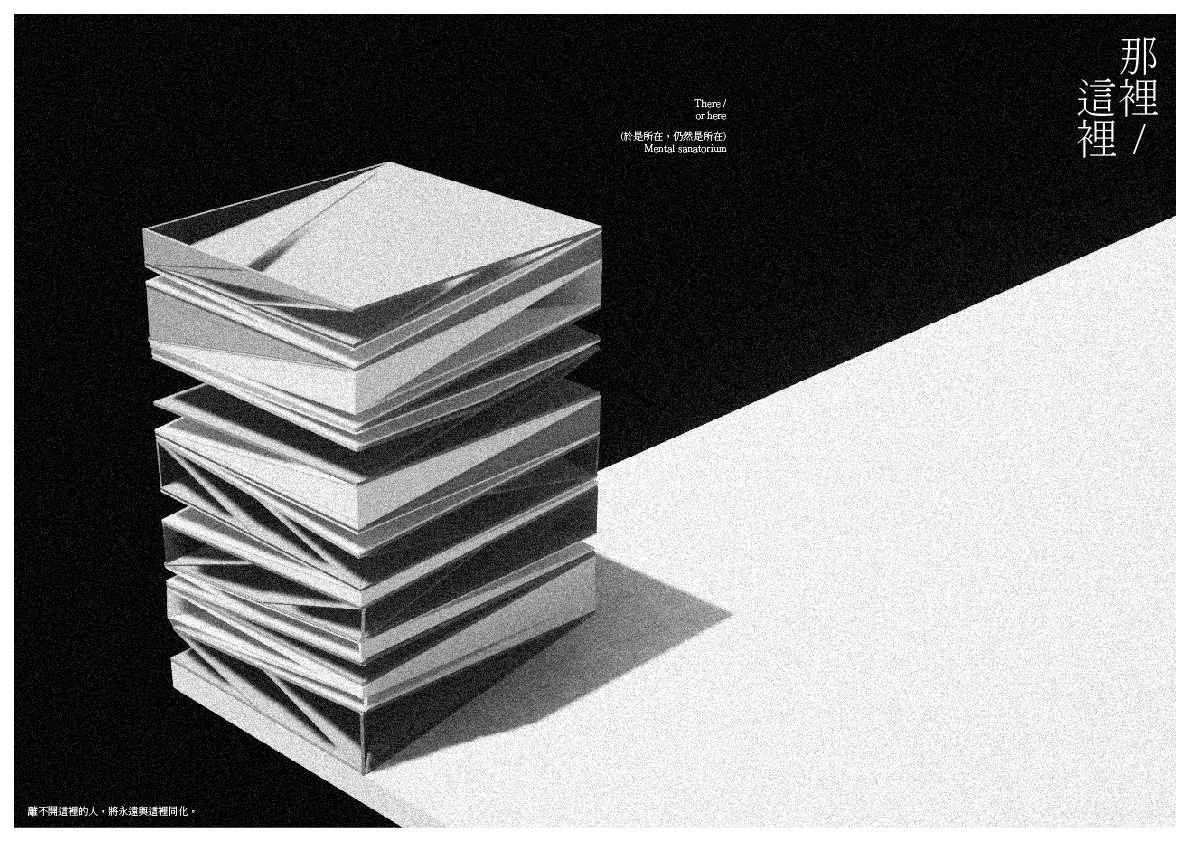
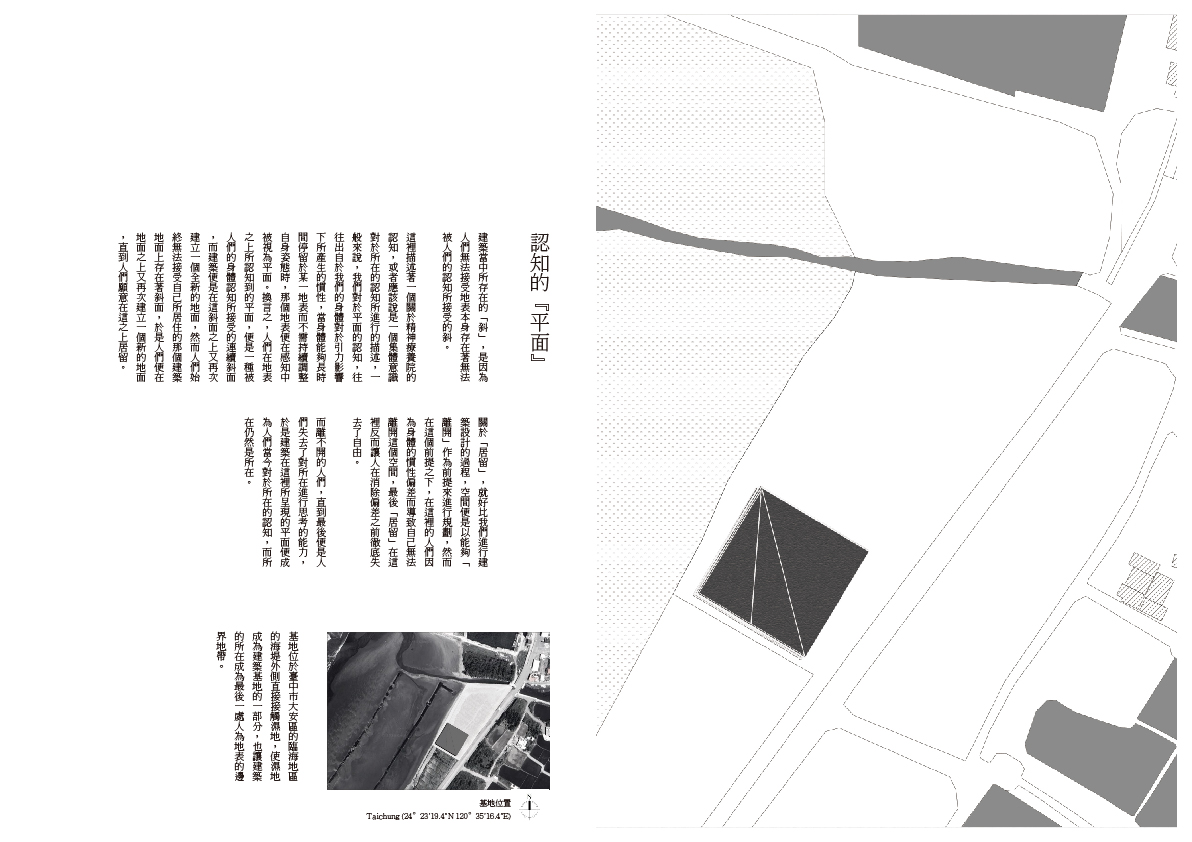
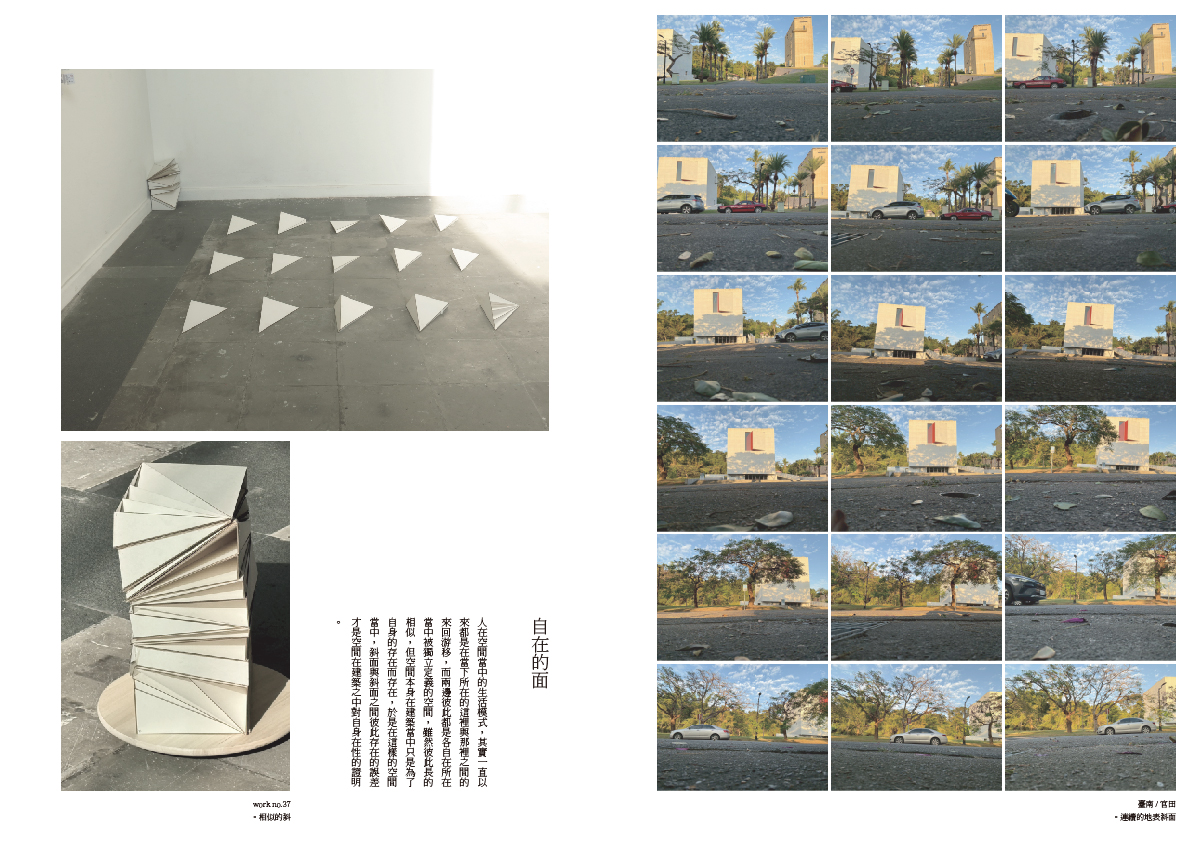
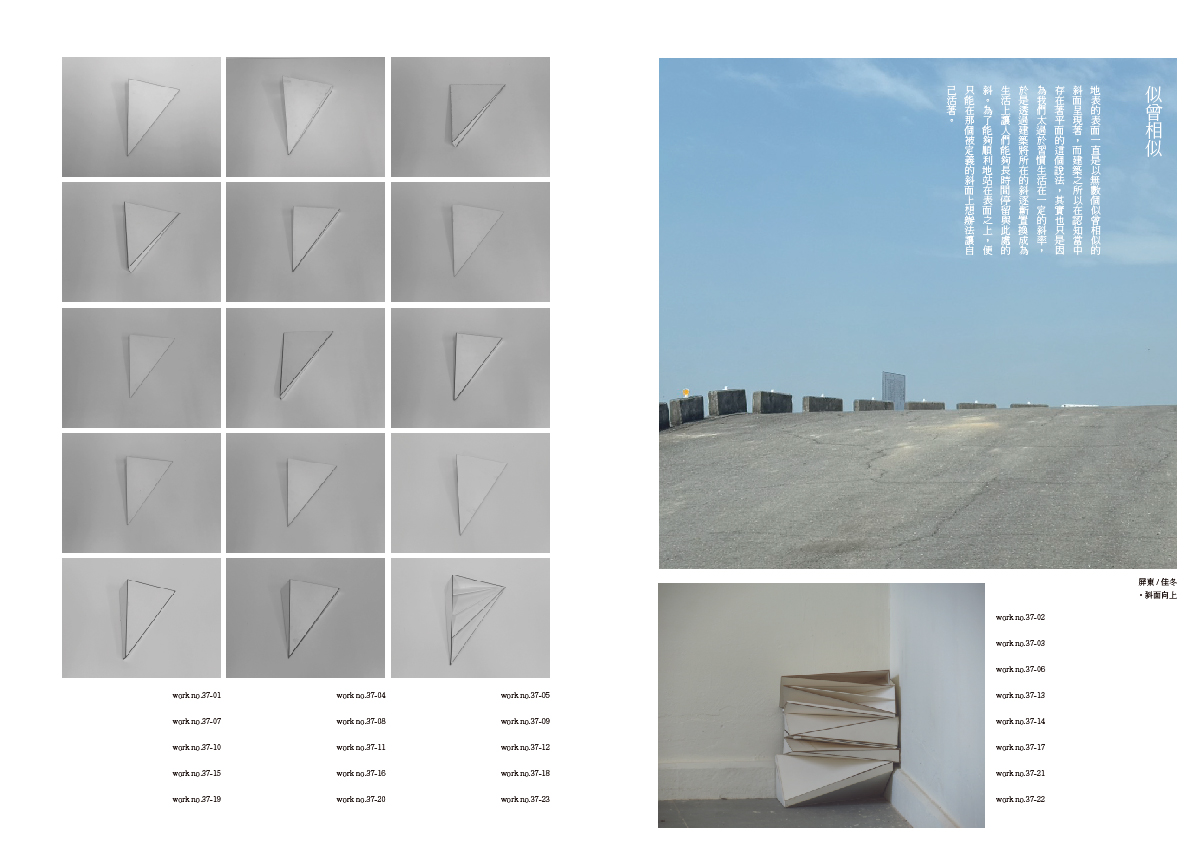
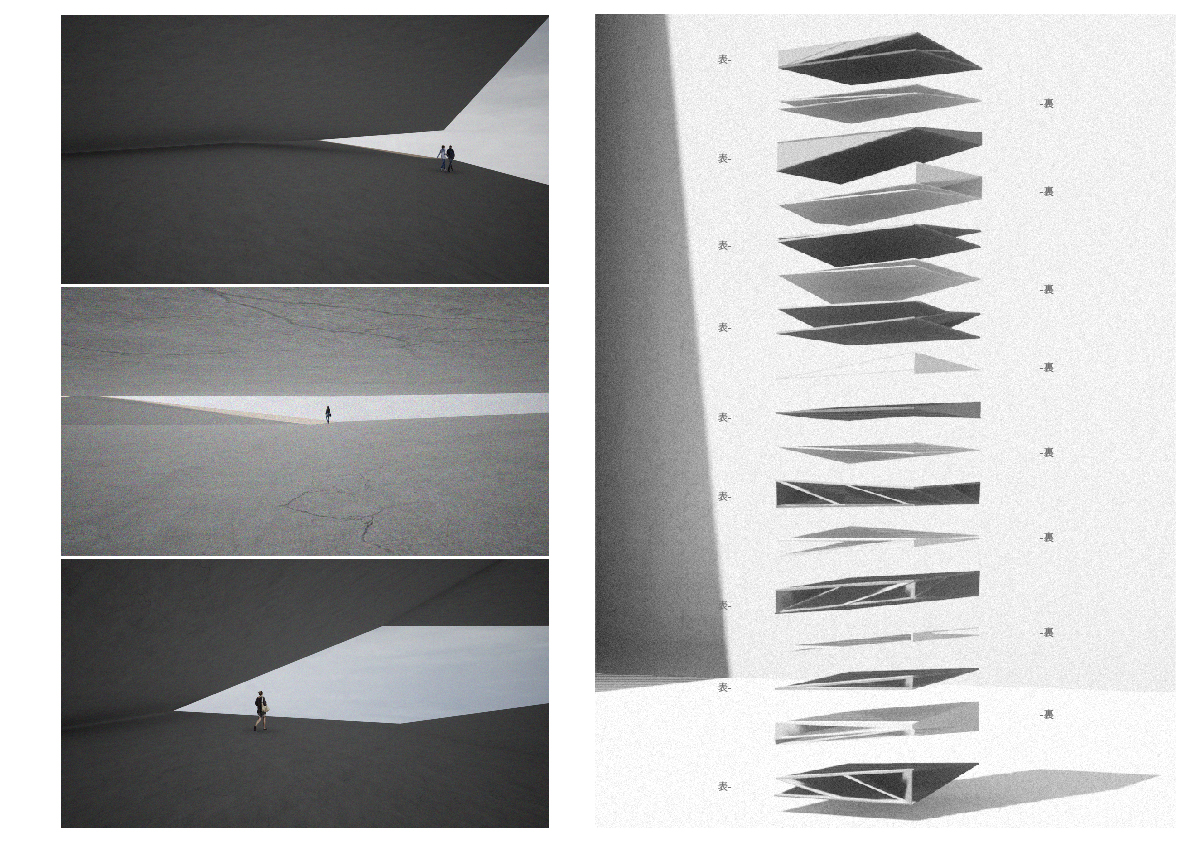
建築當中所存在的「斜」,是因為人們無法接受地表本身存在著無法被人們的認知所接受的斜。
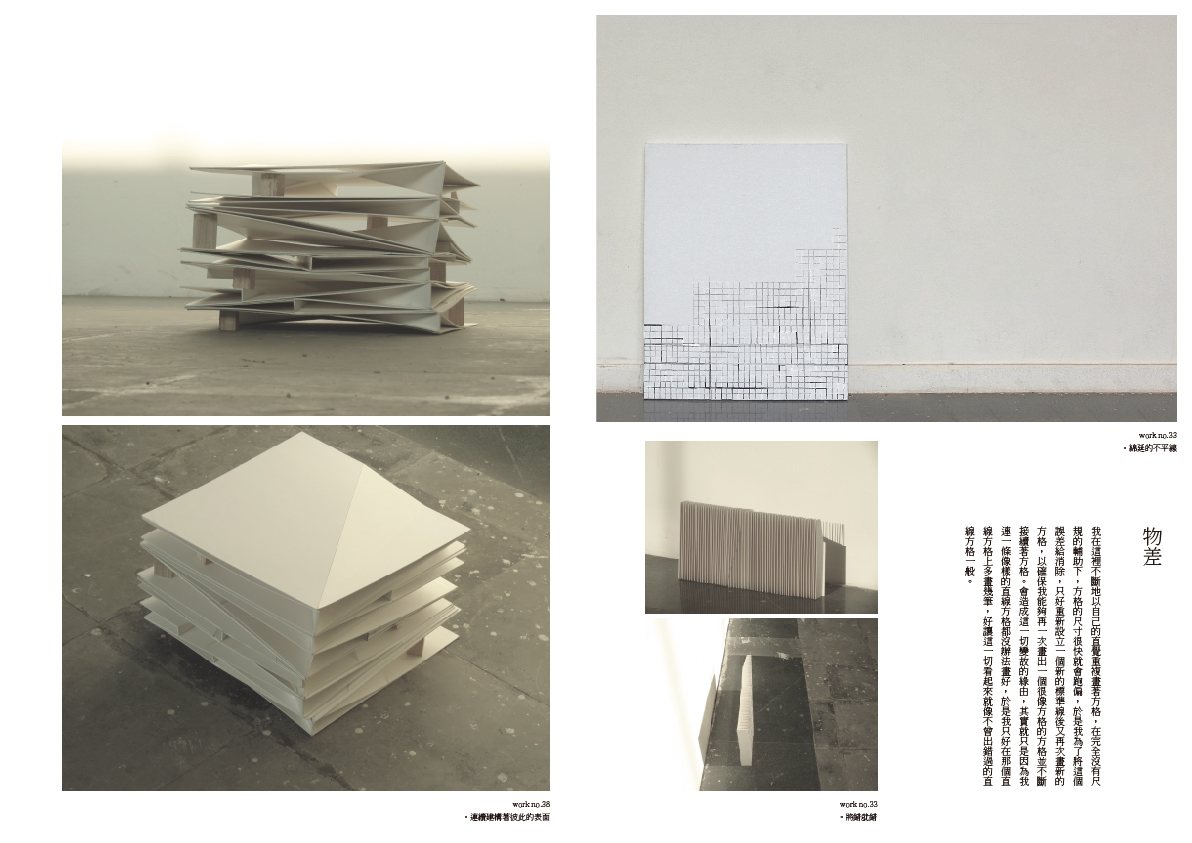
這裡描述著一個關於精神療養院的認知,或者應該說是一個集體意識對於所在的認知所進行的描述,一般來說,我們對於平面的認知,往往出自於我們的身體對於引力影響下所產生的慣性,當身體能夠長時間停留於某一地表而不需持續調整自身姿態時,那個地表便在感知中被視為平面。換言之,人們在地表之上所認知到的平面,便是一種被人們的身體認知所接受的連續斜面,而建築便是在這斜面之上又再次建立一個全新的地面,然而人們始終無法接受自己所居住的那個建築地面上存在著斜面,於是人們便在地面之上又再次建立一個新的地面,直到人們願意在這之上居留。
關於「居留」,就好比我們進行建築設計的過程,空間便是以能夠「離開」作為前提來進行規劃,然而在這個前提之下,來到這裡的人們卻因為身體的慣性偏差而導致自己無法離開這個空間,最後「居留」在這裡反而讓人們在消除偏差之前徹底失去了自由。
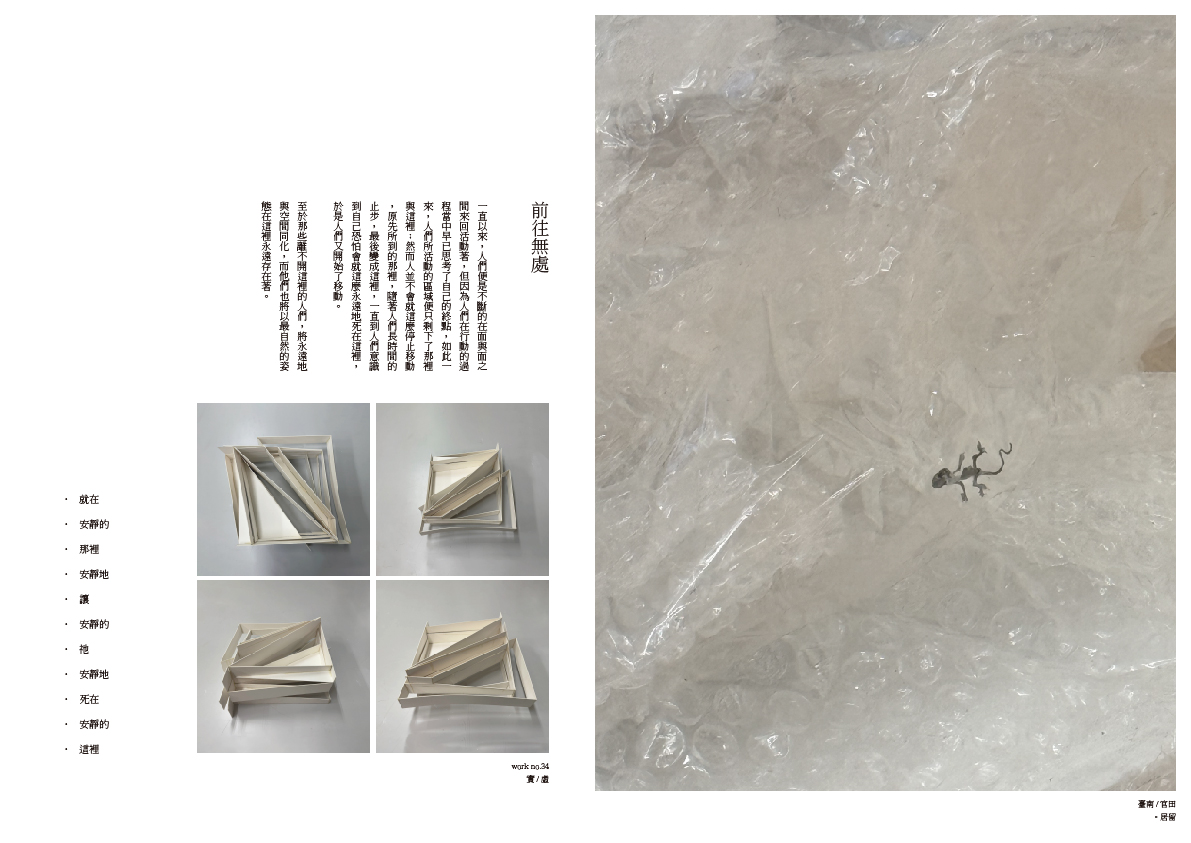
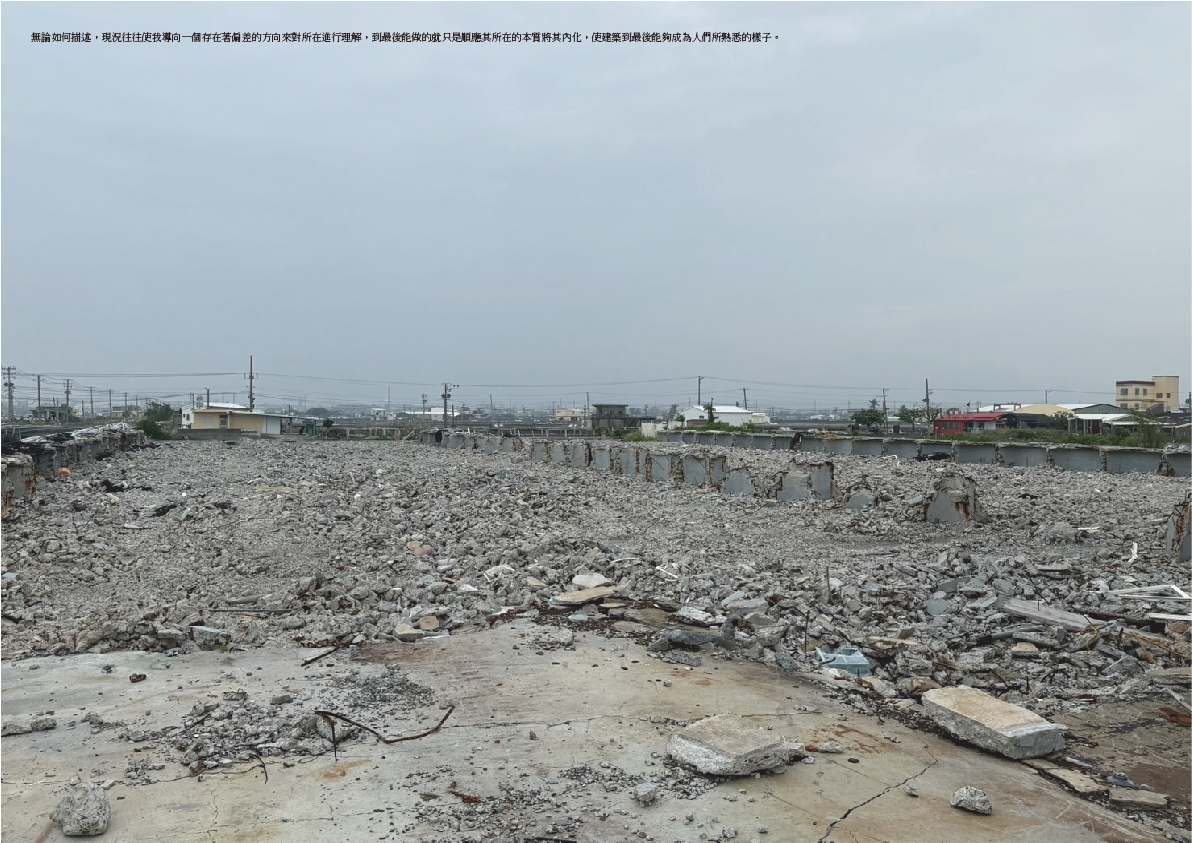
而那些離不開這裡的人們,直到最後便是人們失去了對所在進行思考的能力,於是建築在這裡所呈現的平面便成為人們當今對於所在的認知,於是所在仍然是所在。
There / or here
The presence of slope in architecture arises from humanity’s refusal to accept that the ground itself is inclined beyond cognition.
This text describes a collective perception of a psychiatric sanatorium. Flatness is not an absolute condition but a bodily agreement with gravity: when the body no longer needs constant adjustment, a surface is perceived as level. What is called a plane is therefore a slope already accepted by the body. Architecture constructs new grounds upon this condition, repeatedly overwriting the previous one until dwelling becomes possible.
Space is designed on the premise of departure. Yet here, bodily deviation prevents leaving, and dwelling becomes a state of being unable to depart. Those who cannot leave eventually lose the ability to reflect on where they are. The plane presented by architecture becomes the sole perception of place—thus, being somewhere remains simply being somewhere.