REVIVE 災區早產兒無需電力急救保溫箱
REVIVE Power free emergency infant care in disaster zones.
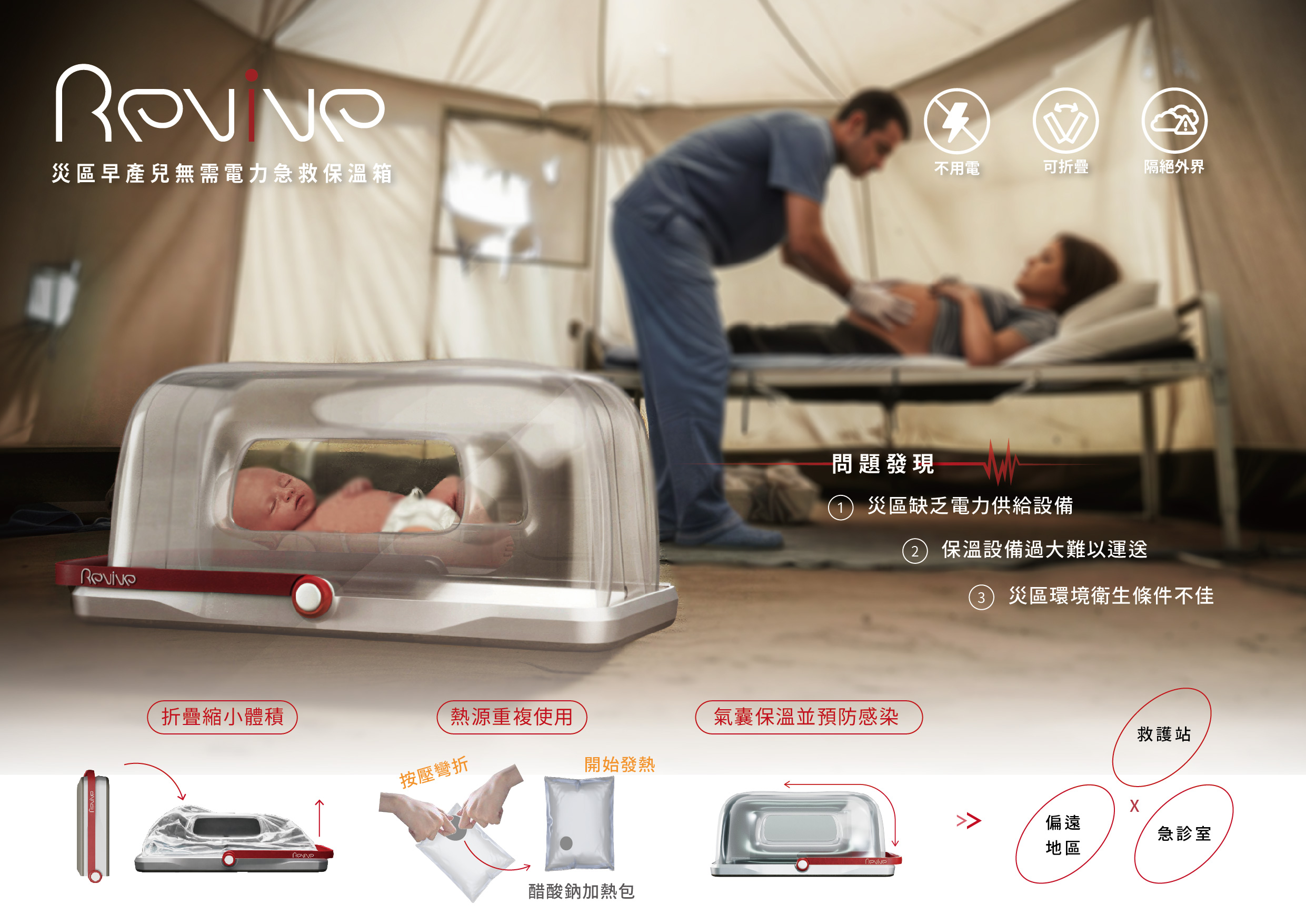
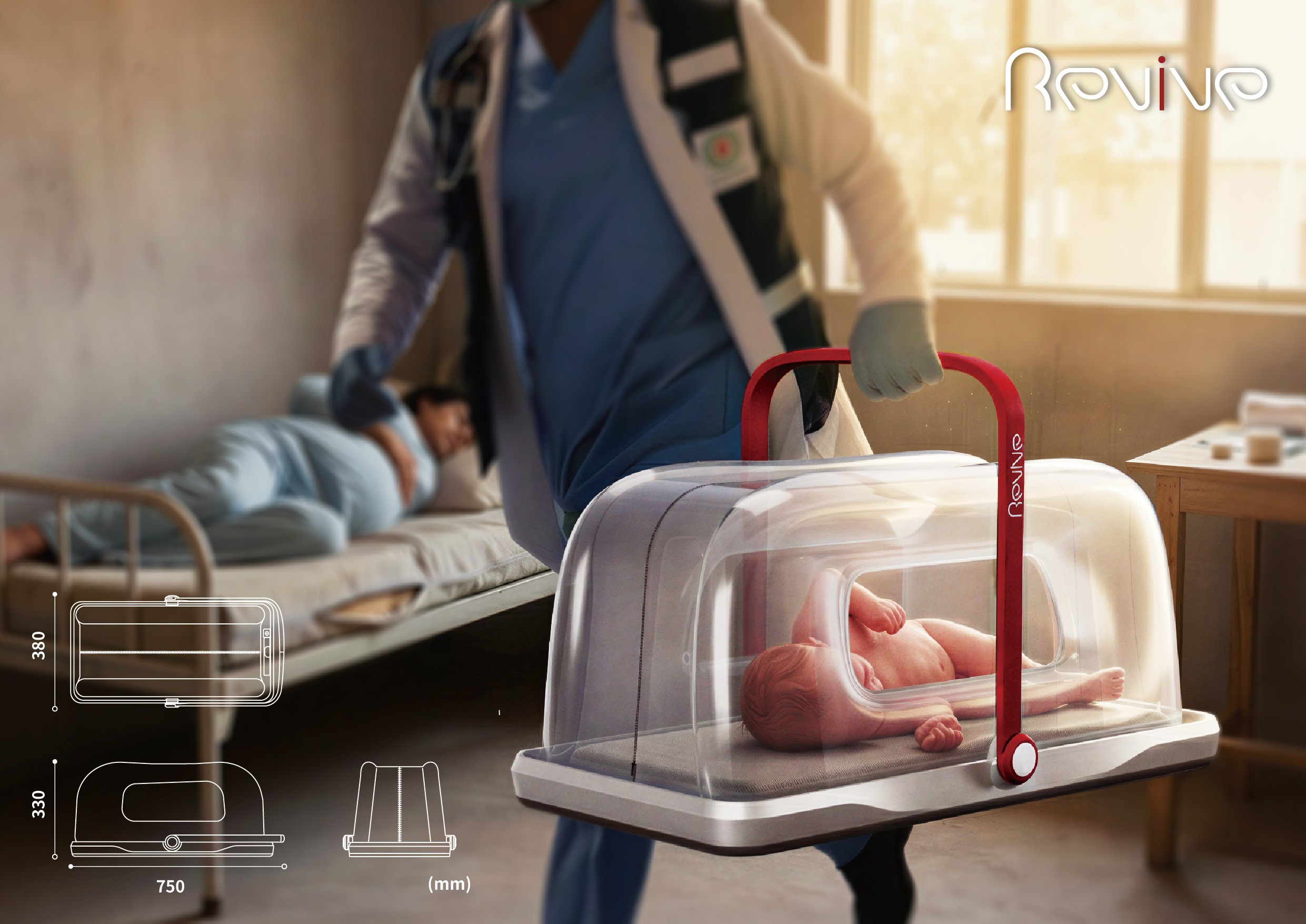
在災難或醫療資源不足的地區,早產新生兒可能因為皮下脂肪稀少與體溫調節中樞未成熟,面臨極高的失溫與感染風險。然而現有的醫療用保溫箱,較多為電力提供熱源為主,且體積龐大,難以部署於空間受限的臨時醫療站或動盪的災後轉運情境中。
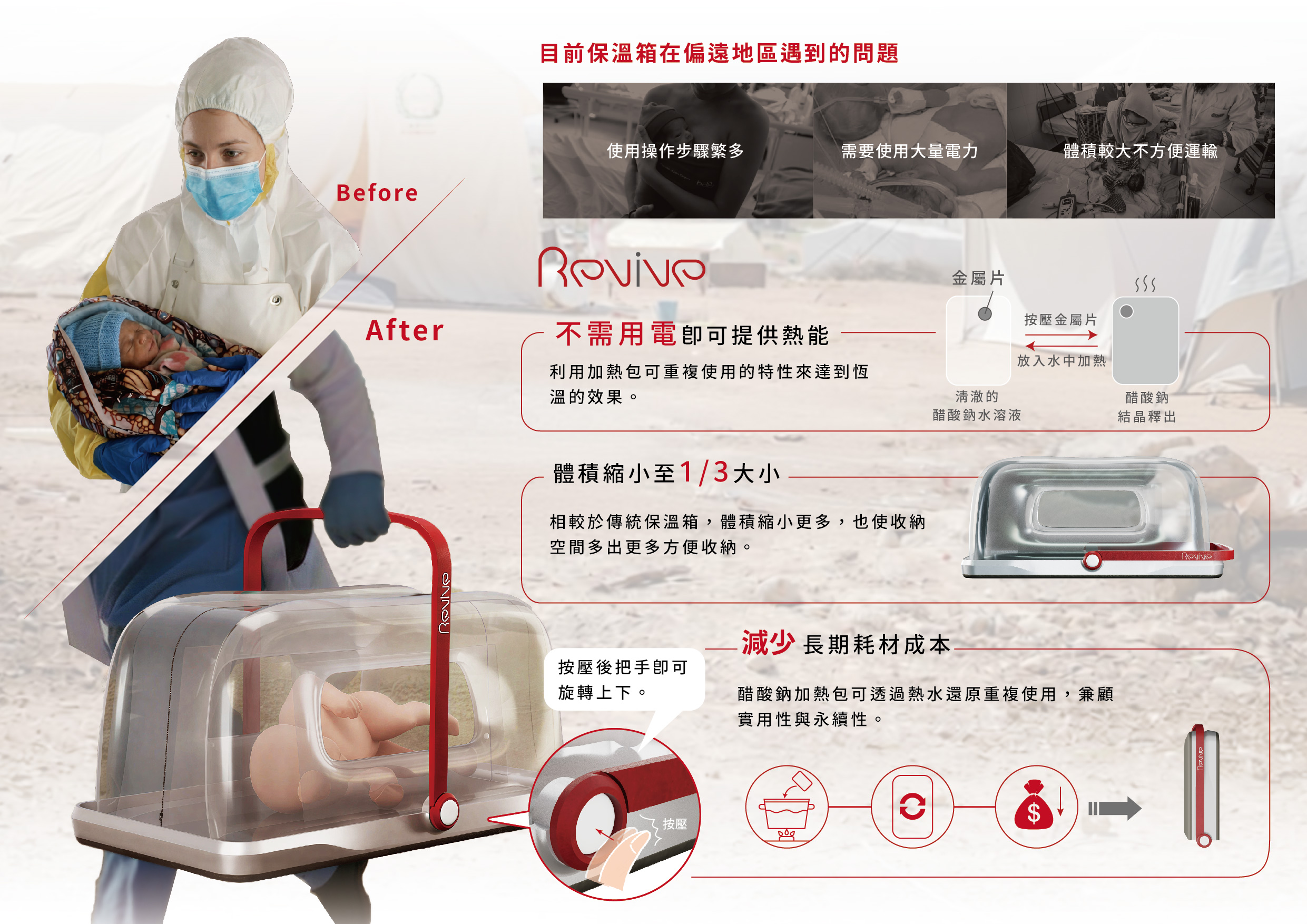
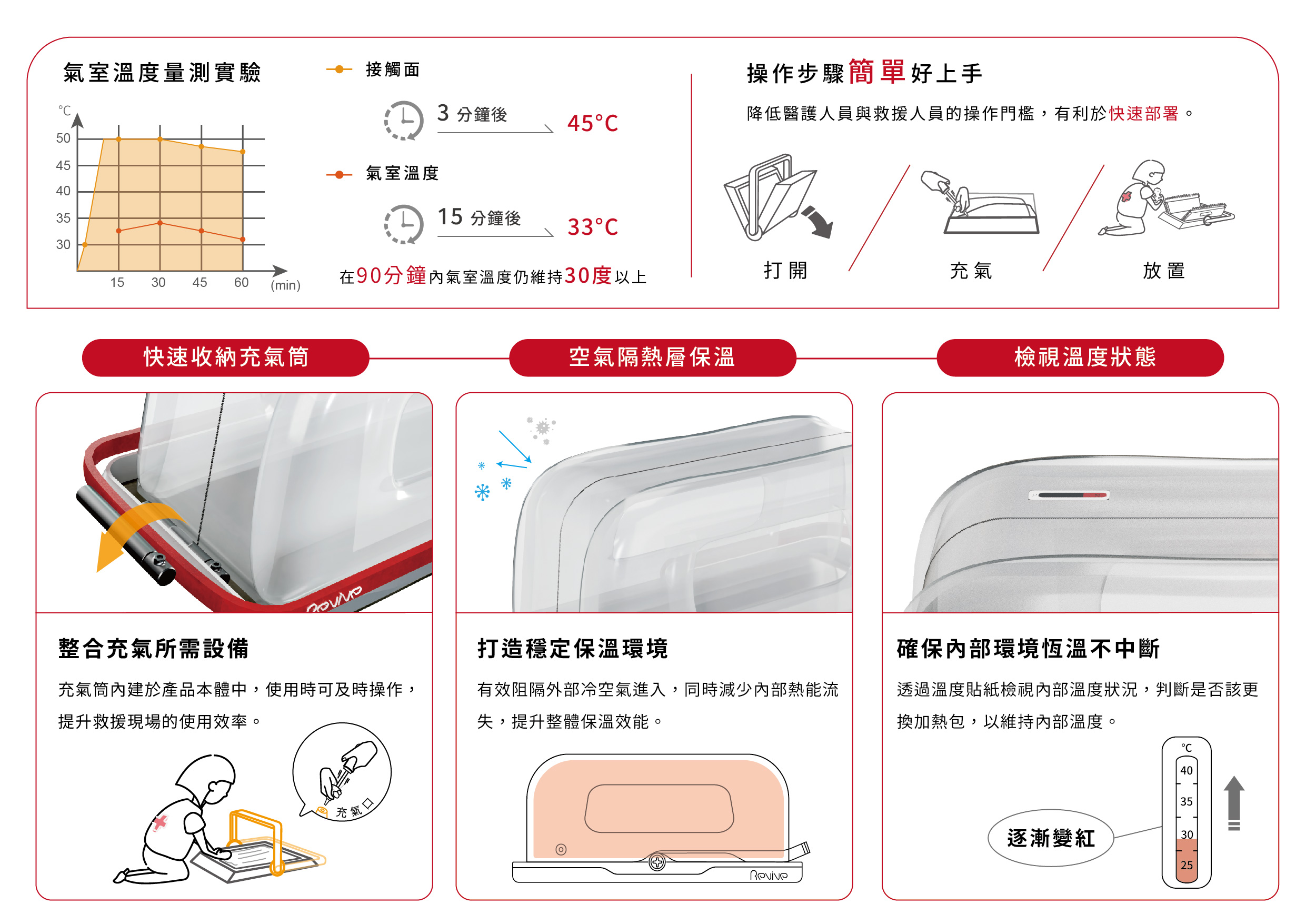
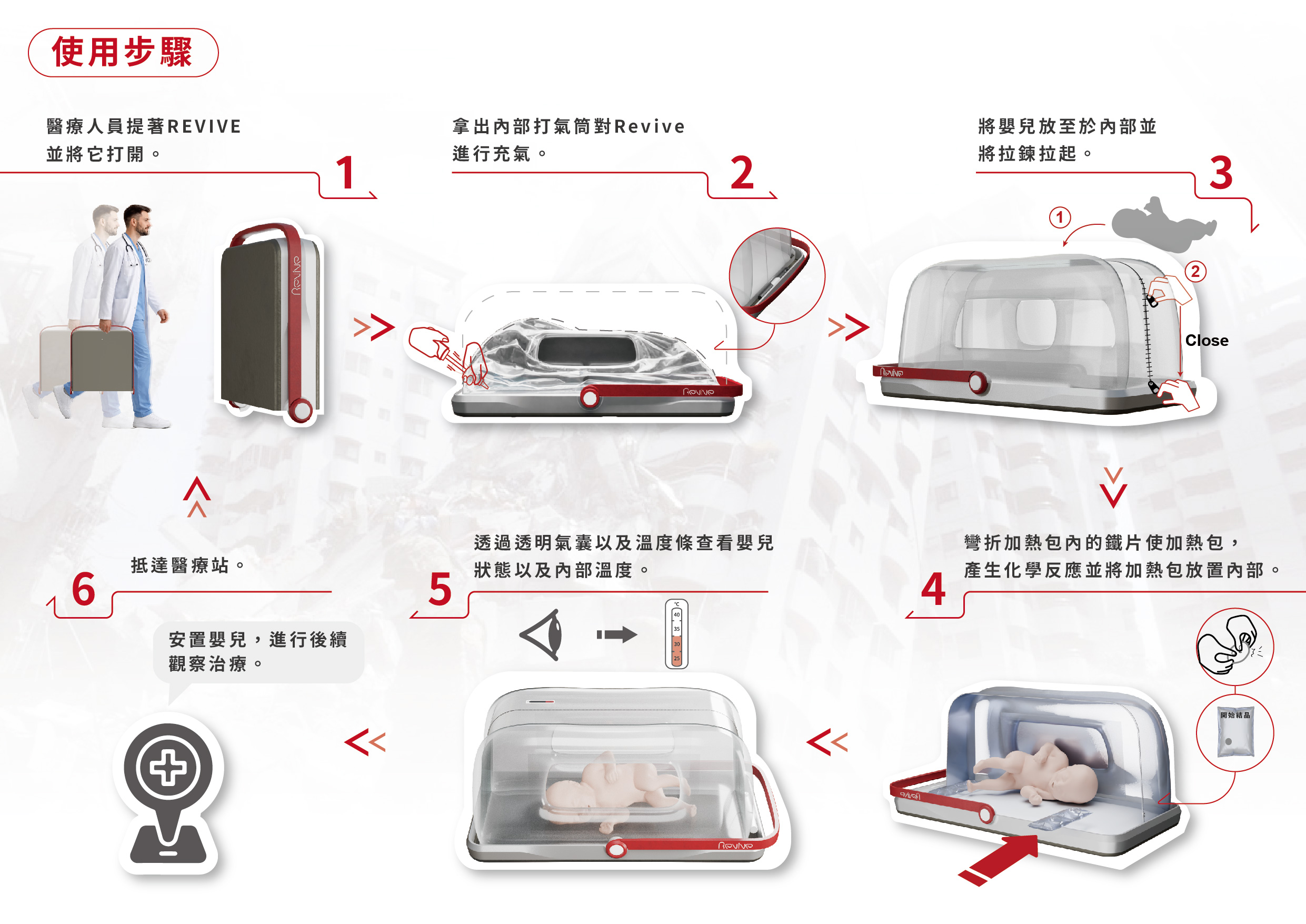
我們透過訪談及與業師討論,了解了現有保溫箱現有的問題痛點發現了現有保溫箱,不管是在體積上或使用上皆不符合災區及落後地區,我們針對上述痛點去做創新設計的解方,並且進行實驗來驗證產品的可行性,測試醋酸鈉加熱包的使用及溫度測量。同時模擬外形提把的機構是否可動以及進行充氣式結構設計,整合上述特點並將外型設計調整至順暢之線條,來達到更好的應用。
因此我們期望提出一款可以不需要使用電力並可以攜帶至受災現場之急救保溫箱,利用充氣式結構設計來達到縮小一半體積的特點,相較於一般保溫箱,在收納時可以大幅減少佔有空間,同時也不需要使用電力即可以為新生兒提供熱源,確保在無能源供應的受災現場,仍能即時為新生兒提供穩定且安全的熱補償,達成維持生理體徵恆定之效果。
REVIVE Power free emergency infant care in disaster zones.
In disaster-stricken or resource-limited environments, preterm infants face high risks of hypothermia and infection due to limited body fat and immature thermoregulation. Most existing incubators rely on electricity and are bulky, making them unsuitable for temporary medical stations or post-disaster transport.
Through interviews and expert consultations, we identified key limitations in size, portability, and usability. In response, we developed a portable, non-electric emergency incubator and validated its feasibility through testing sodium acetate heat packs, handle mechanisms, and an inflatable structure.
The inflatable design reduces storage volume by up to 50%, improving transport efficiency. Without requiring electricity, it provides a stable heat source, ensuring timely and safe thermal support for newborns in energy-limited environments, helping maintain vital physiological stability.
高雄科技大學 工業設計系
(四年級)
陳O蓁
國立高雄科技大學 工業設計系
(四年級) 指導老師 宋O仁