猴硐共餵系統
PawLink
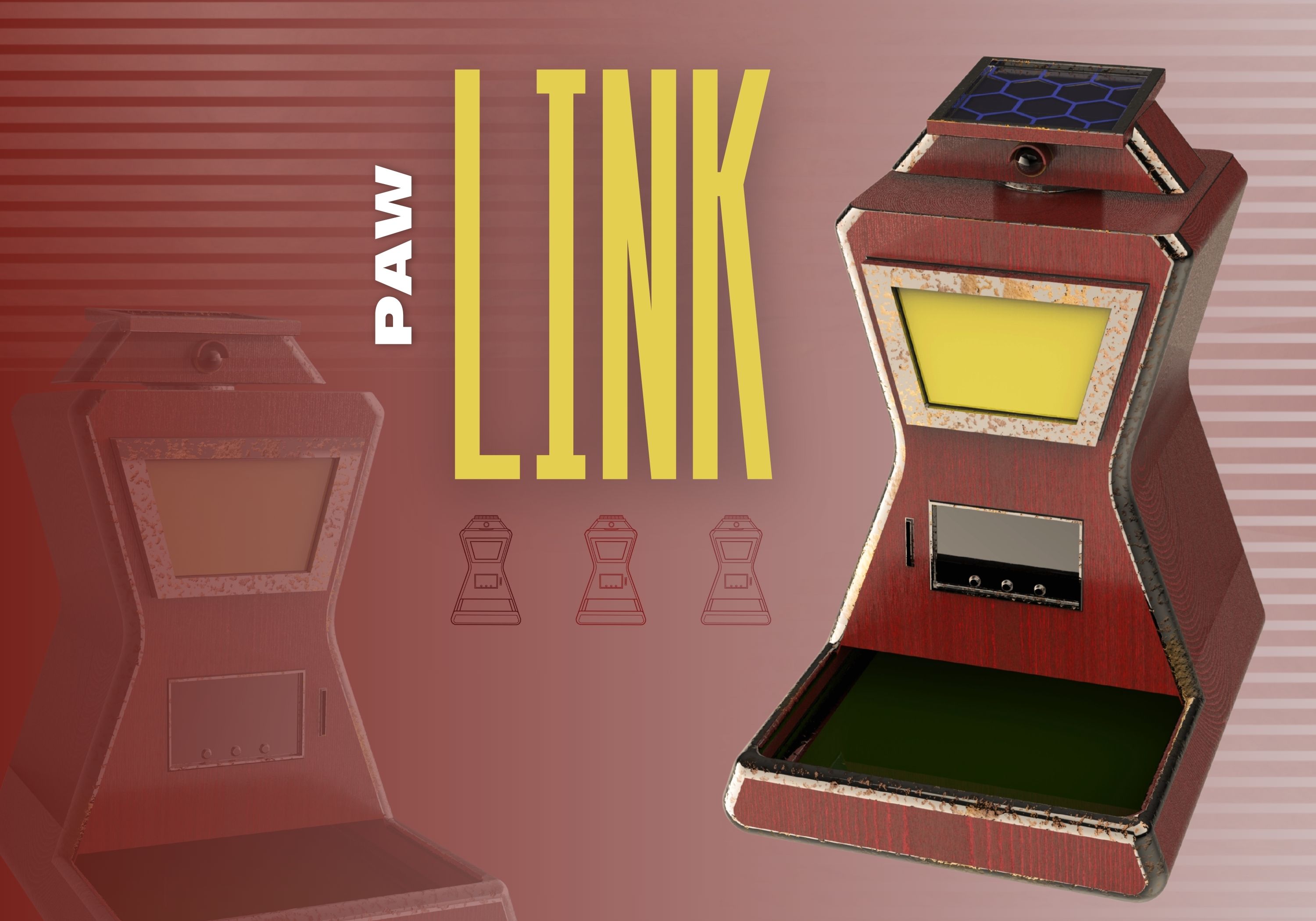
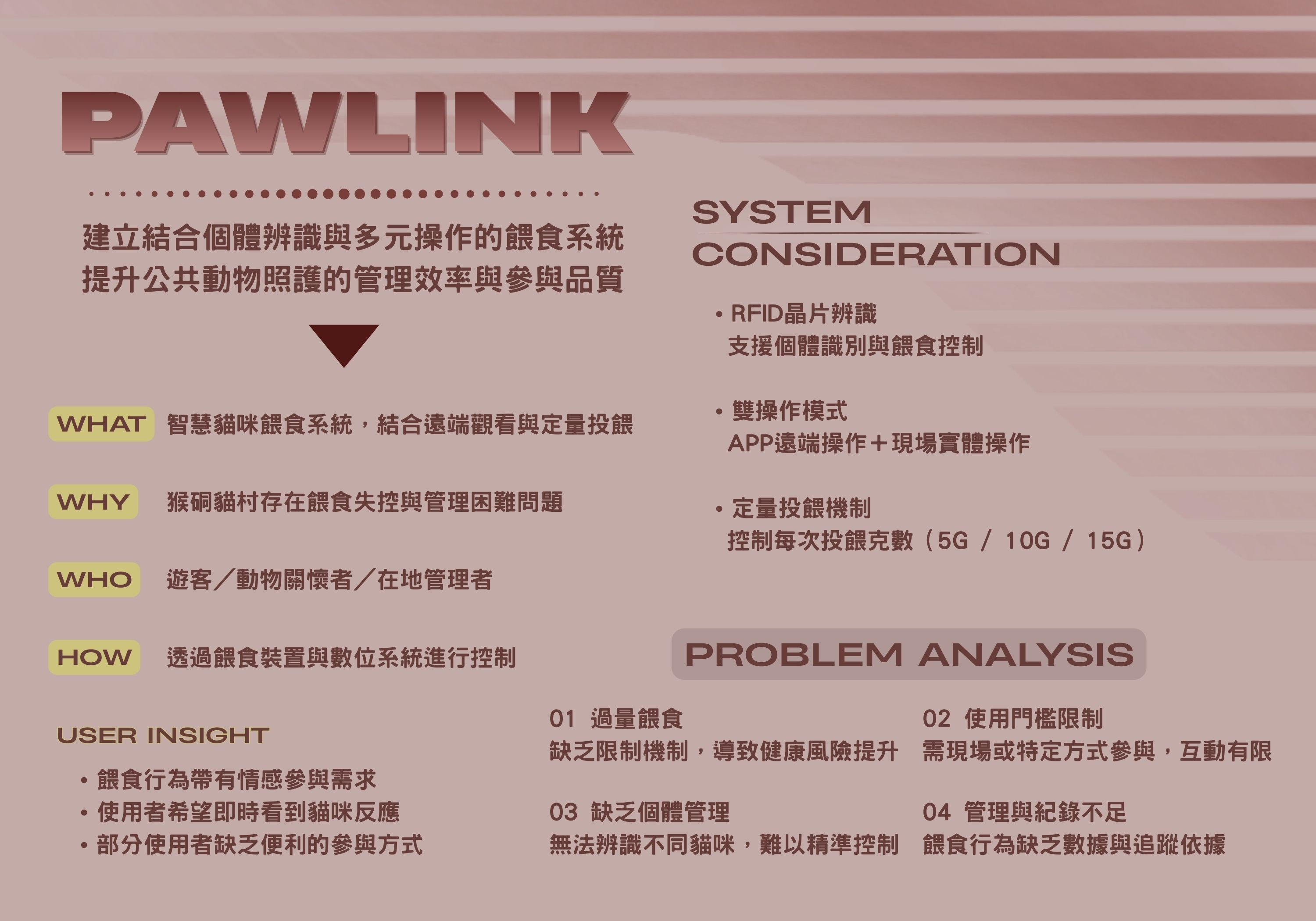
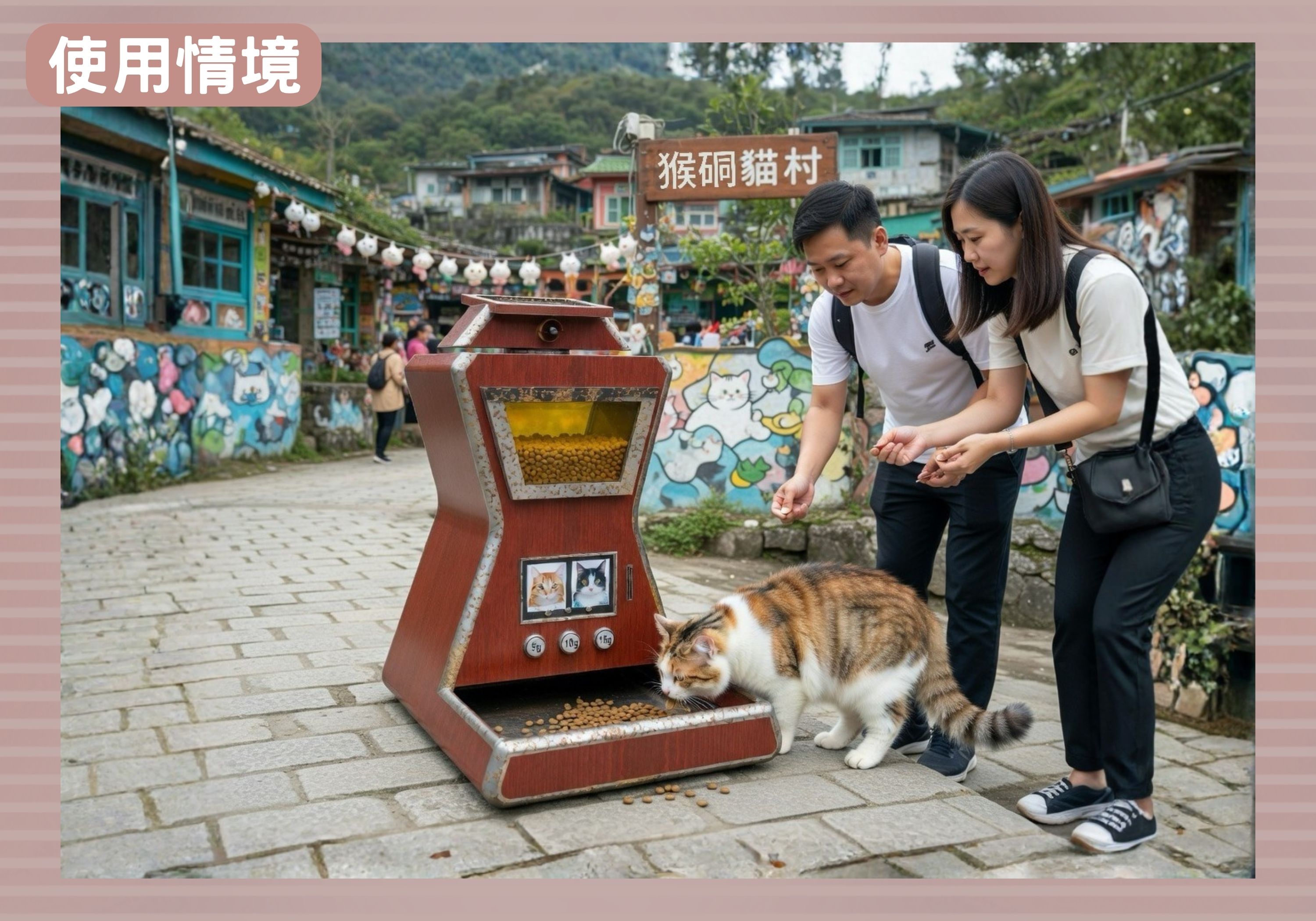
本設計以猴硐貓村公共餵養情境為背景,探討觀光行為與動物照護之間的平衡問題。現場多仰賴遊客自由餵食,雖能促進人與動物互動,卻也導致過量投餵、營養失衡與管理困難等情況,進一步影響貓咪健康與環境品質。
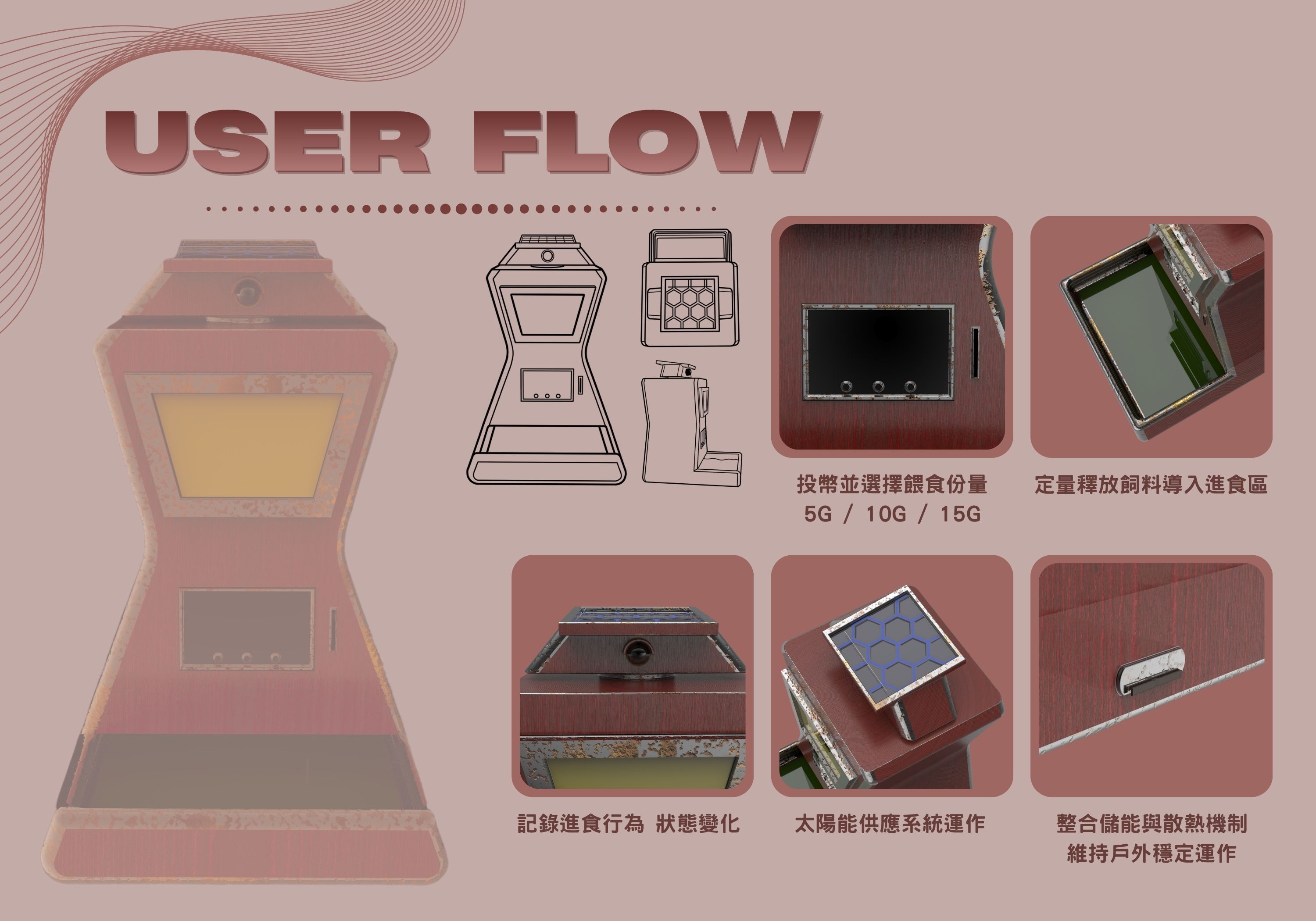
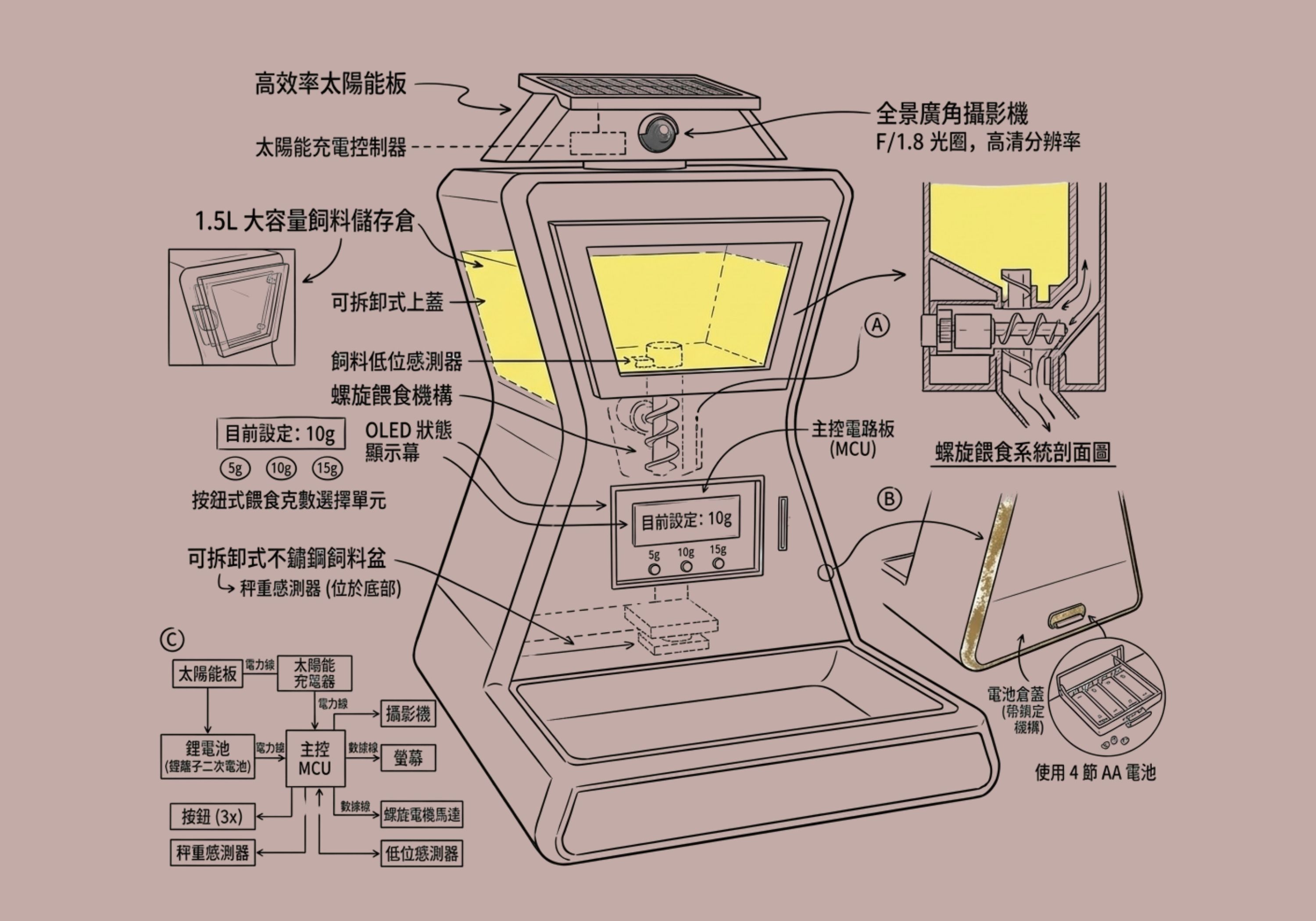
本提案提出一套結合智慧餵食裝置與數位介面的整合系統,透過晶片辨識機制,建立以個體為單位的餵食管理方式,有效限制單一貓咪攝取量,並減少搶食行為。同時,系統提供定量投餵功能,搭配現場投幣與實體按鈕操作,降低使用門檻,使不同使用者皆能參與餵食行為。
在能源設計上,裝置結合太陽能供電與電池儲能系統,並整合散熱結構,以因應戶外長時間運作的穩定性需求。此外,透過攝影機進行進食狀態紀錄,建立基礎行為數據,有助於後續管理與觀察。
本設計嘗試從單一餵食行為出發,轉化為具管理性與參與性的公共照護系統,提升動物福祉,同時維持人與動物之間的正向互動關係。
PawLink
This project is based on the public feeding context of Houtong Cat Village, Taiwan, addressing the imbalance between tourism interaction and animal care. While feeding enhances human-animal connection, the lack of control often leads to overfeeding and uneven distribution, affecting animal health.
The design integrates a smart feeding device with based identification, enabling individual feeding control to reduce excessive intake and competition. It supports both remote and on-site interaction, allowing users to participate through a mobile interface or physical input.
A solar-powered system combined with battery storage ensures stable outdoor operation, while a built-in camera records feeding conditions for basic monitoring.
By transforming feeding into a controlled and participatory system, this design aims to improve animal welfare while maintaining meaningful interaction between humans and animals.
國立臺北教育大學 藝術與造形設計學系
(三年級) 指導老師 李O朮