PineWalk・鳳梨遛
PineWalk
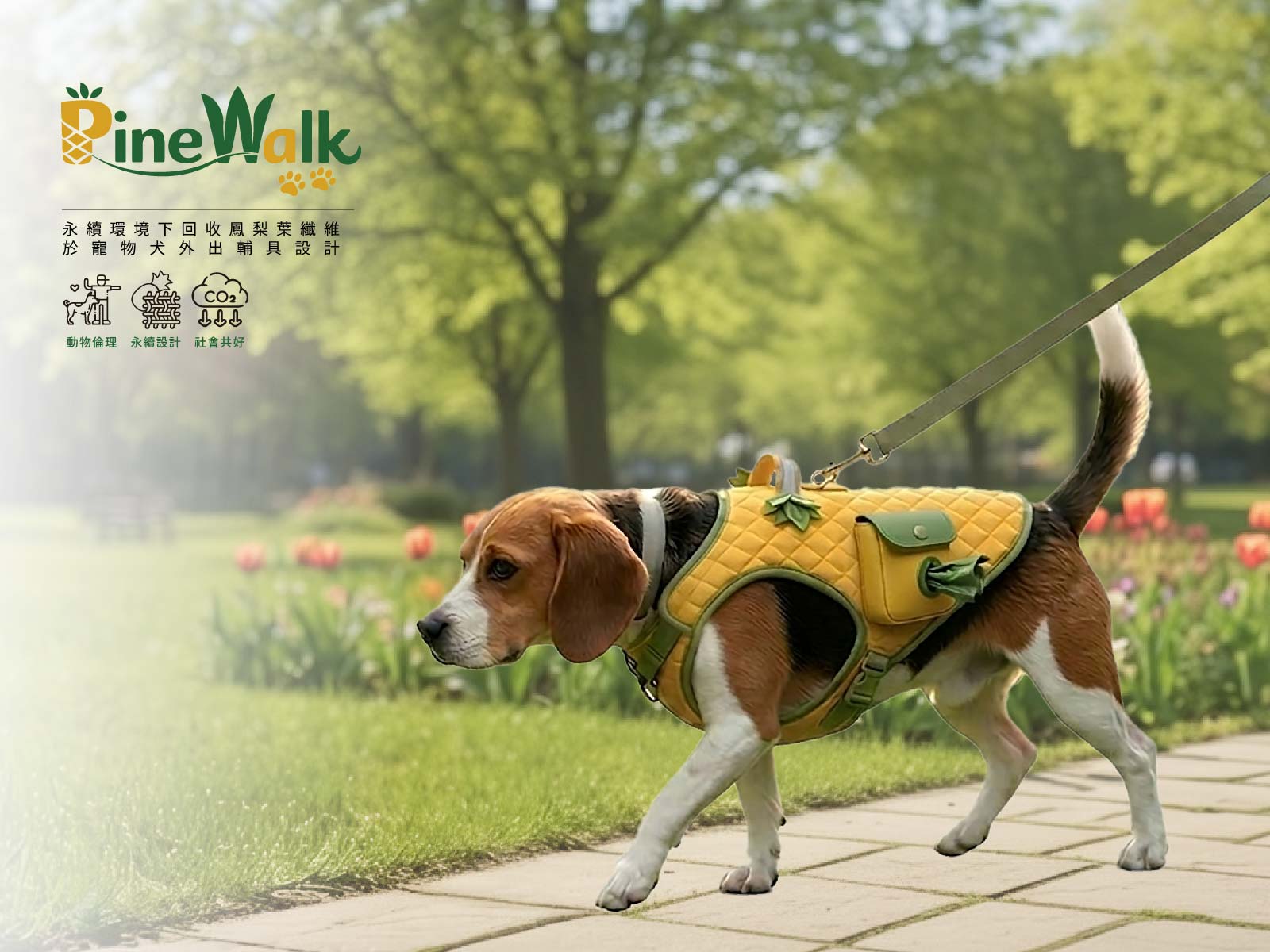
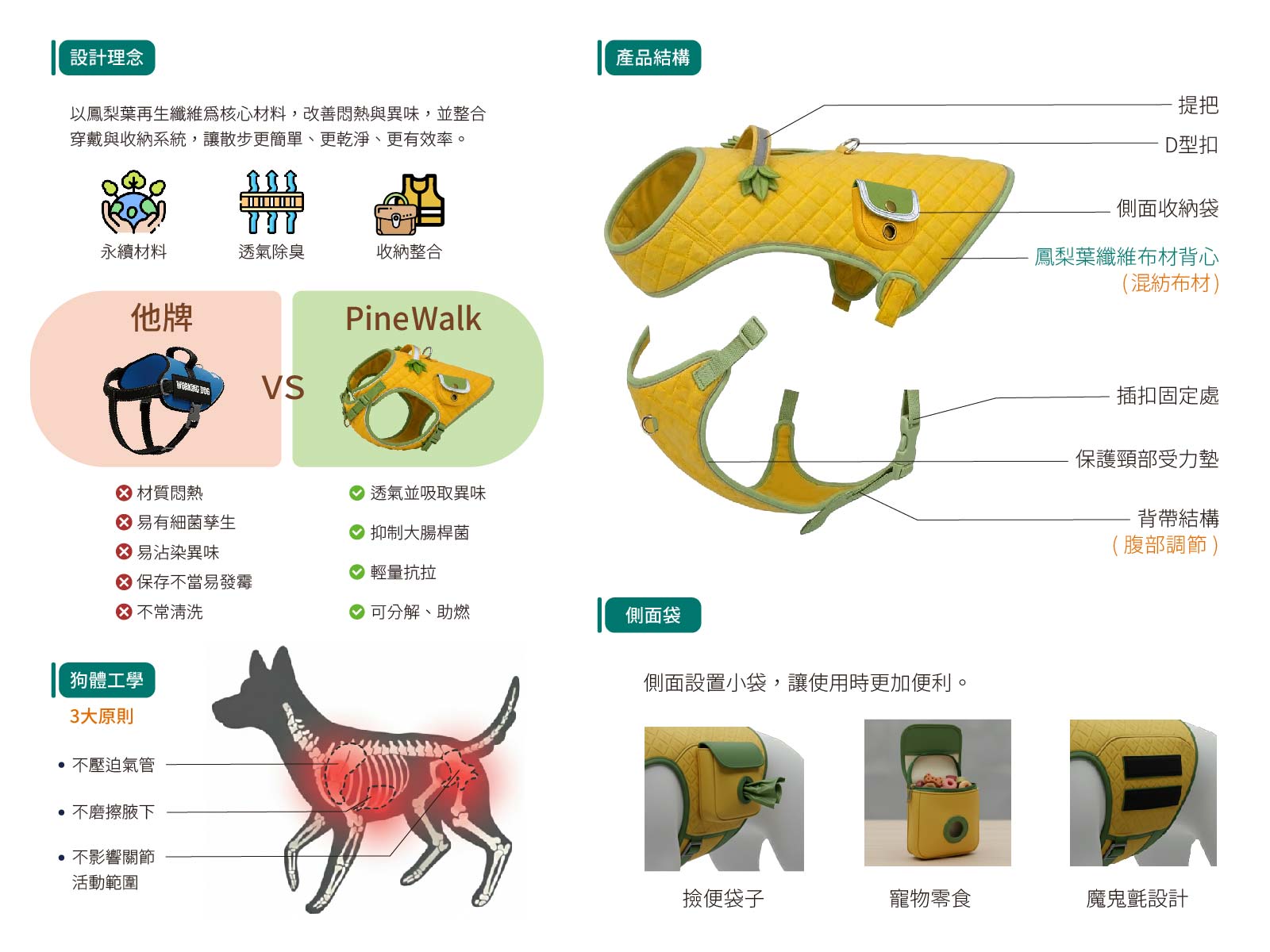
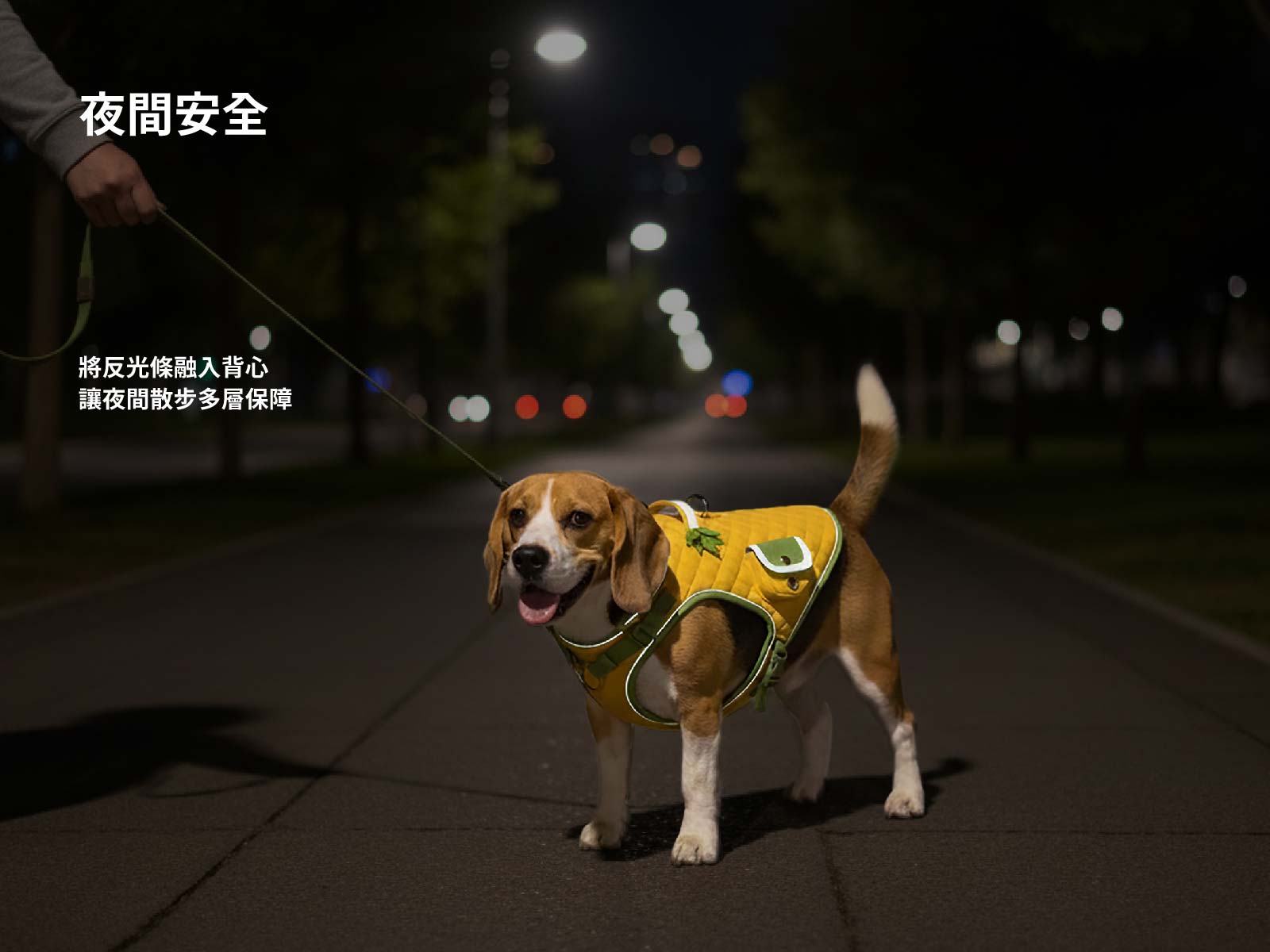
屏東為台灣鳳梨田重鎮,卻伴隨大量棄置鳳梨葉,引發環境問題。同時台灣環境濕熱,以及現代人喜歡給寵物穿戴衣服,然而寵物犬配戴傳統合成纖維與不符合犬體工學的背心外出活動,承受悶熱與細菌孳生。本設計重新定義農業廢棄物的價值,尋求土地與理解動物之間的解決方案。
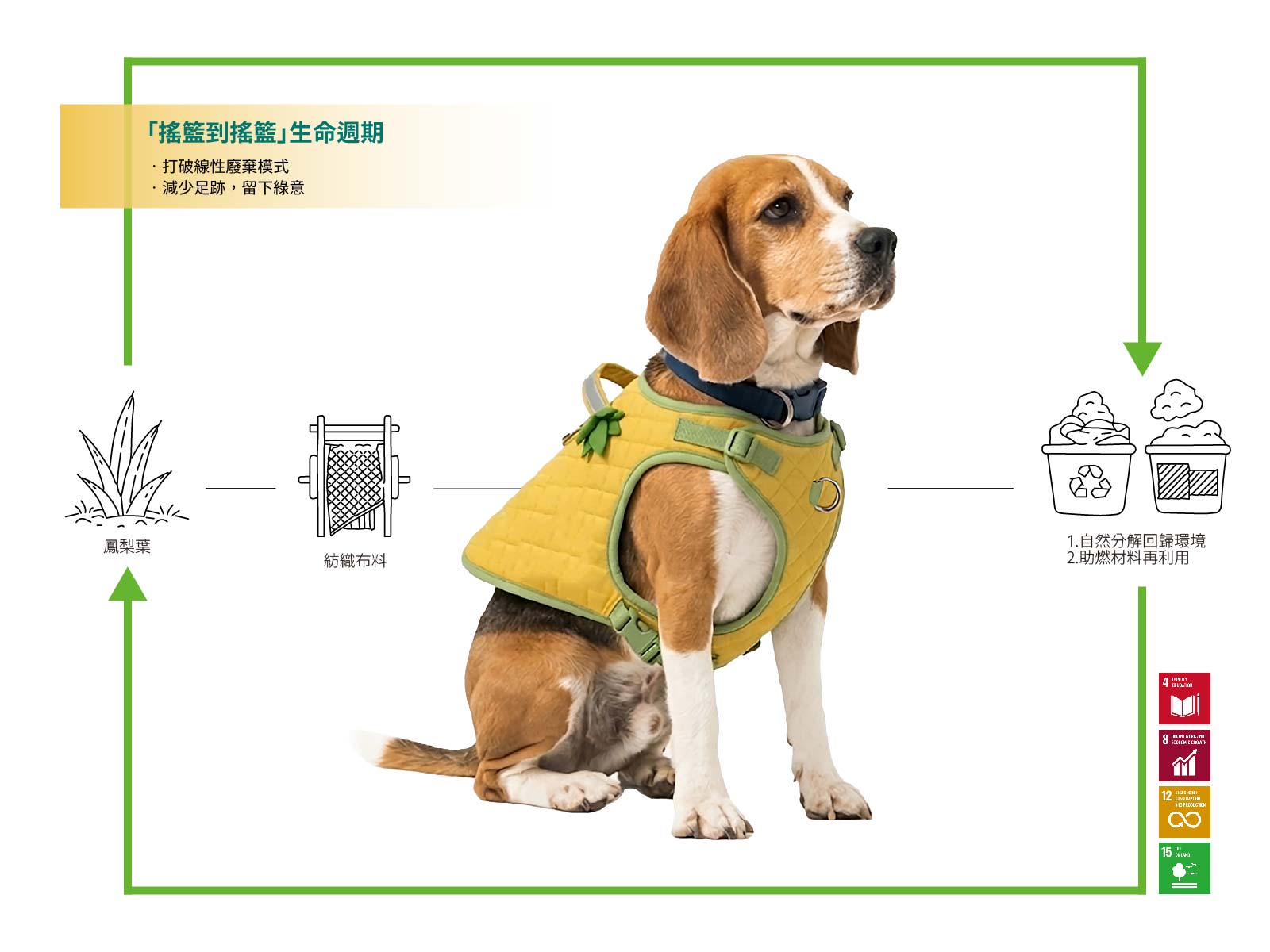
本設計將廢棄的鳳梨葉透過取纖工藝與針刺加工,轉化為具韌性、透氣、天然抑菌特性的天然纖維布料。保留了植物纖維的柔軟,並克服以往背心帶來的不適感,將不符合犬隻的材料轉為親膚的永續布材。
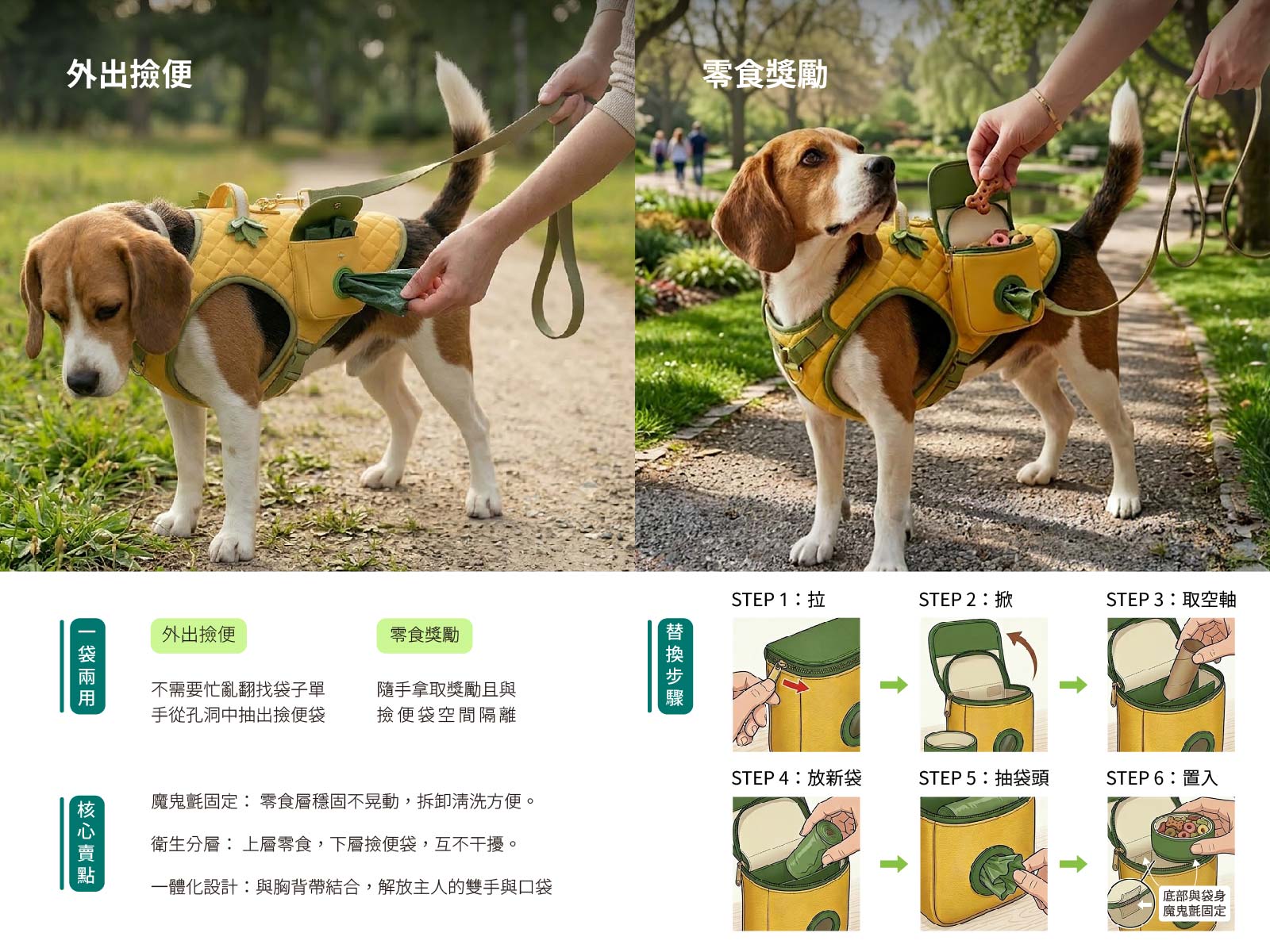
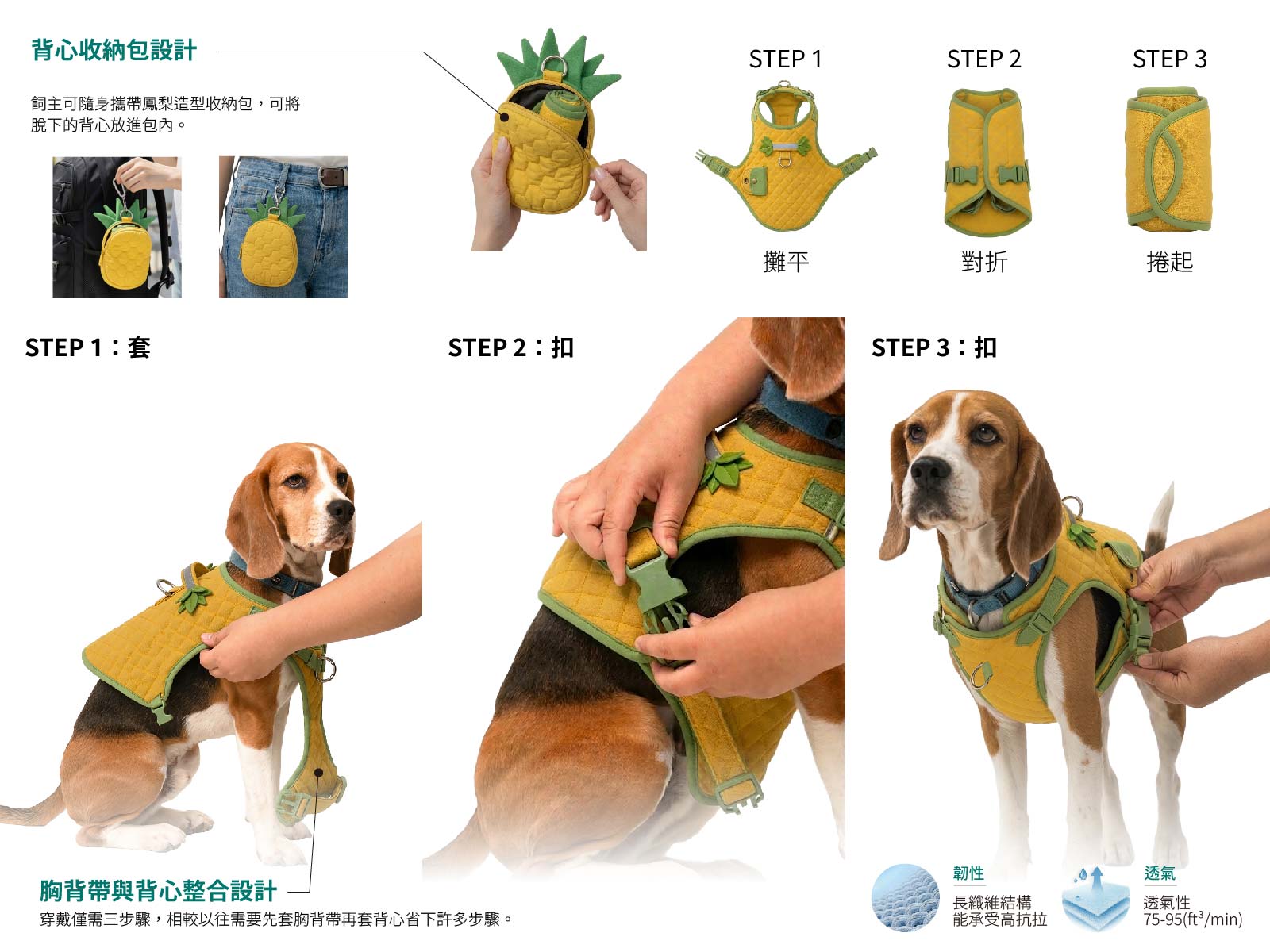
整體設計採胸背帶與背心結合,減少穿戴步驟,並加入犬體工學設計避開氣管與肩胛活動區,確保犬隻的靈活度。布料為鳳梨纖維布料並取用鳳梨的菱形意象作為整體外形,並加上鳳梨造型收納包可將背心收於包內,結合扣件可扣於背包上成為背包上裝飾的一部分,整體採用手工製作以及特殊縫法呈現最佳工藝。
本作品不只是產品,更是循環經濟的體現。相較於棉花,鳳梨葉纖維生產過程節水7成並減少4成碳排。透過這件背心,連結在地農業與寵物市場需求,將本身的價值從視覺美感到環境社會責任ESG,都為台灣在地材開創具備實用與理解動物的綠色美學。
PineWalk
Pingtung’s pineapple industry generates massive leaf waste. Meanwhile, Taiwan’s humid climate makes synthetic pet vests prone to odor and skin issues. This design repurposes agricultural waste into a high-performance, breathable, and naturally antibacterial fabric via fiber extraction and needle punching.
The vest follows canine ergonomics, avoiding the trachea and scapula to ensure full mobility while simplifying the dressing process. Featuring a pineapple-inspired diamond pattern, the set includes a modular storage bag for versatile use.
This project embodies the circular economy: compared to cotton, pineapple fiber saves 70% water and reduces carbon emissions by 40%. It connects local agriculture with the pet market, creating a green aesthetic that balances ESG responsibility with animal welfare.
國立屏東科技大學 木材科學與設計系
(三)
柯O膨
國立屏東科技大學 木材科學與設計系
(三)
陳O忠
國立屏東科技大學 木材科學與設計系
(三) 指導老師 汪O峯
龍O
羅O姍