荒廢在城市中的綠洲 - 於自然與科技間的「非中心展演場」
An oasis abandoned in the city - a decentralized performance space between nature and technology
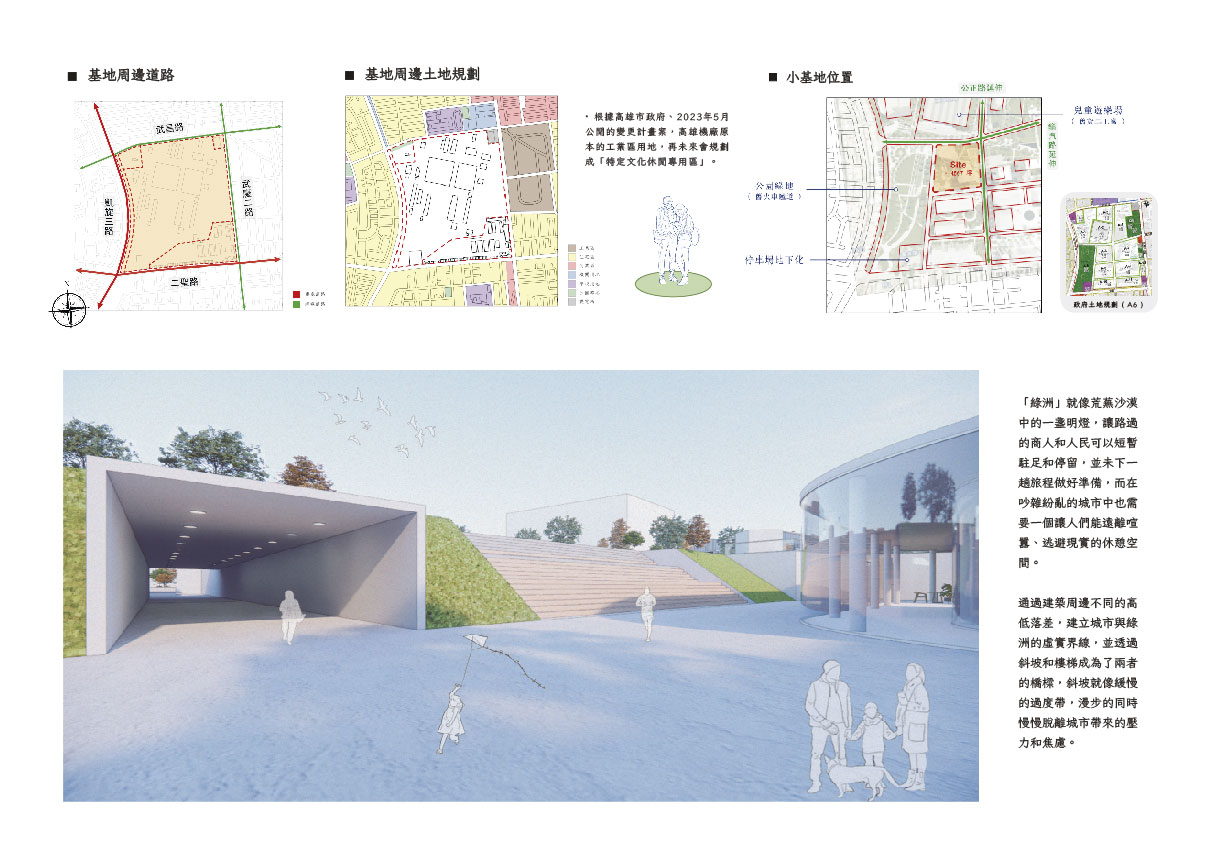
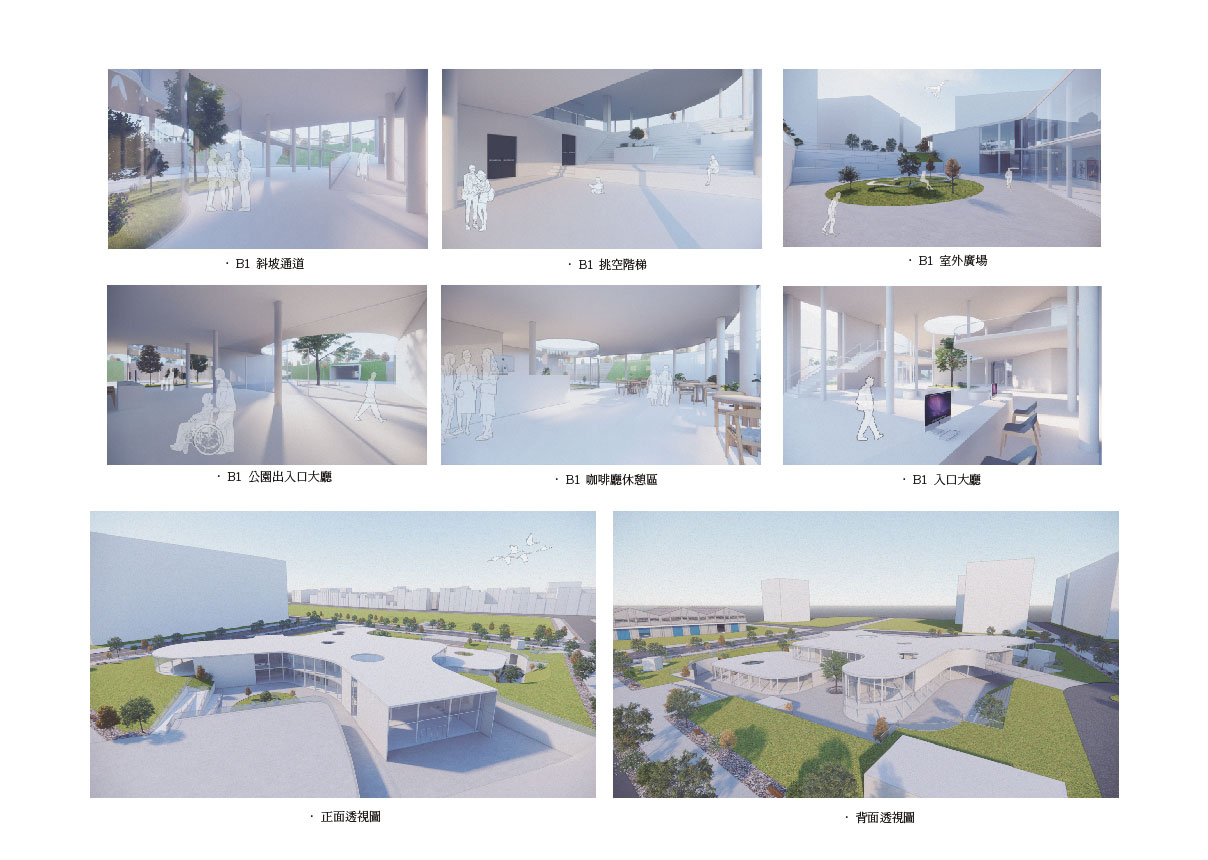
「綠洲」就像荒蕪沙漠中的一盞明燈,讓路過的商人和人民可以短暫駐足和停留,並未下一趟旅程做好準備,而在吵雜紛亂的城市中也需要一個讓人們能遠離喧囂、逃避現實的休憩空間。
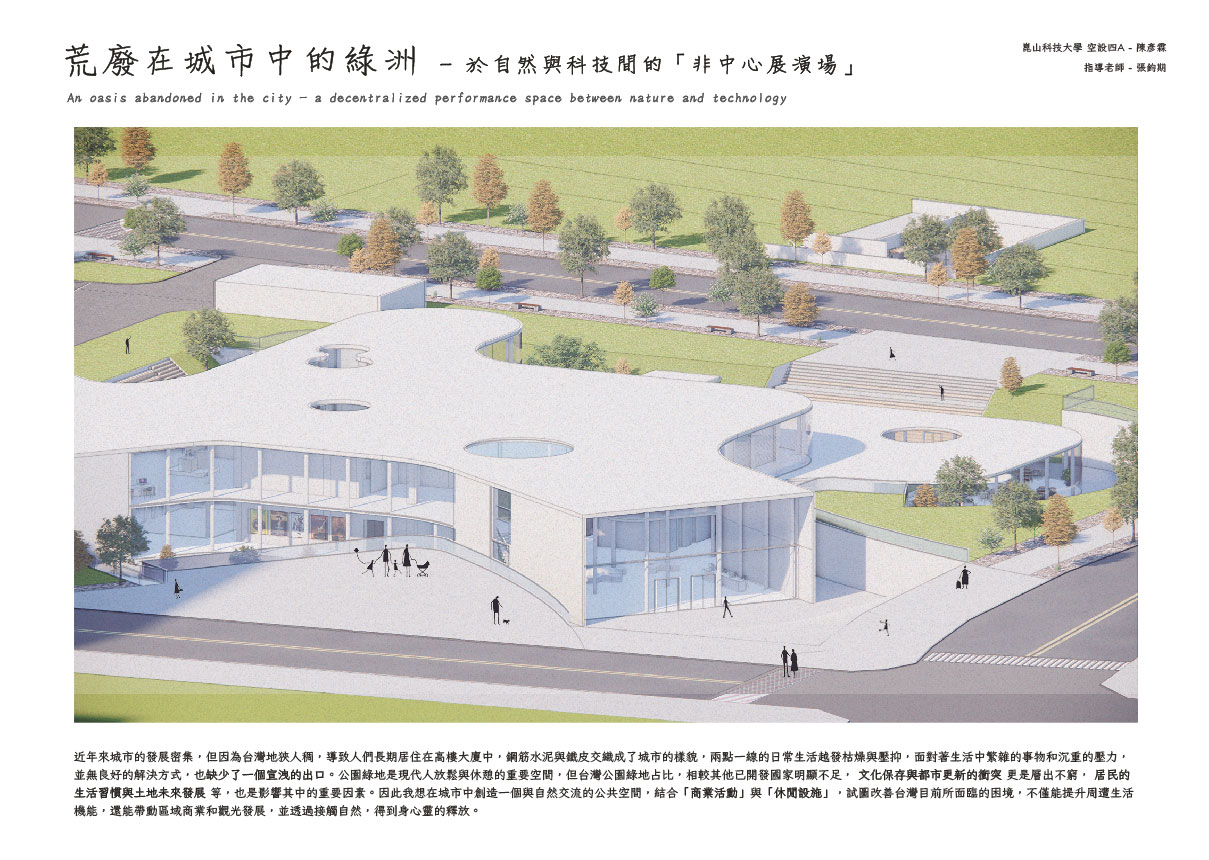
近年來城市的發展密集,但因為台灣地狹人稠,導致人們長期居住在高樓大廈中,鋼筋水泥與鐵皮交織成了城市的樣貌,兩點一線的日常生活越發枯燥與壓抑,面對著生活中繁雜的事物和沉重的壓力,並無良好的解決方式,也缺少了一個宣洩的出口。公園綠地是現代人放鬆與休憩的重要空間,但台灣公園綠地占比,相較其他已開發國家明顯不足, 文化保存與都市更新的衝突 更是層出不窮, 居民的生活習慣與土地未來發展 等,也是影響其中的重要因素。因此我想在城市中創造一個與自然交流的公共空間,結合「商業活動」與「休閒設施」,試圖改善台灣目前所面臨的困境,不僅能提升周遭生活機能,還能帶動區域商業和觀光發展,並透過接觸自然,得到身心靈的釋放。
An oasis abandoned in the city - a decentralized performance space between nature and technology
An "oasis" is like a beacon in a barren desert, allowing passing merchants and people to pause and prepare for their next journey. Similarly, a resting space where people can escape reality is needed in the noisy and chaotic city.
In recent years, urban development has been intensive, but due to Taiwan's limited land and dense population, people have long lived in high-rise buildings. The urban landscape is a tapestry of reinforced concrete and metal sheets, making daily life increasingly monotonous and oppressive. Faced with the complexities and heavy pressures of life, there are no good solutions and no outlet for release. Parks and green spaces are important spaces for modern people to relax and unwind, but Taiwan's proportion of parkland and green space is significantly insufficient compared to other developed countries. Residents' lifestyles and the future development of the land are also important factors influencing this.
崑山科技大學 空間設計系
(四年級) 指導老師 張O期