被海風拆解的村落:漁村零件的記憶組裝
Villages Disassembled by the Sea Breeze: Memory Assembly of Fishing Village Fragments
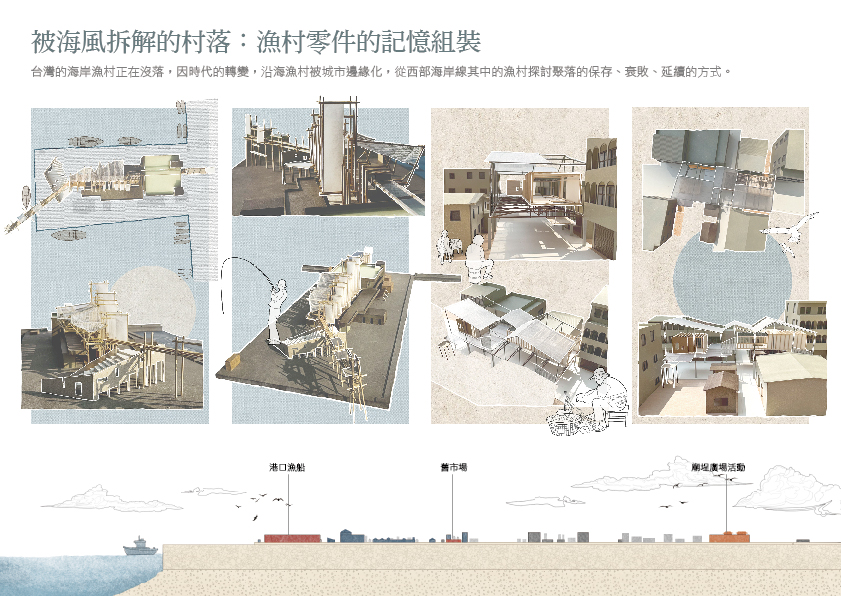
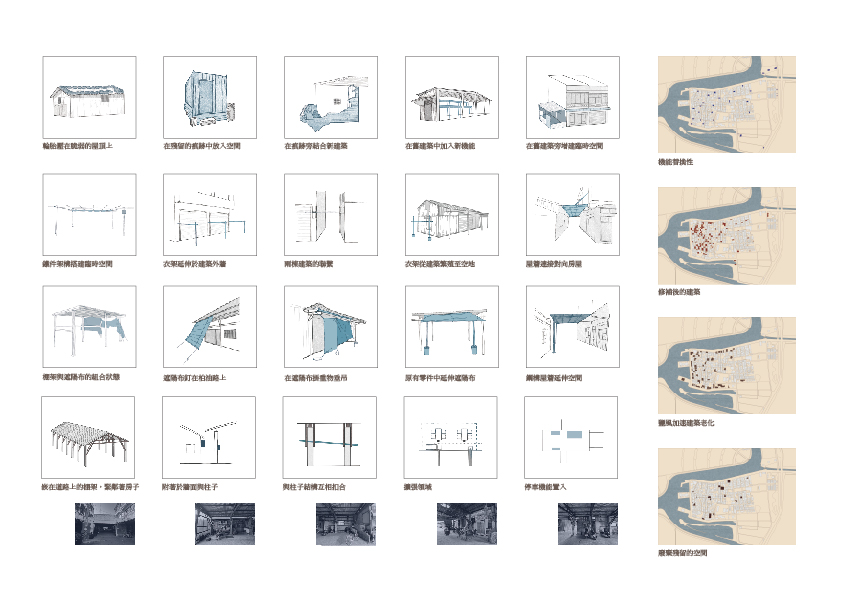
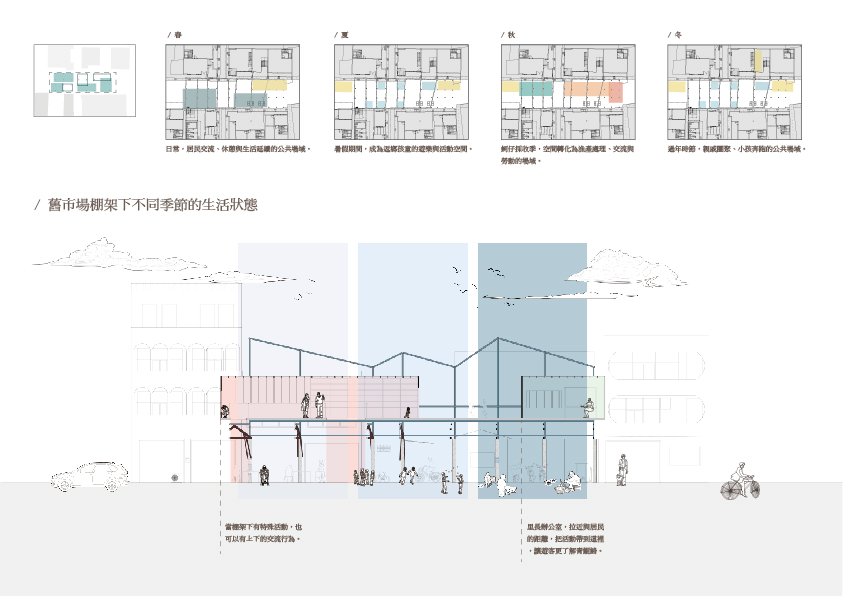
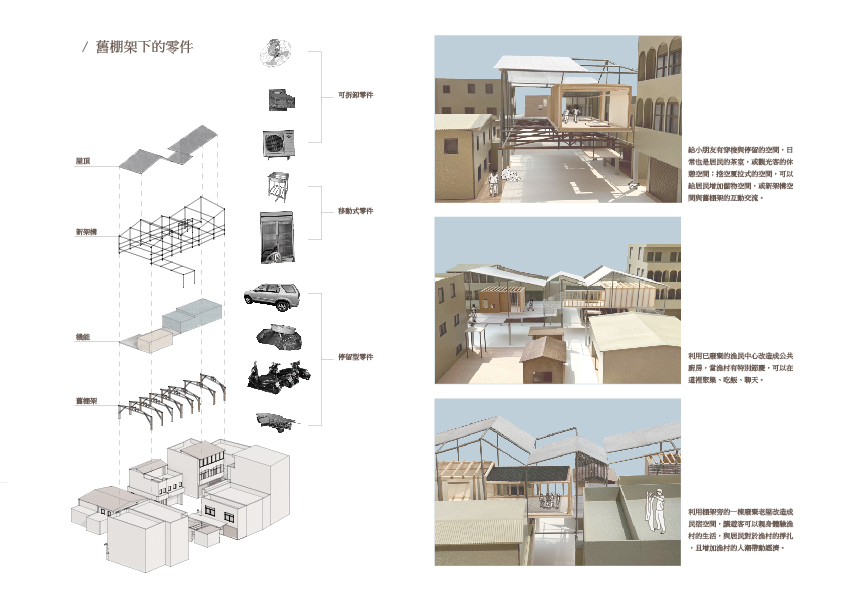
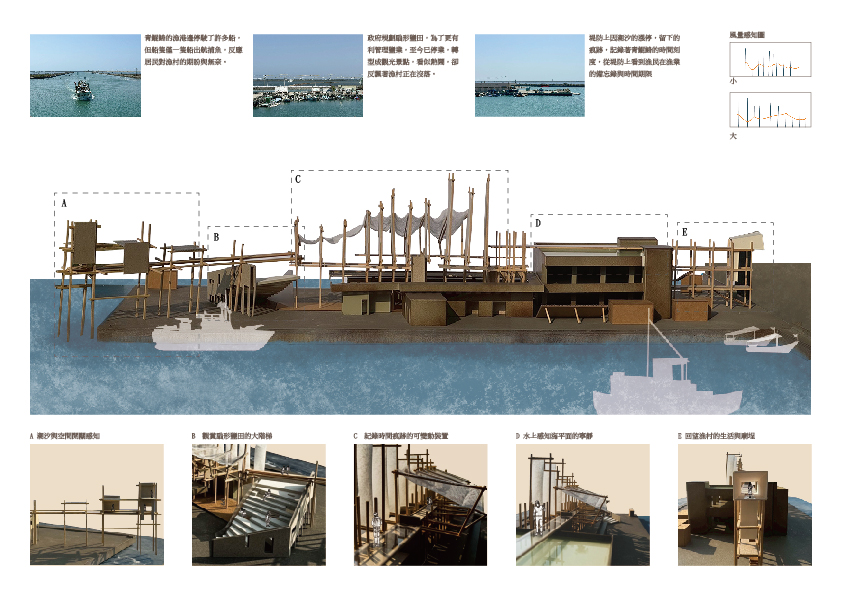
台灣西部沿海漁村逐漸衰敗,青鯤鯓仍透過日常零件維繫生活。設計先回應居民使用與聚集的需求,延續漁村既有的生活運作,讓空間重新被使用與佔據;同時以魚市場這個逐漸失去作用的空間為載體,重新詮釋其存在價值。透過設計轉化風與潮汐的自然變化,形成可被感知的時間刻度,使環境本身成為記錄時間的媒介。空間中保留既有構件與使用痕跡,並以輕介入的方式引入新的活動,讓居民得以持續在此生活、工作與交流,也讓逐漸沉寂的場域重新產生連結。風的強弱與潮汐的高低,成為日常中反覆出現的變化,慢慢累積為時間的證據。人在其中不只是觀看,而是在行走與停留之間,透過身體感知環境的變動,閱讀漁村的狀態,理解其在延續與消逝之間的拉扯,最終留下屬於這片土地的生命痕跡。
Villages Disassembled by the Sea Breeze: Memory Assembly of Fishing Village Fragments
In the declining villages of Taiwan’s western coast, Qingkunshen sustains its life through the resilient "patchwork" of everyday fragments. This design prioritizes residents' needs for gathering and utility, ensuring operational continuity. By repurposing the fading fish market as a spatial vessel, the project transforms wind and tides into sensory scales of time.
Through light interventions that preserve existing traces, the space facilitates new activities for living and working. The fluctuating wind and tides become perceptible daily rhythms, accumulating into the evidence of time. Here, the observer moves and pauses to decipher the village’s state—witnessing the constant tension between persistence and disappearance, and the enduring traces of life left behind.