綁繩語言
Rope-Binding Language
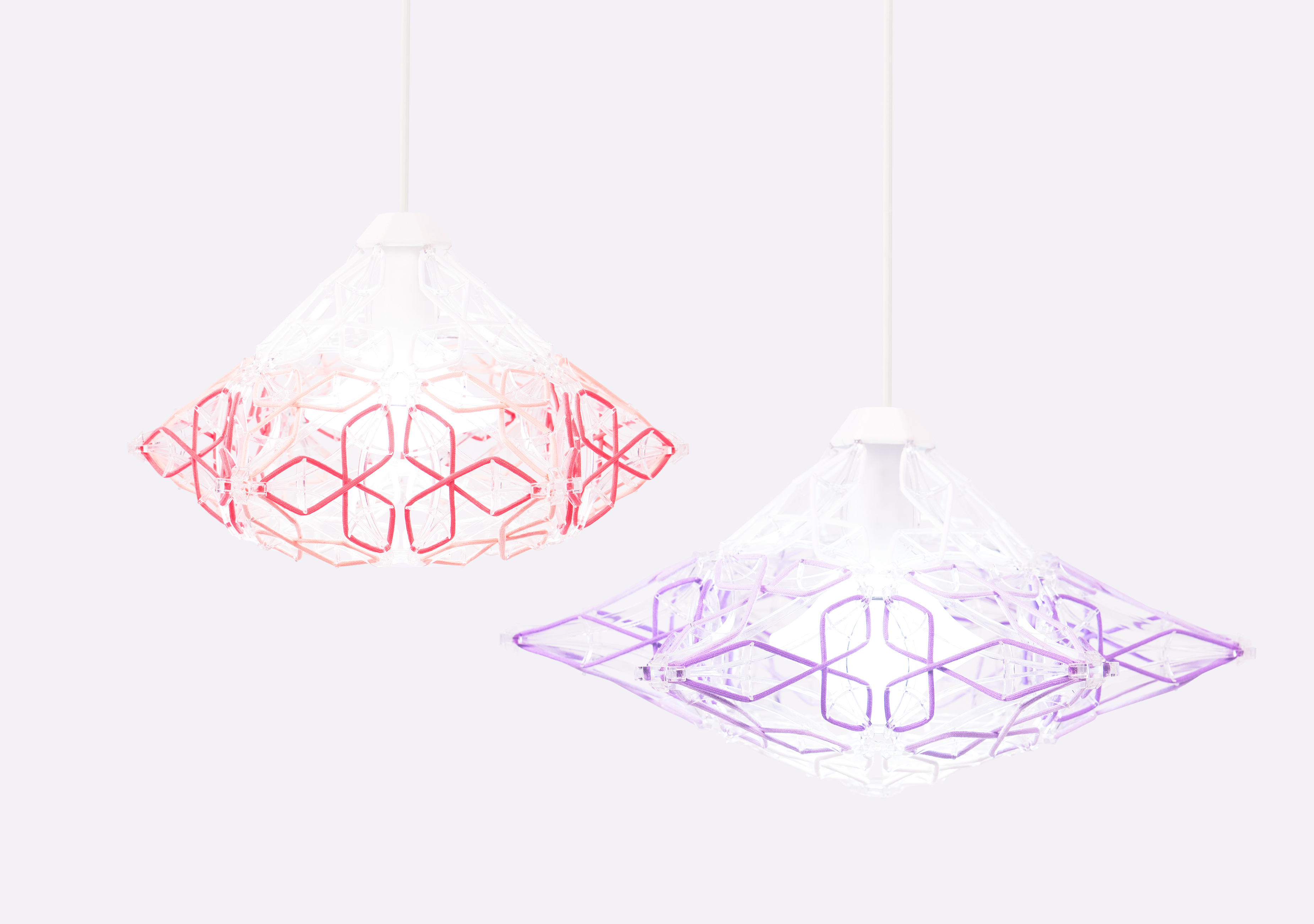
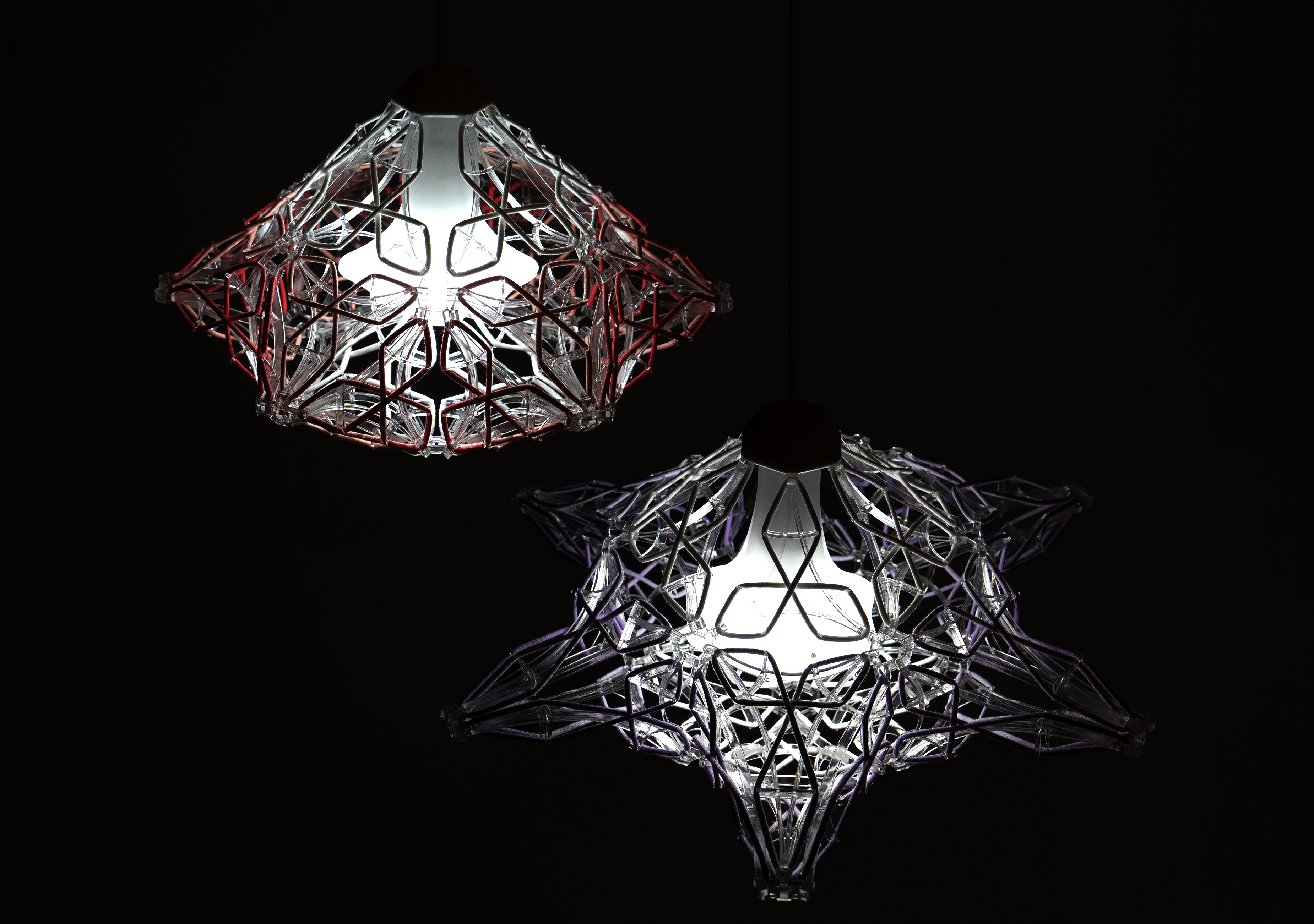
本設計源於對台灣常民生活的觀察。早期雜貨店與麻油行普遍存在「玻璃瓶綑綁」技藝,僅依靠單一繩索與特定交織路徑產生束縛工法,其背後蘊含了具備功能性的結構美學與力學智慧。隨著工業包裝更迭,這項具備在地特性的常民技藝逐漸消失。
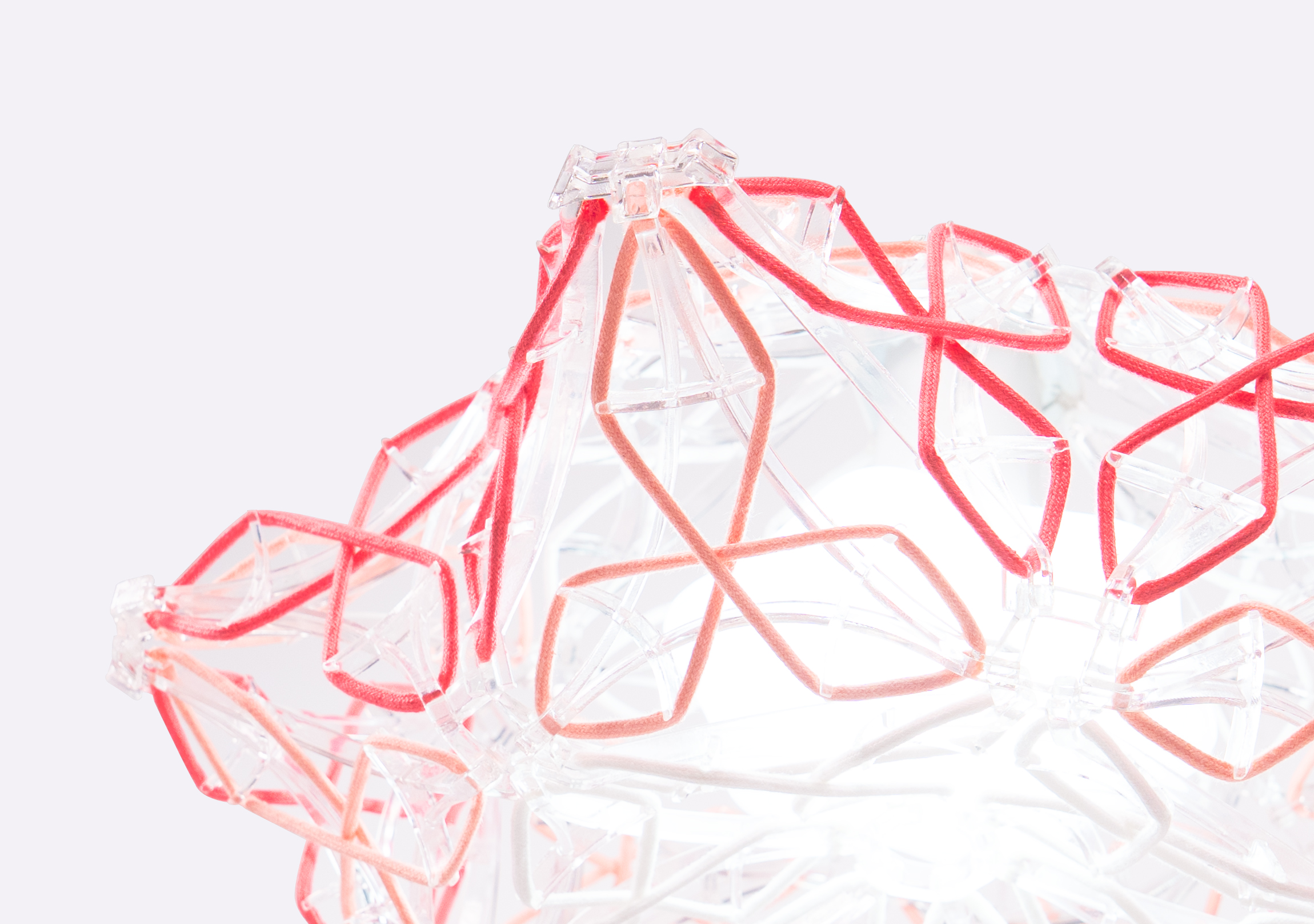
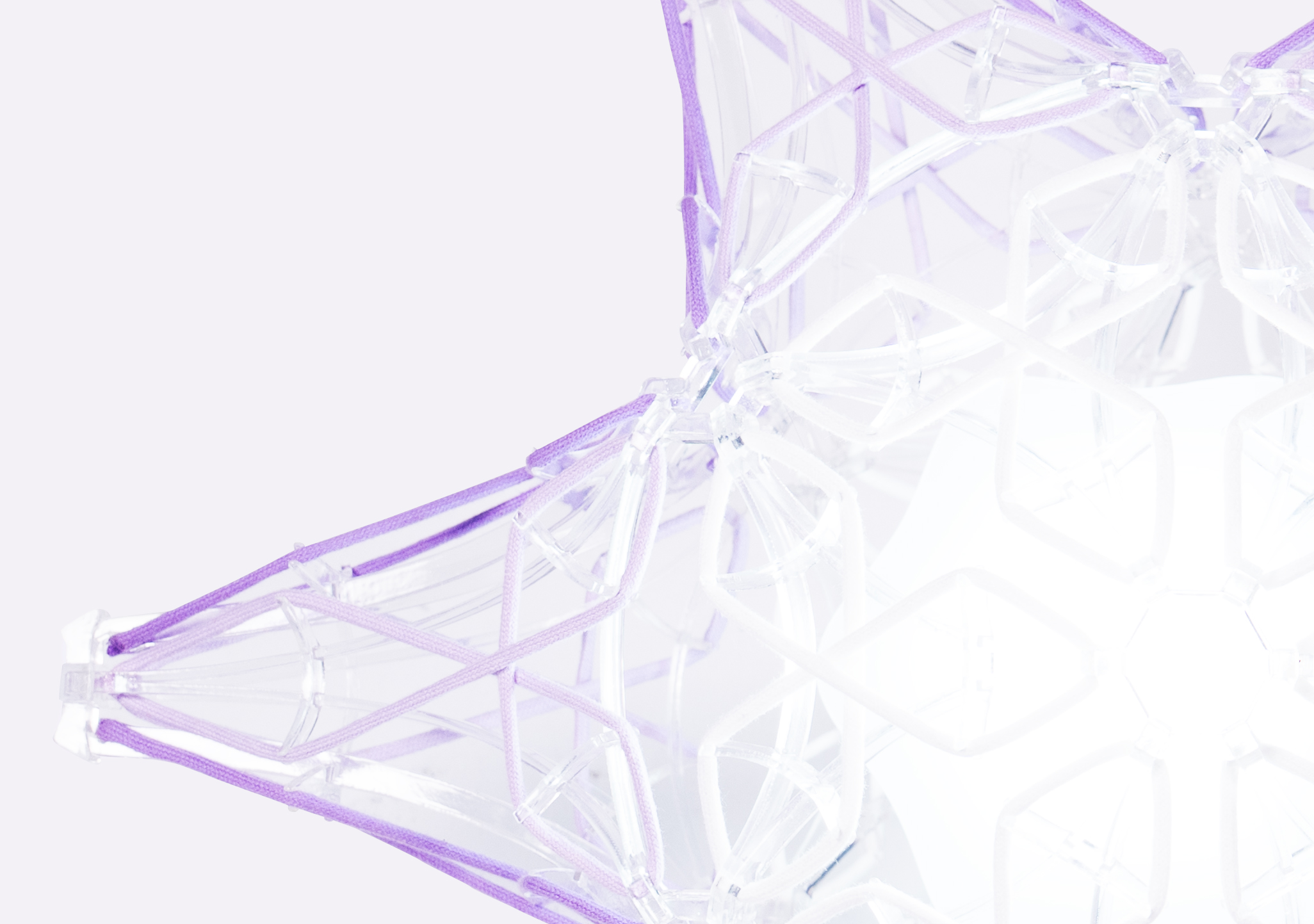
本設計提取綑綁技藝中的「交織型態」為核心,將純功能的綑綁規律轉譯為當代設計符號;透過研究繩索在拉緊狀態下的張力規律,定義出精確的三角單元模組。在結構構建上,捨棄裝飾性元素,以三角單元構建放射狀的立體陣列,使軟質繩索與硬質塊體在拉力平衡下,形塑出具備結構張力的設計語彙。
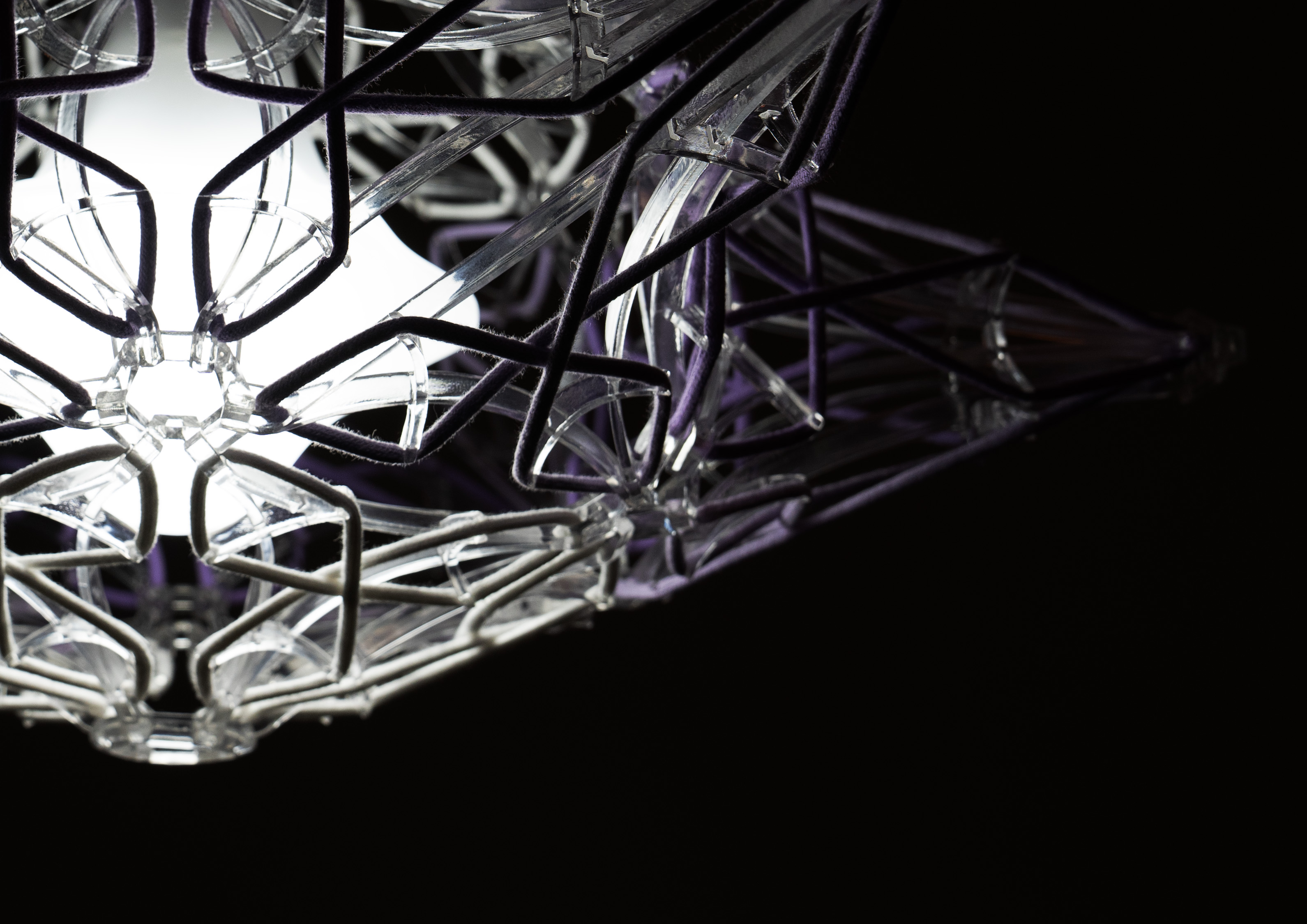
此外,本設計進一步透過光影介入強化感官體驗。當光源由內向外散射,放射狀幾何結構層層過濾光線,於空間投射出具備韻律感的交織陰影。本設計旨在透過符號化轉譯,使傳統束縛工法脫離純勞務標籤,轉化為具備文化底蘊的結構藝術;讓使用者在操作與觀賞產品時,能直觀感受常民智慧的結構精準度,實現生活記憶的創新傳承。
Rope-Binding Language
Inspired by traditional Taiwanese "glass bottle bundling," this design translates historical folk wisdom into contemporary design symbols. This project extracts the interlacing techniques of local grocery stores, defining precise triangular modules through the study of cord tension.
By replacing decorative elements with a radial 3D array, soft cords and rigid modules reach a state of tension equilibrium, shaping a design language defined by structural integrity. Integrating light and shadow, the structure filters light in layers to project rhythmic shadows, enhancing the sensory experience. By elevating traditional binding from mere labor to structural art, the design ensures the creative inheritance of collective lifestyle memories through intuitive interaction.