蝸牛視霧所
Snail Visual Office
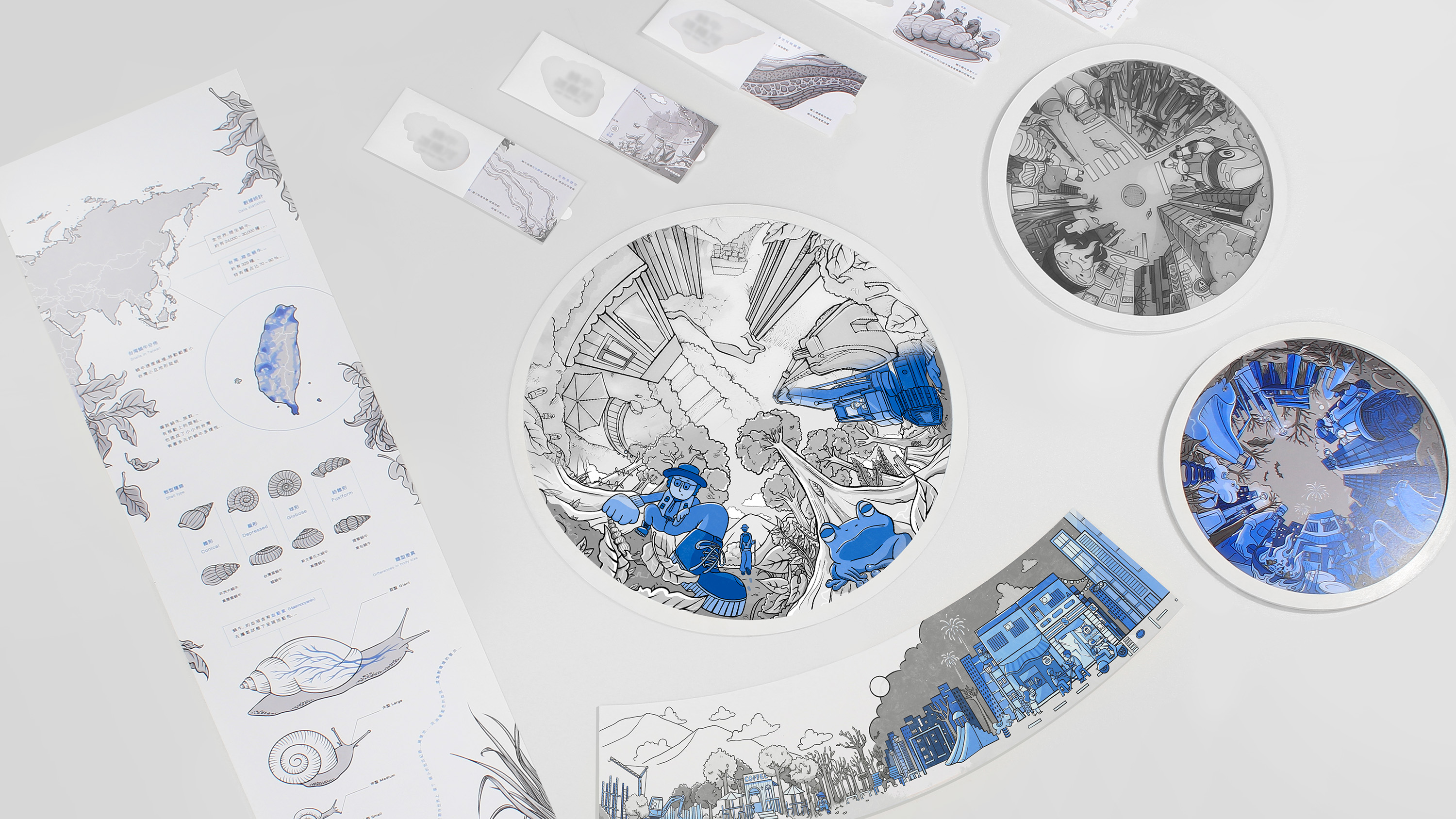

蝸牛視霧所透過視角的切換,帶領人類進入蝸牛的視角,看見正被我們破壞的棲地環境。
人類視力清晰,卻往往看不見對生態環境的破壞;相反地,生活在我們周遭的蝸牛,牠們雖然視力模糊,卻對環境改變格外敏感,成為重要的生態指標。
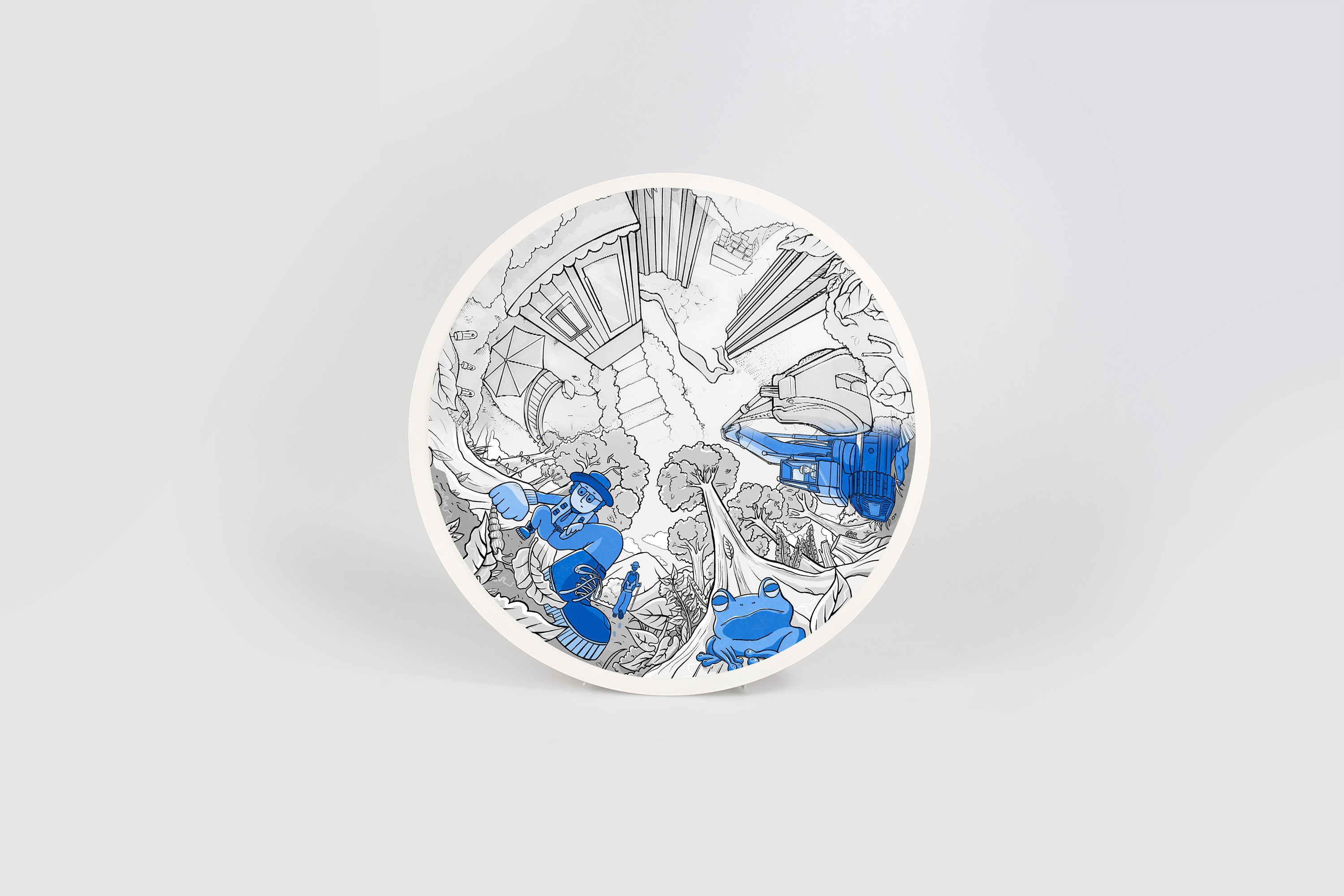
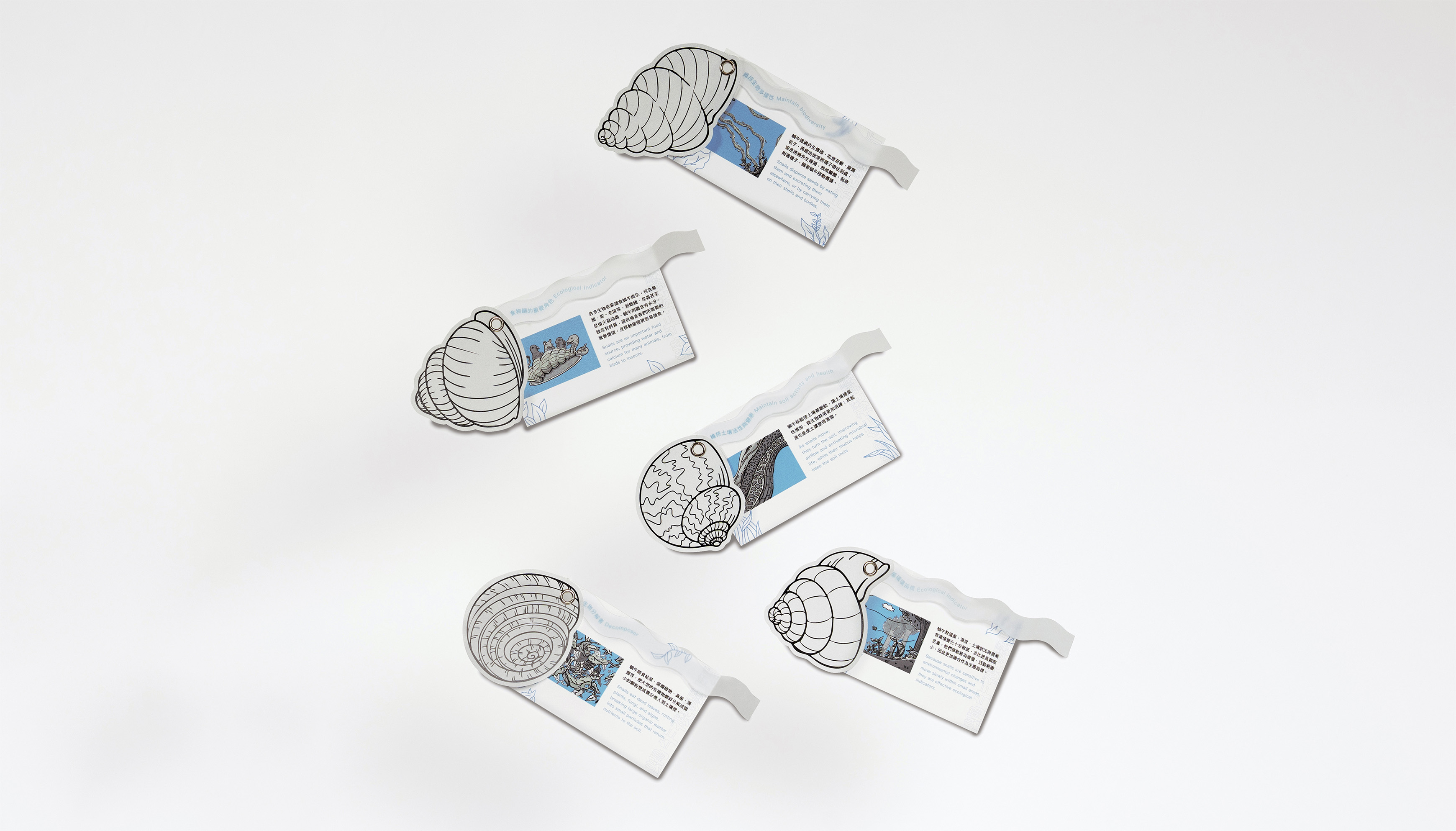
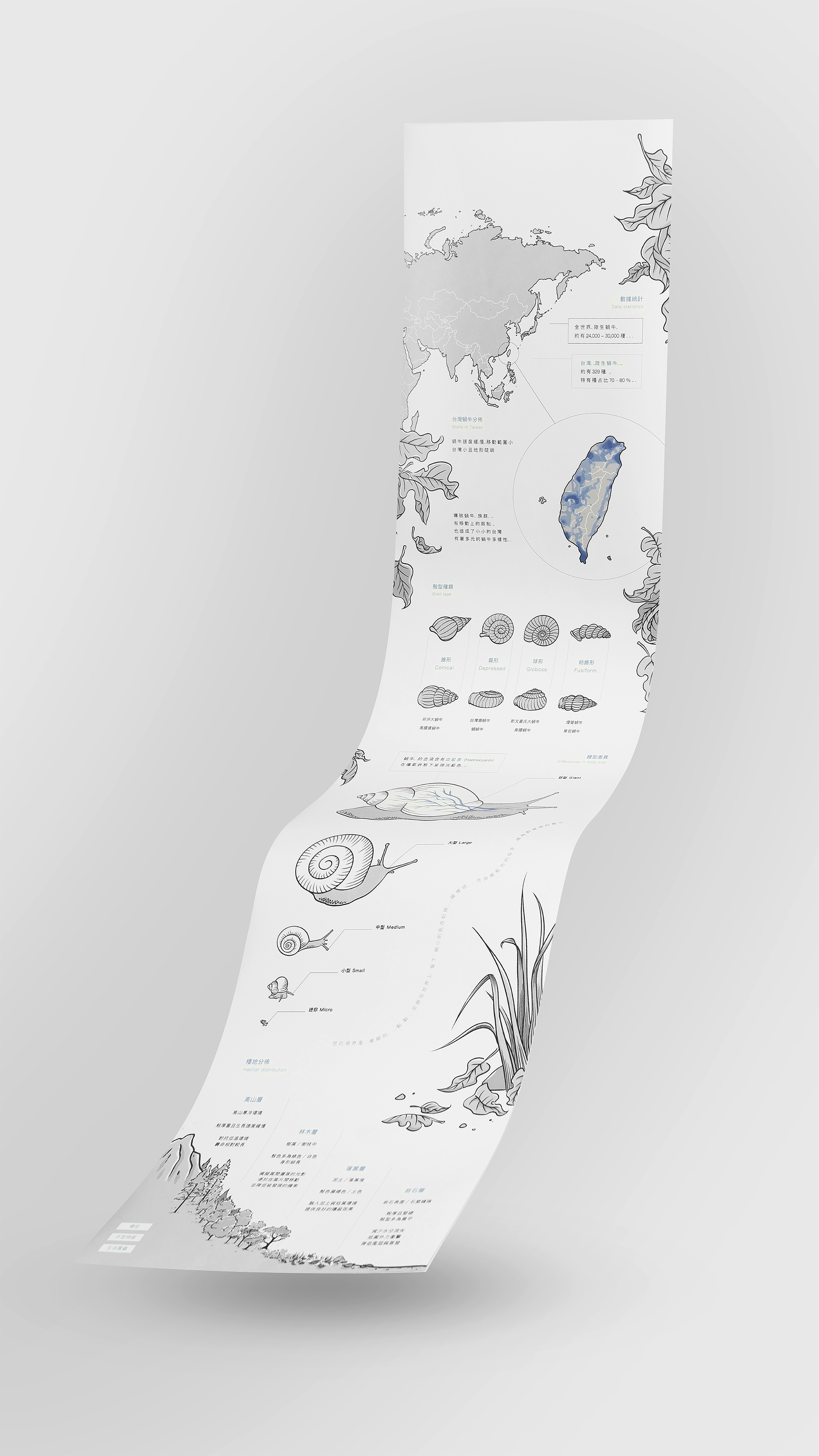
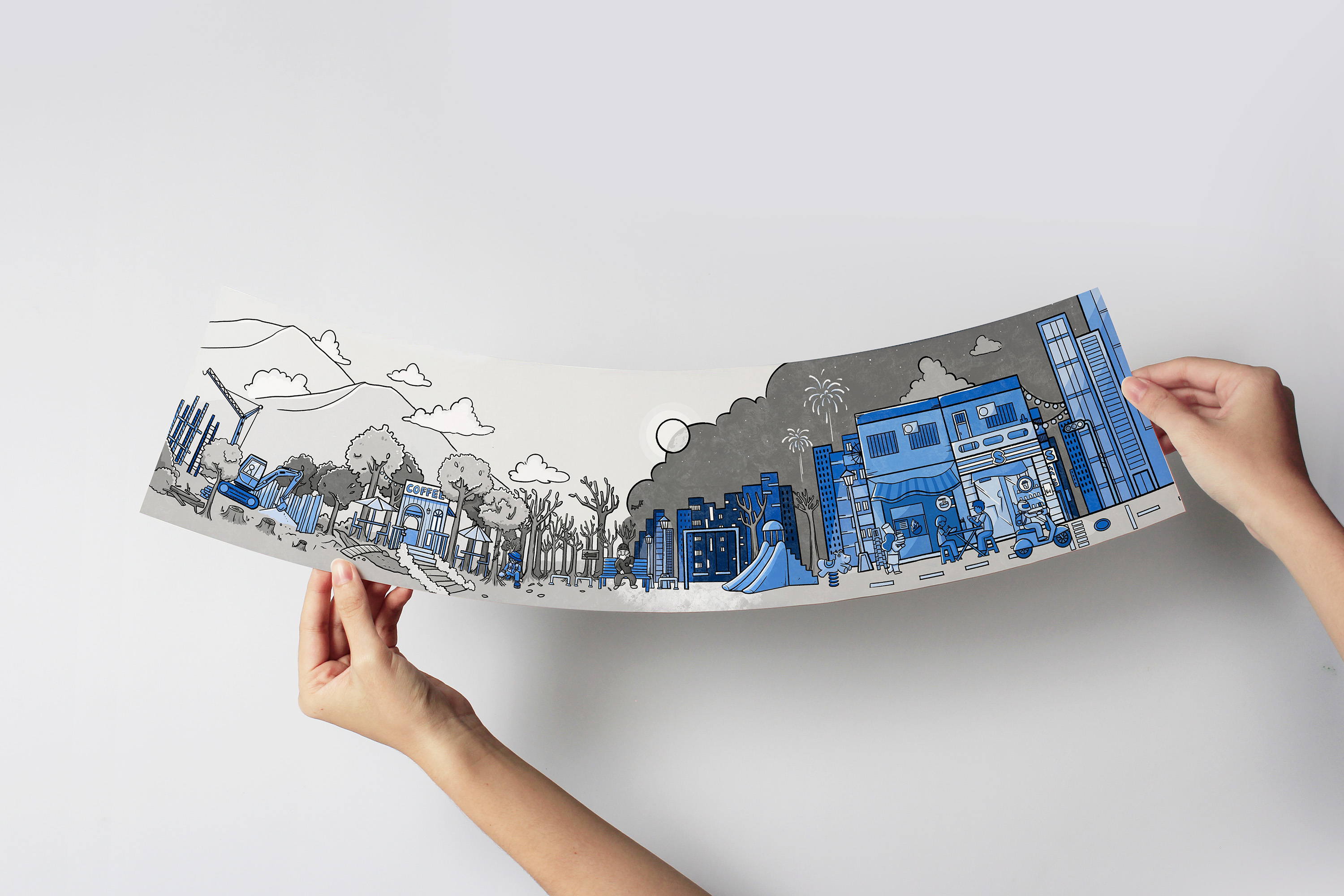
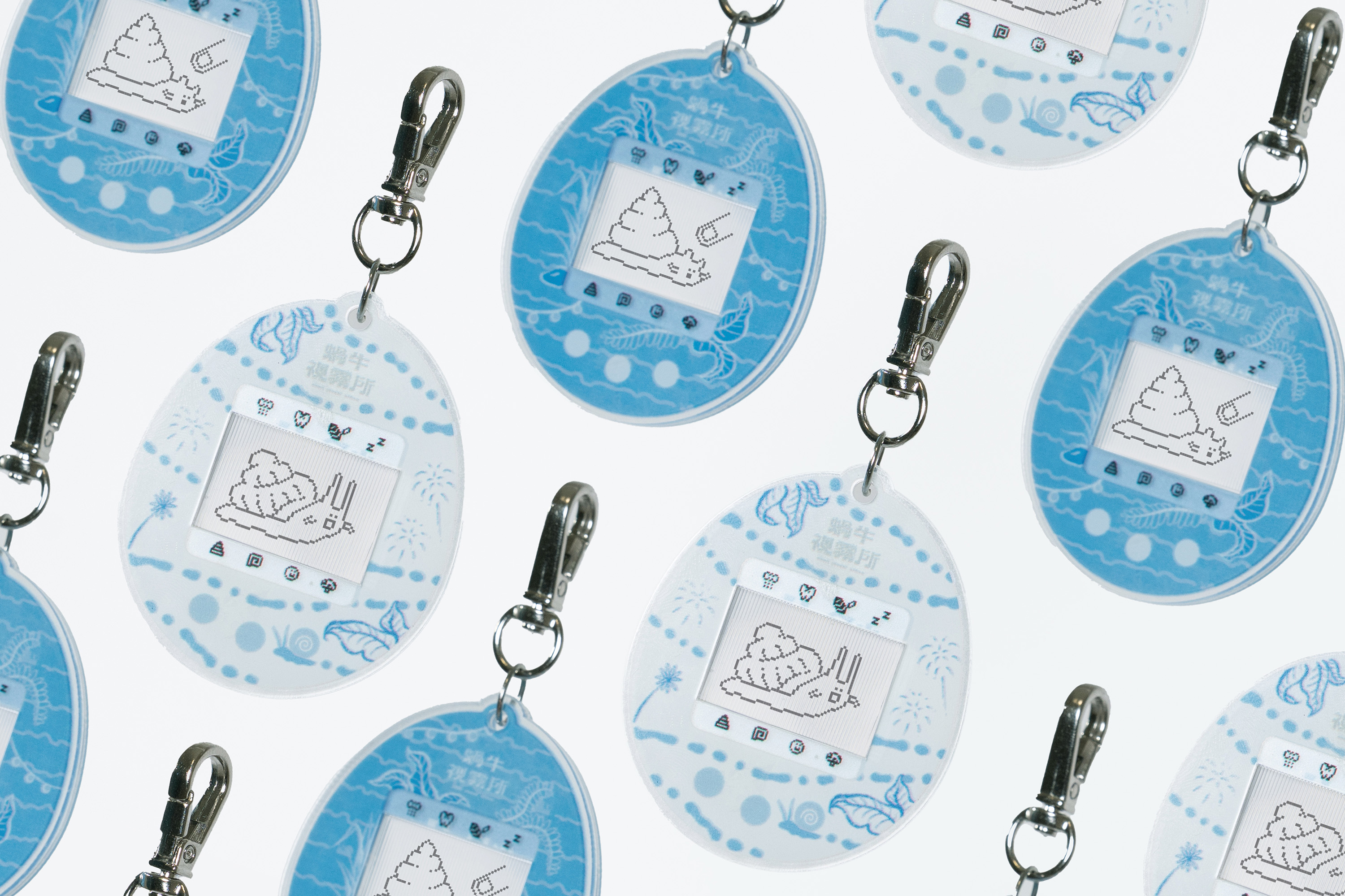
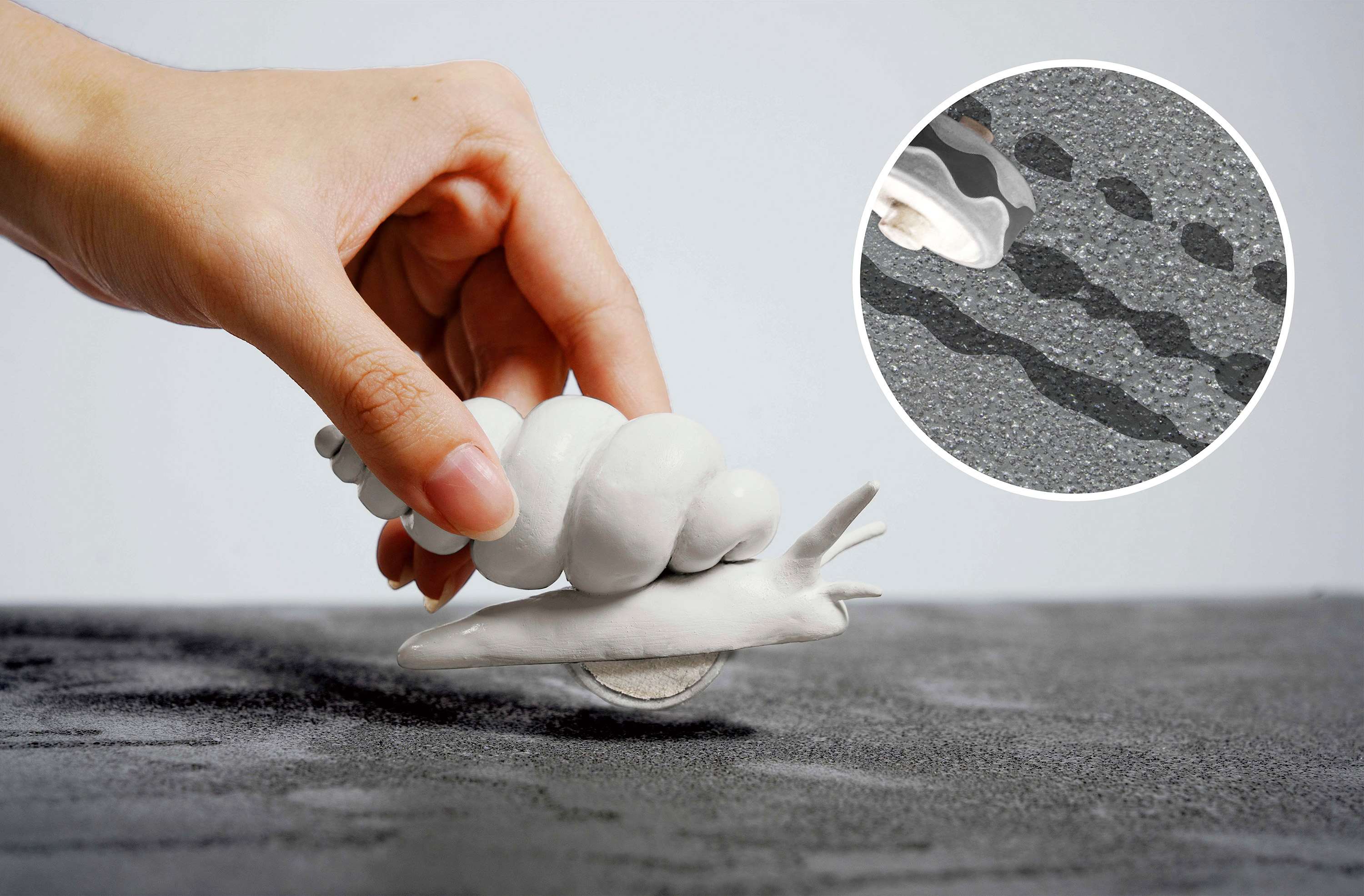
因此,本專題以蝸牛為核心,透過視角轉換探討棲地破壞與環境變遷;主視覺運用魚眼效果與放射構圖呈現人類俯視與蝸牛仰視的差異,並結合光柵卡互動設計,觀眾透過站立或蹲下即可切換視角;當蹲下轉換為蝸牛視角時,將浮現藍色破壞區域。本專題也延伸設計生態價值卡,透過文字與插畫說明蝸牛在食物鏈、土壤健康、分解作用、生物多樣性與生態指標中的角色,強調其在生態系中的關鍵地位。以及長型海報整理全球與台灣陸生蝸牛物種數量與分布,並以蝸牛血液的藍色作為主題色,連結生物特性與視覺語彙,同時呈現不同殼型與其於岩石層、落葉層、林木層及高山層的分布關係,透過局部上光強化層次。另設全景輔助海報整合山林與城市場景,將兩種環境並置,深化觀者對視角切換與棲地破壞關係的理解,引導重新思考日常環境與生態之間的連結。
Snail Visual Office
Snail Visual Office shifts human perspective into that of a snail,revealing habitats damaged by our actions. While humans see clearly,we often overlook environmental destruction;snails,though visually limited,are highly sensitive ecological indicators. Through fisheye visuals and lenticular interaction,viewers switch perspectives by standing or squatting. Blue damaged areas appear in the snail’s view,prompting reflection on habitat loss and our relationship with nature.This topic also features numerous peripheral designs,such as eco-value cards,banner panoramic posters,and long posters,which include snail blood in blue,snail in the food chain,soil health,decomposition,and biodiversity.
國立雲林科技大學 視覺傳達設計系
(四年級)
陳O柔
國立雲林科技大學 視覺傳達設計系
(四年級)
陳O穎
國立雲林科技大學 視覺傳達設計系
(四年級) 指導老師 陳O如
林O州
廖O忠