嬰兒吞嚥訓練奶嘴
NeoPulse Pacifier
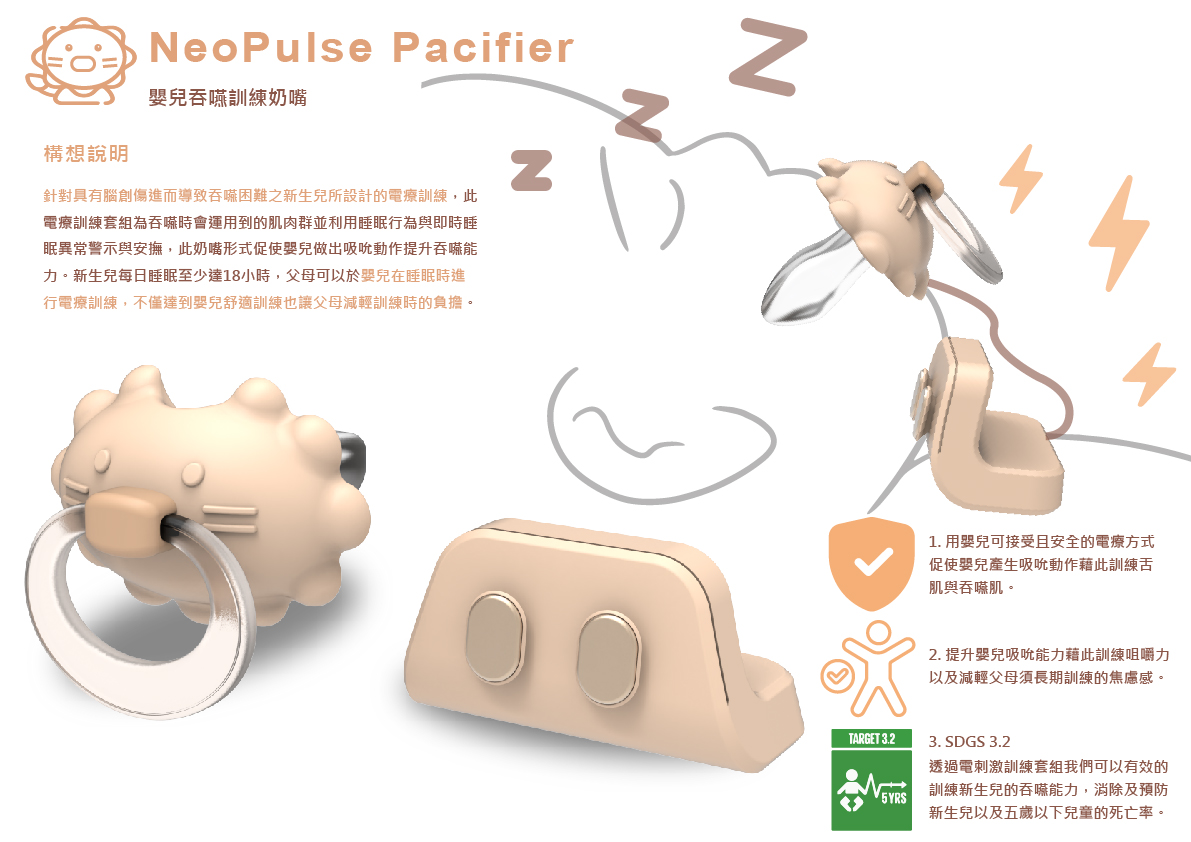
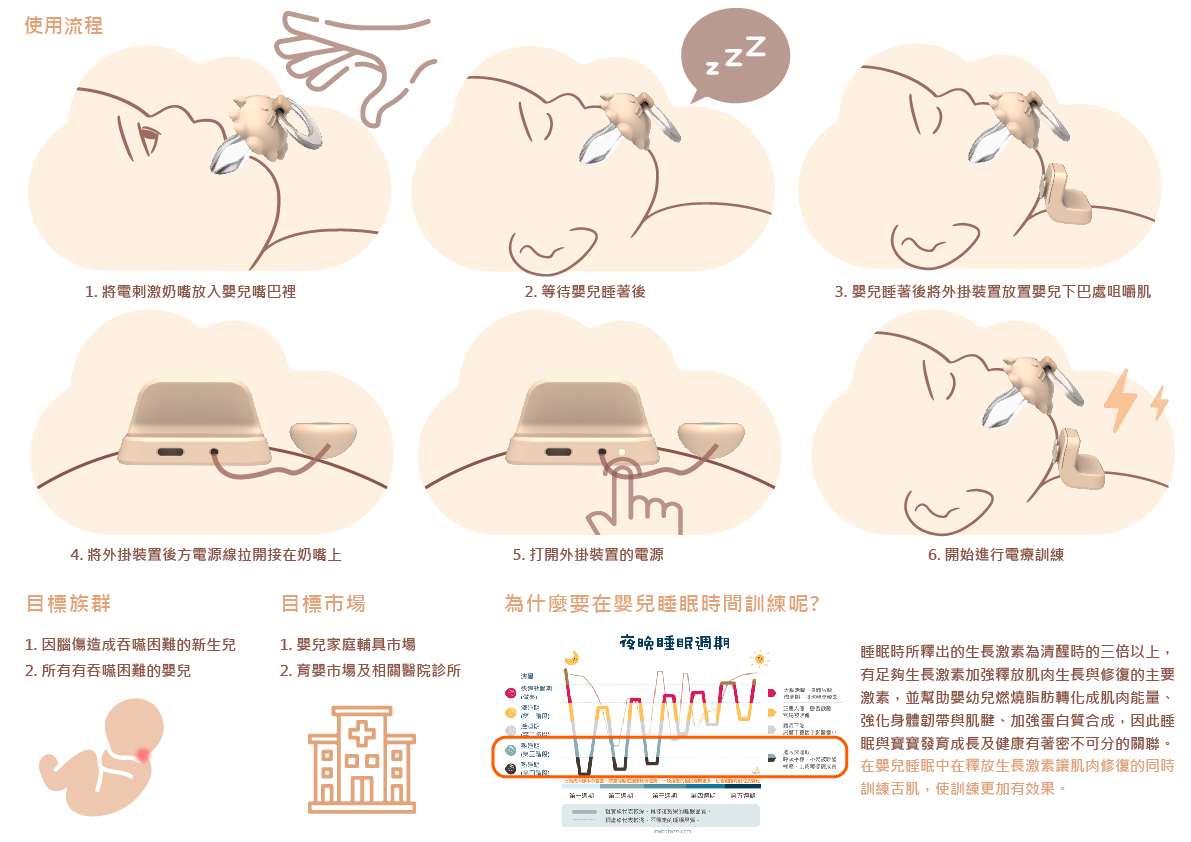
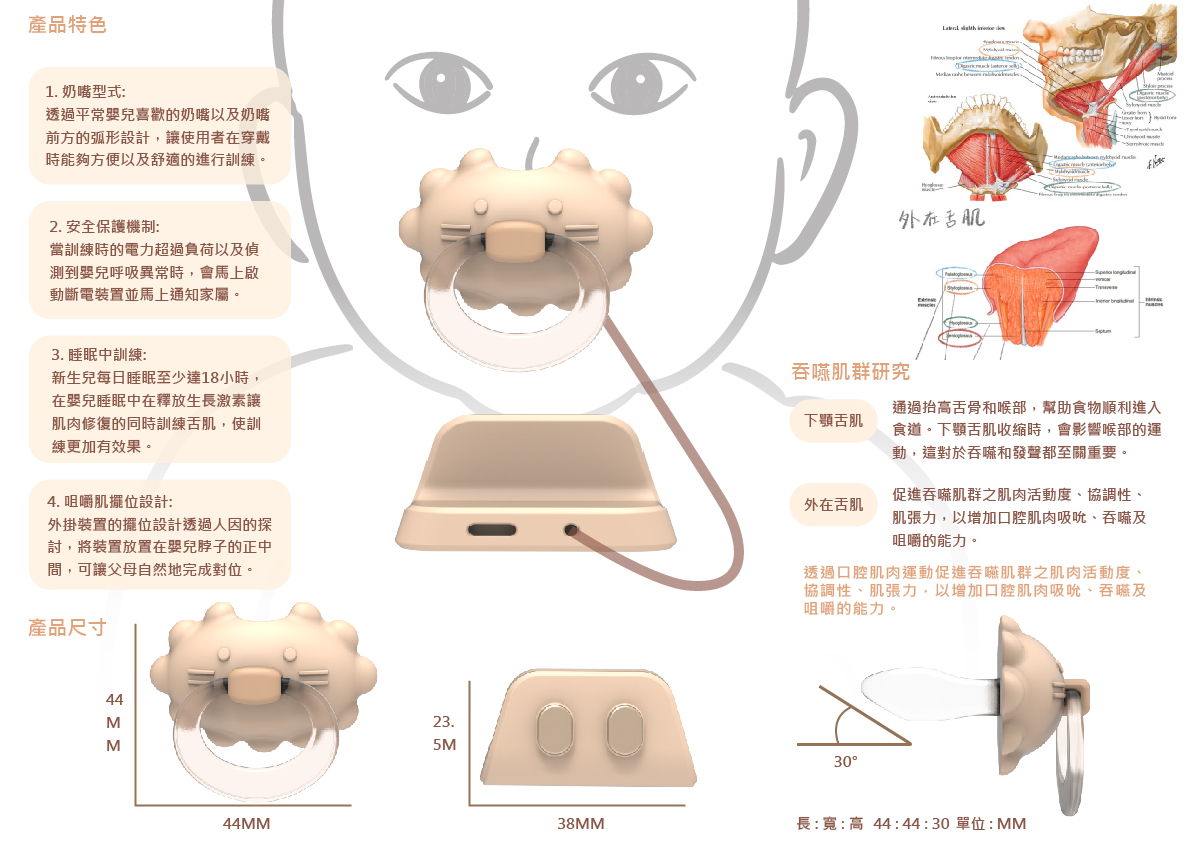
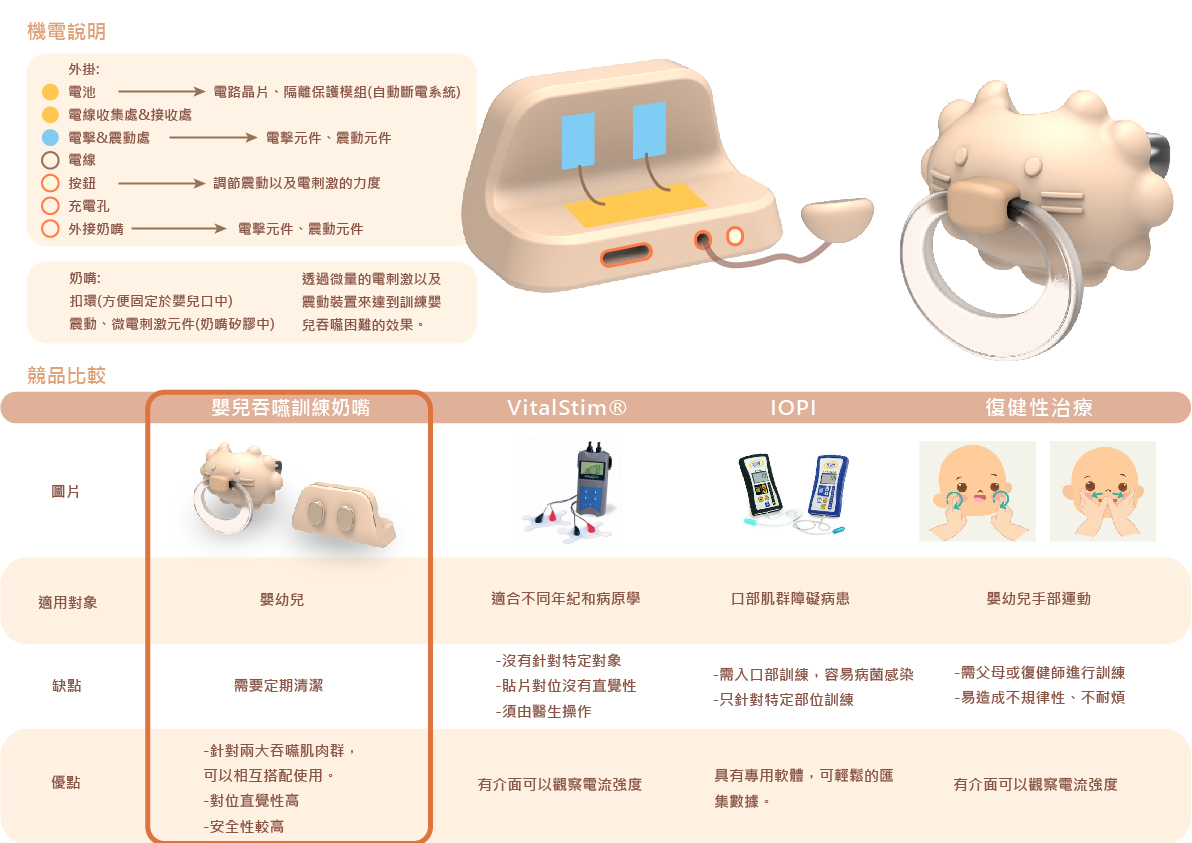
此為針對腦創傷導致吞嚥困難的新生兒設計的電療訓練產品,透過奶嘴引導嬰兒吸吮以訓練吞嚥肌群;並利用感測器紀錄吸吮與睡眠節奏,以利嬰兒睡眠時電療刺激吞嚥相關肌群。
數據顯示:
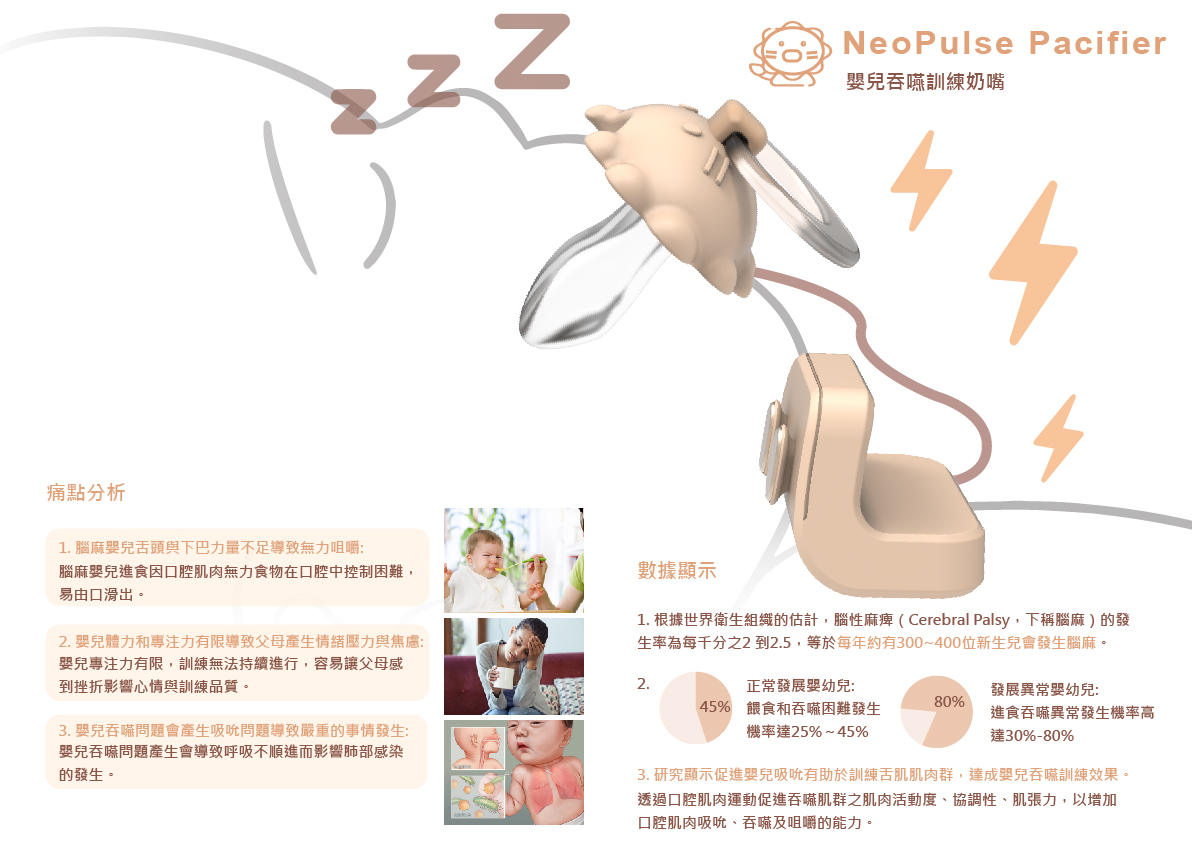
1. 根據世界衛生組織的估計,腦性麻痺(Cerebral Palsy,下稱腦麻)的發生率為每千分之2 到2.5,等於每年約有300~400位新生兒會發生腦麻。
2. 研究顯示促進嬰兒吸吮有助於訓練舌肌肌肉群,達成嬰兒吞嚥訓練效果。
透過口腔肌肉運動促進吞嚥肌群之肌肉活動度、協調性、肌張力,以增加口腔肌肉吸吮、吞嚥及咀嚼的能力。
痛點分析:
1. 腦麻嬰兒舌頭與下巴力量不足導致無力咀嚼:
腦麻嬰兒進食因口腔肌肉無力食物在口腔中控制困難,易由口滑出。
2. 嬰兒專注力有限,訓練無法持續進行,容易讓父母感到挫折影響心情與訓練品質。
3. 嬰兒吞嚥問題產生會導致呼吸不順進而影響肺部感染的發生。
價值:
1. 用嬰兒可接受且安全的電療方式使嬰兒產生吸吮動作藉此訓練舌肌與吞嚥肌。
2. 提升嬰兒吸吮能力藉此訓練咀嚼力以及減輕父母須長期訓練的焦慮感。
3. 有效的訓練新生兒的吞嚥能力,消除及預防新生兒以及五歲以下兒童的死亡率。
NeoPulse Pacifier
This is an electrotherapy training device designed for newborns with swallowing difficulties caused by brain injury. A pacifier is used to guide the infant’s sucking behavior to train the swallowing muscles. Sensors record sucking patterns and sleep rhythms, enabling targeted electrical stimulation of the swallowing-related muscles during sleep.
Data:
1. Cerebral palsy affects 2–2.5 per 1,000 newborns (~300–400/year).
2. Sucking exercises train tongue and swallowing muscles, improving oral coordination and chewing.
Pain Points:
1. Weak tongue/jaw muscles make chewing difficult.
2. Limited infant attention causes parental stress.
3. Swallowing issues can lead to breathing problems and infections.
Value:
1. Safe electrical stimulation promotes sucking and trains swallowing muscles.
2. Enhances chewing and reduces parental anxiety.
3. Supports safe swallowing, helping prevent serious complications in infants and young children.
明志科技大學 工業設計系
(四年級)
羅O荺
國立臺北教育大學 藝術與造形設計學系
(四年級) 指導老師 李O朮