(彡): 新規訓之下的毛髮
(彡): The Hair of The New Discipline
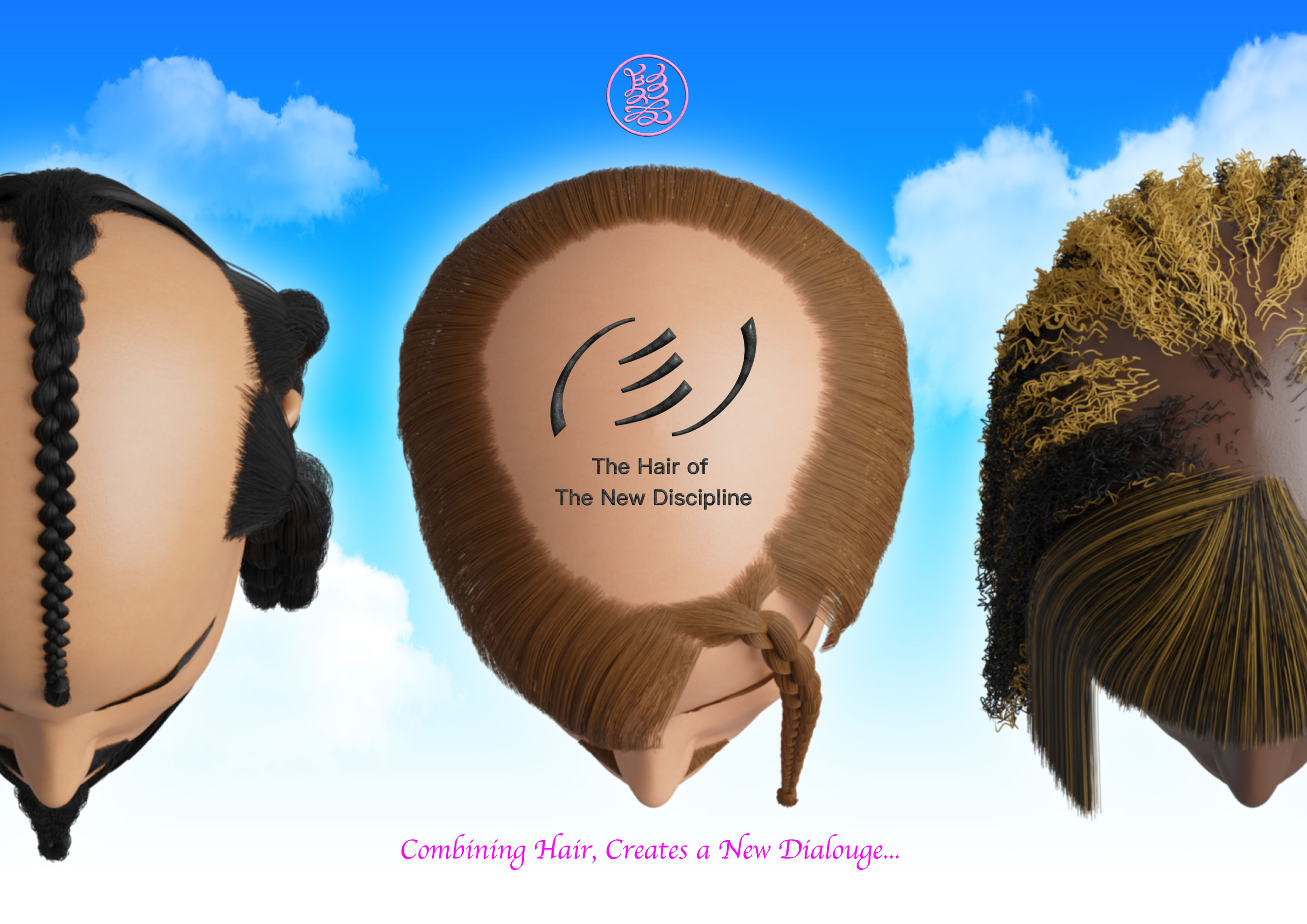
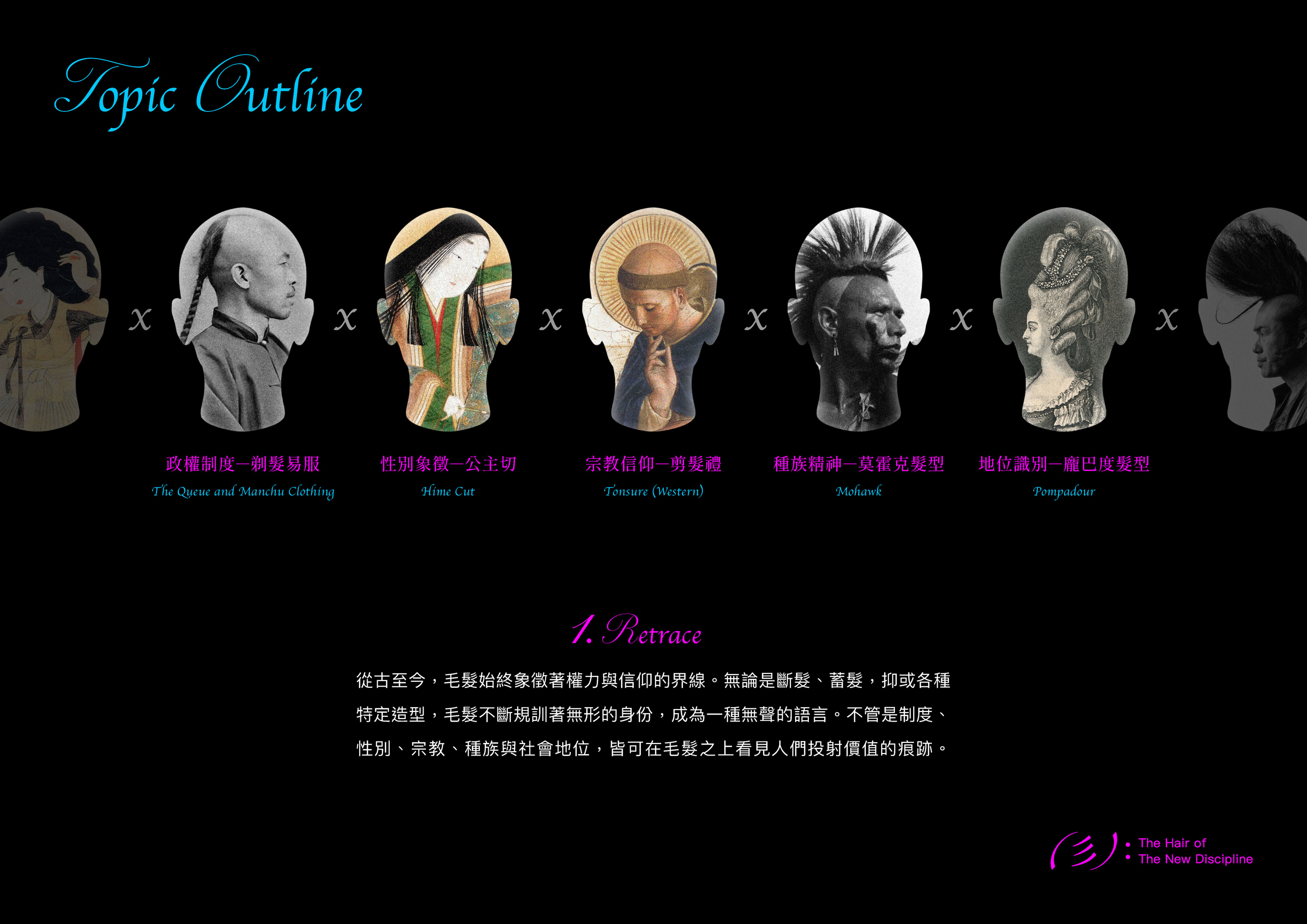
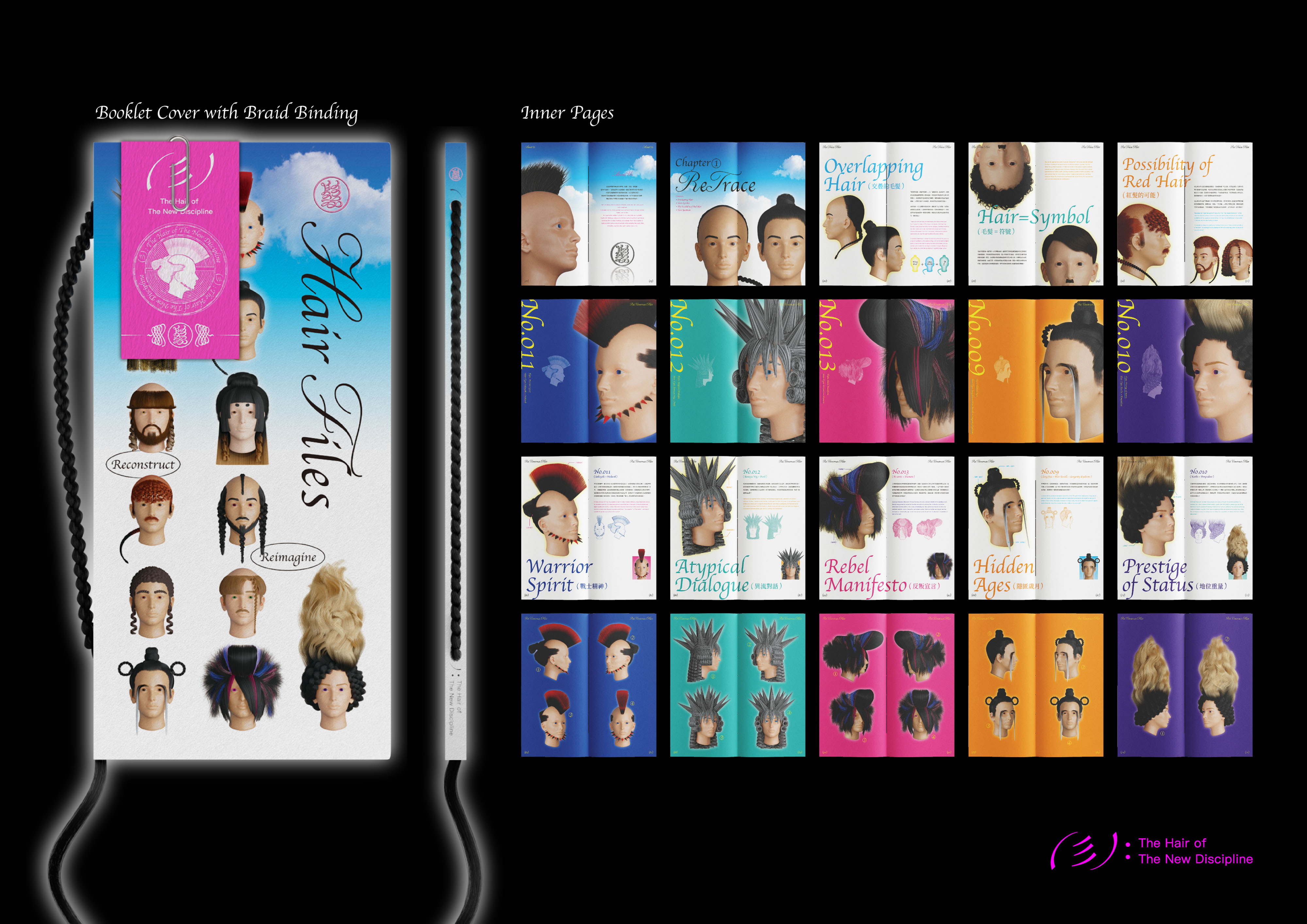
從古至今,毛髮曾是權力與信仰的界線:被剪、被留、被規訓。滿清入關時的「剃髮易服」確立了政治的絕對服從;中世紀天主教修士的「剪髮禮」則透過把頭頂剃光將靈魂交付給神權;日治時期對台灣所實行的「髮禁」為用於辨識的集體標誌。
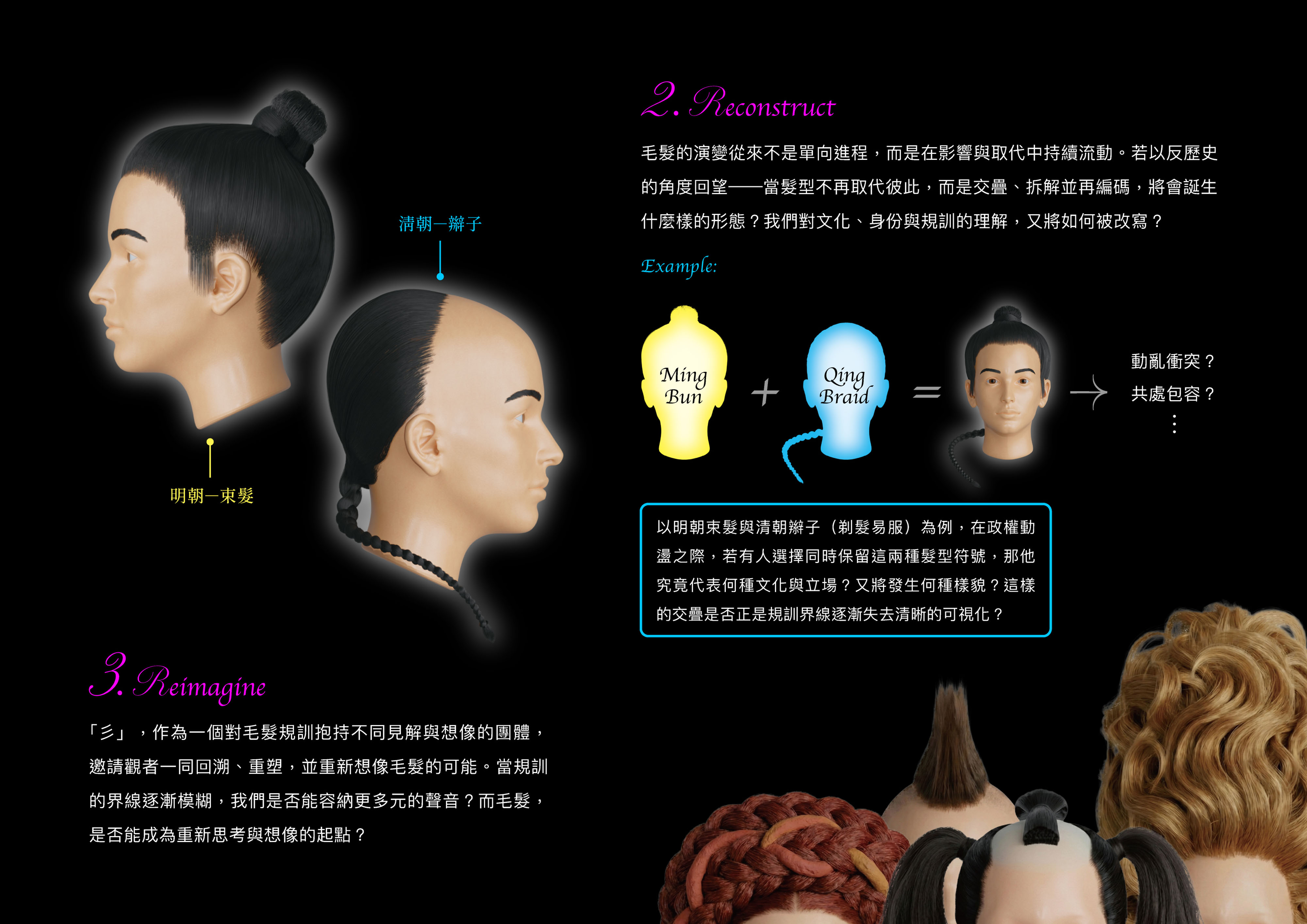
毛髮作為承載文化與規訓的載體,能否在彼此的兼容中開啟新的對話:包容、衝突、反思?以明朝束髮與清朝辮子(剃髮易服)為例,在政權動盪之際,若有人選擇同時保留這兩種髮型符號,這樣的交疊是否正是規訓界線逐漸失去清晰的可視化?
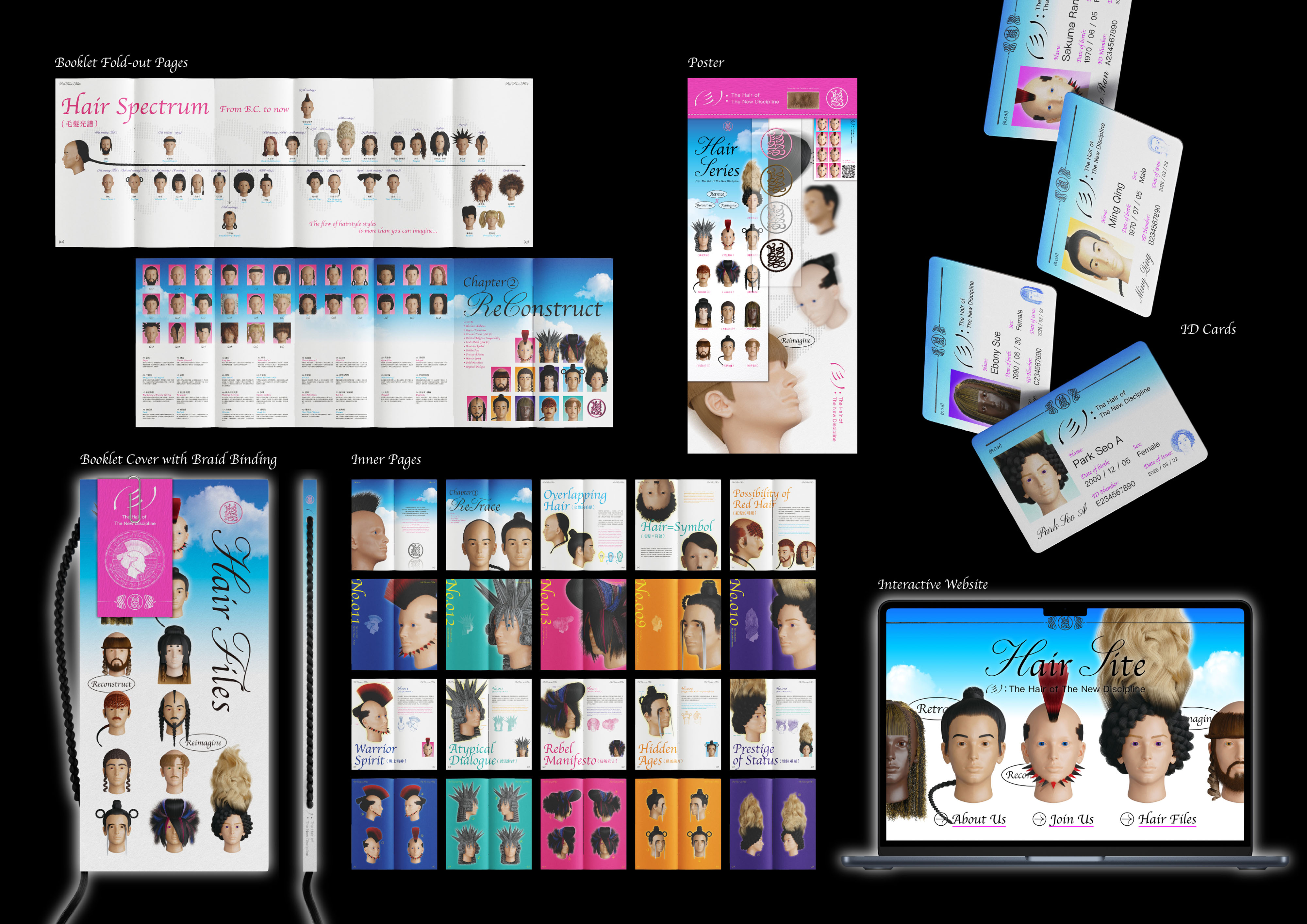
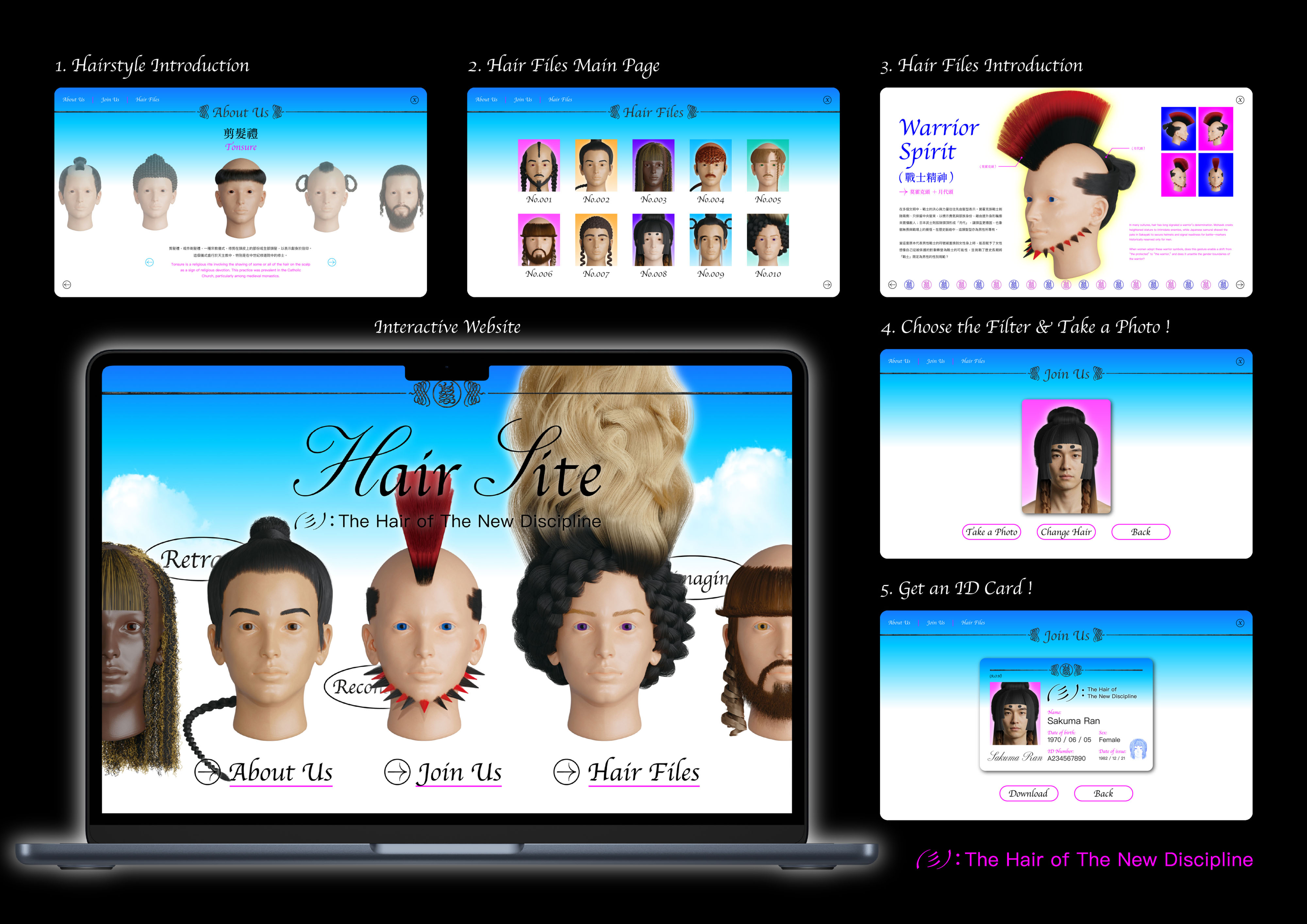
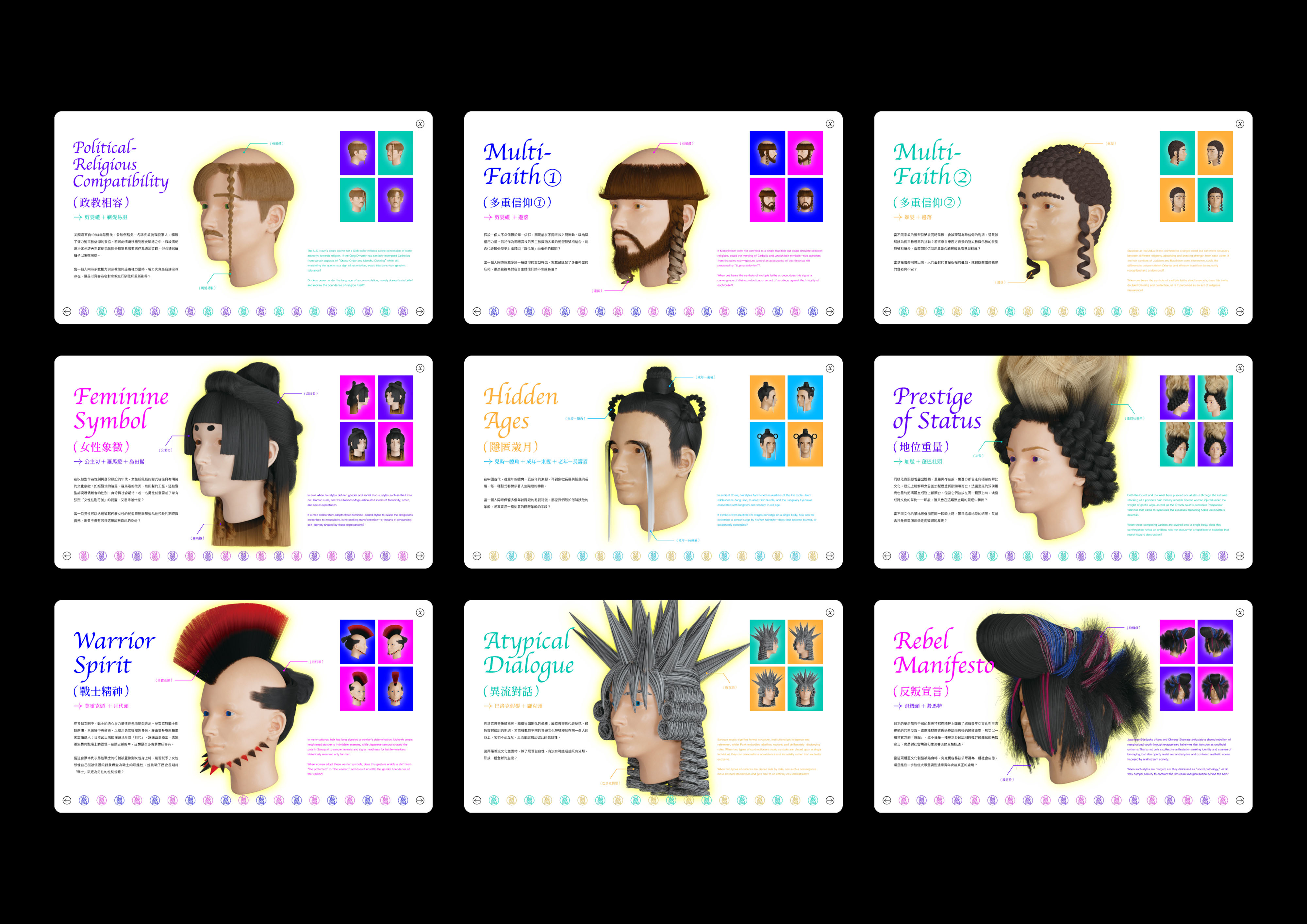
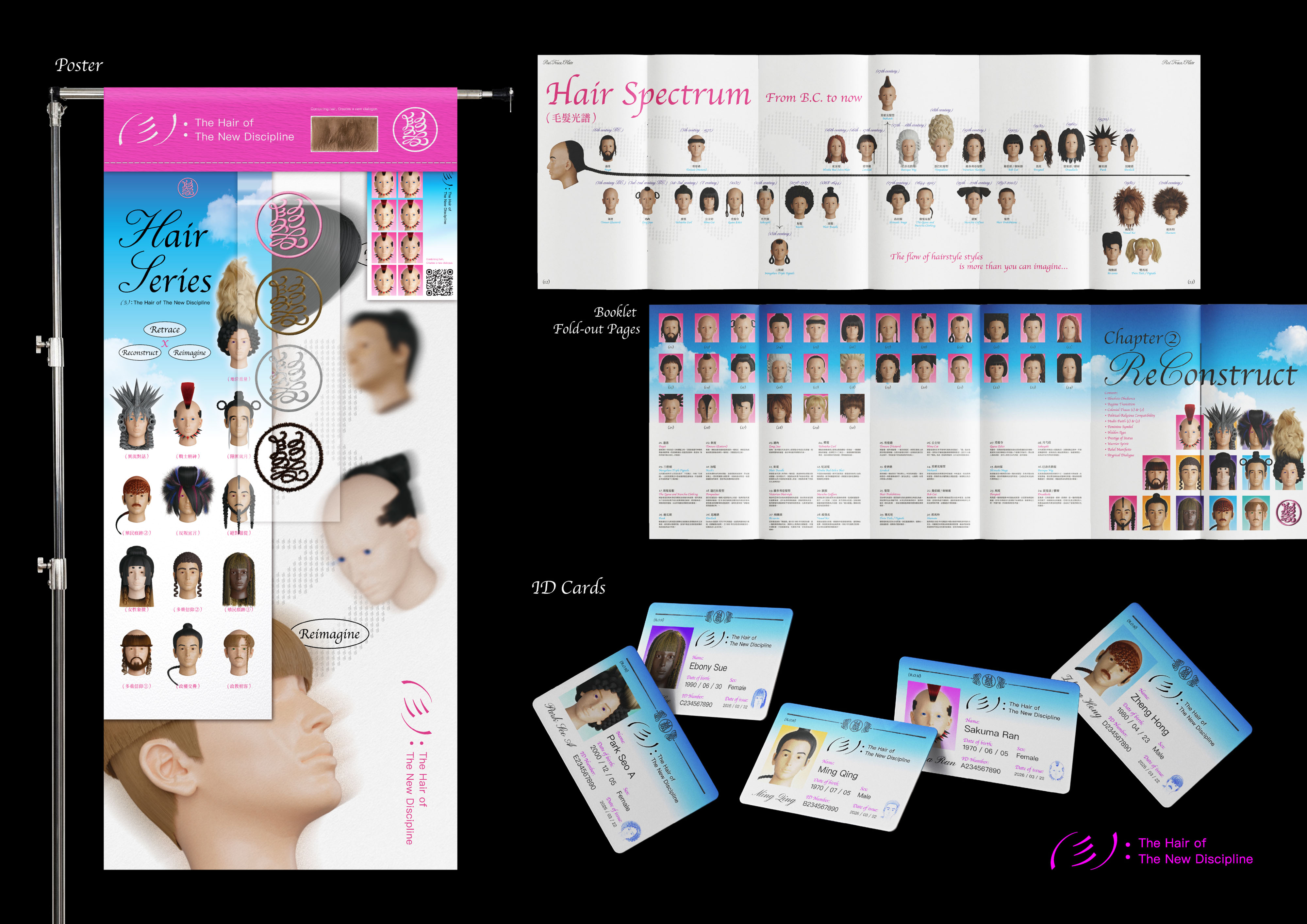
「彡」,作為一個對毛髮規訓抱持不同見解與想像的團體,邀請觀者一同回溯、重塑,並重新想像毛髮的可能。當規訓的界線逐漸模糊,我們是否能容納更多元的聲音?而毛髮,是否能成為重新思考與想像的起點?本專案透過蒐集不同時間線及地域的毛髮資料,以反歷史視角將不同髮型文化共融,結合出數顆新型態髮型並書寫其故事及對話,最終探討毛髮於新規訓之下的可能性。
(彡): The Hair of The New Discipline
Hair used to be a boundary between power and faith: cut, grown, and disciplined. In the Qing Dynasty, the enforced queue demanded visible obedience. Medieval Catholic tonsure symbolized spiritual surrender, while Japanese colonial hair prohibitions in Taiwan served as tools of social control.
As a carrier of culture and discipline, could hair open dialogues of inclusion, conflict, and reflection? When Ming bound hair and the Qing queue coexist on one body, do they blur authority?
“彡” (shān) explores alternative perspectives on hair regulation, inviting audiences to reimagine hair as a space for dialogue. As boundaries dissolve, can thought embrace plurality? Can hair become a starting point for rethinking identity and the future? This project gathers hair data across timelines and regions, merging diverse hairstyling cultures through an alternative historical perspective. It generates hybrid hairstyles with stories, exploring the possibilities of hair under new forms of discipline.
國立臺灣科技大學 設計系
(五年級)
吳O遠
國立臺灣科技大學 設計系
(五年級) 指導老師 廖O豪