視野的重構
Reconstruction of Vision.
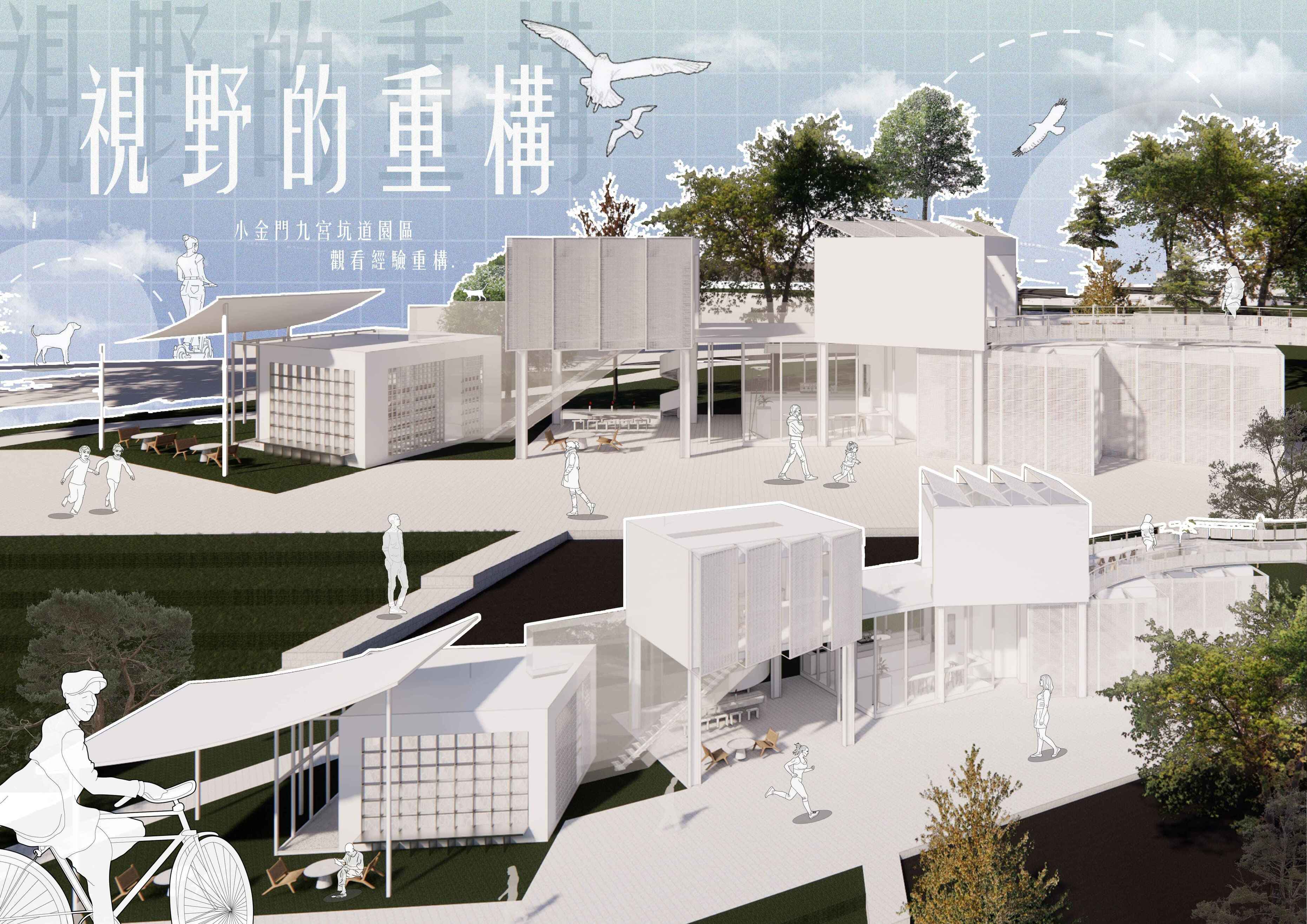
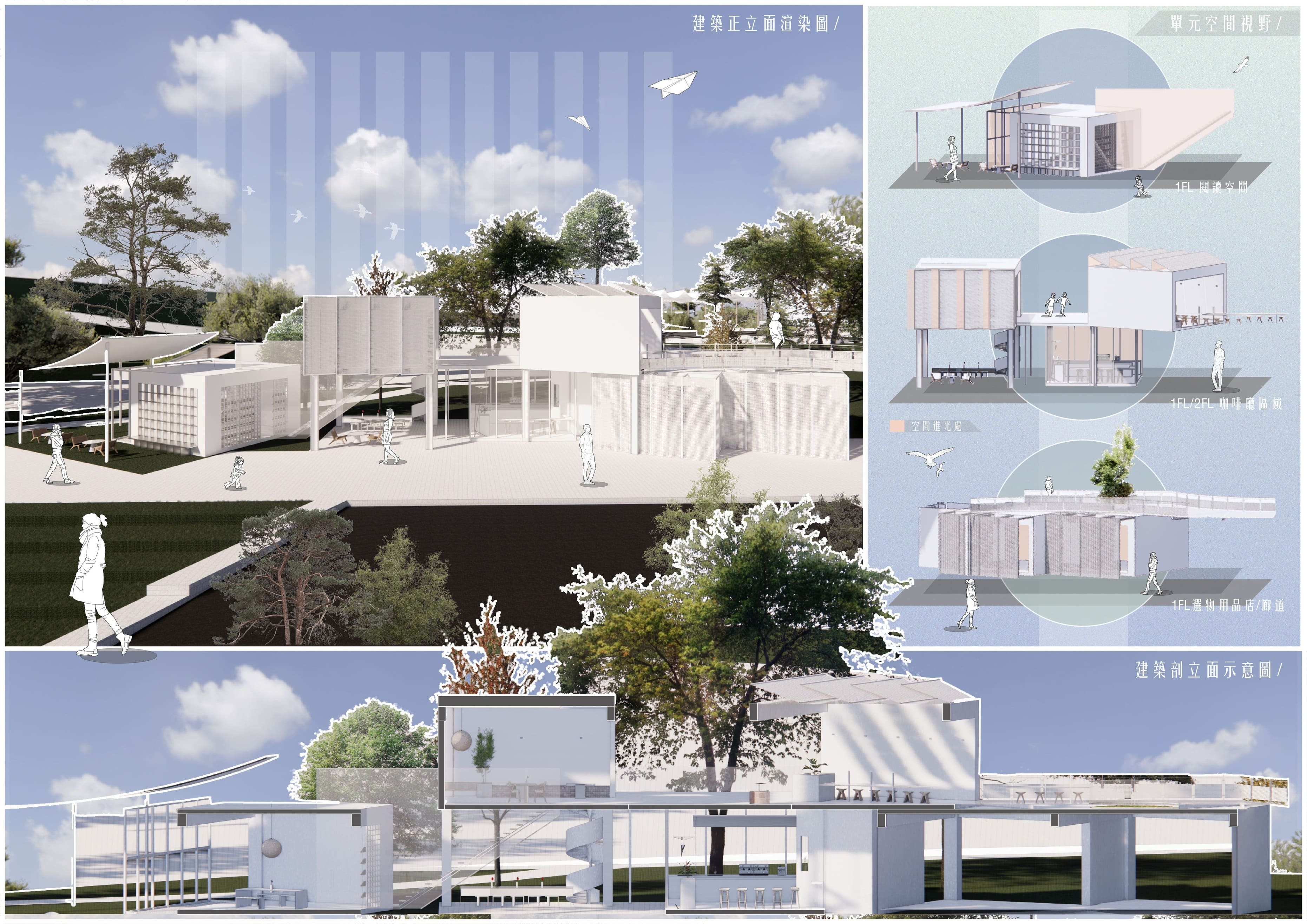
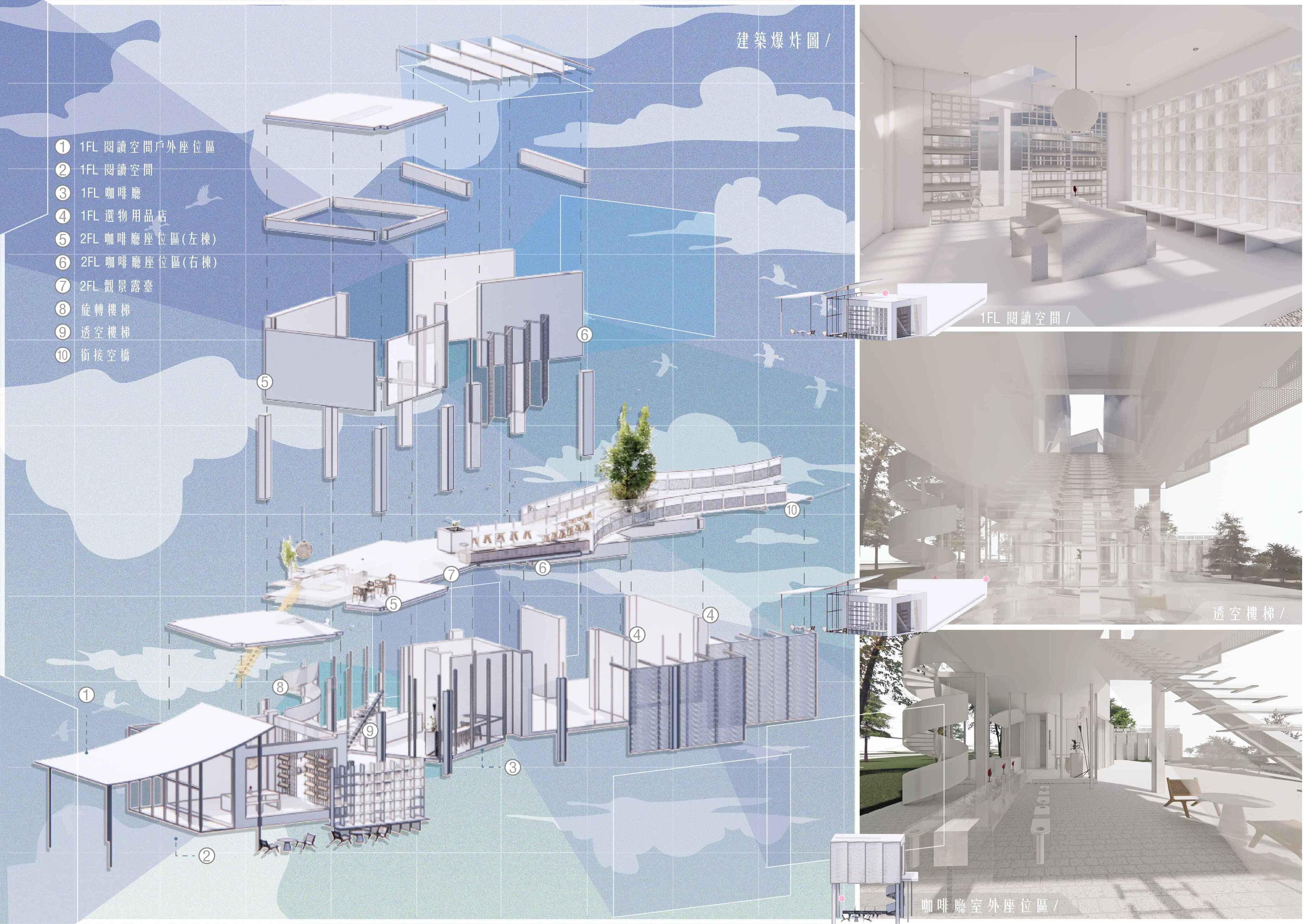
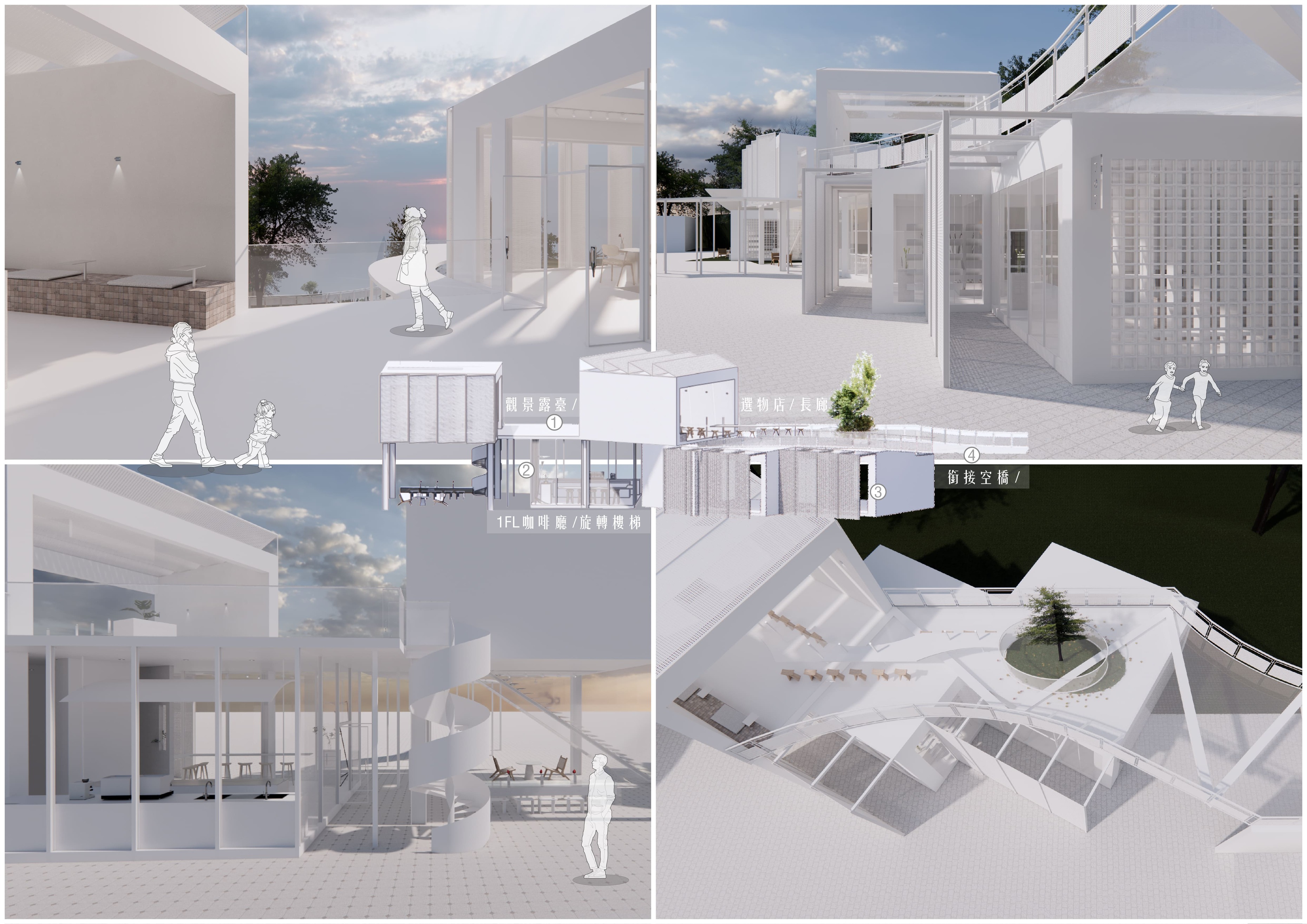
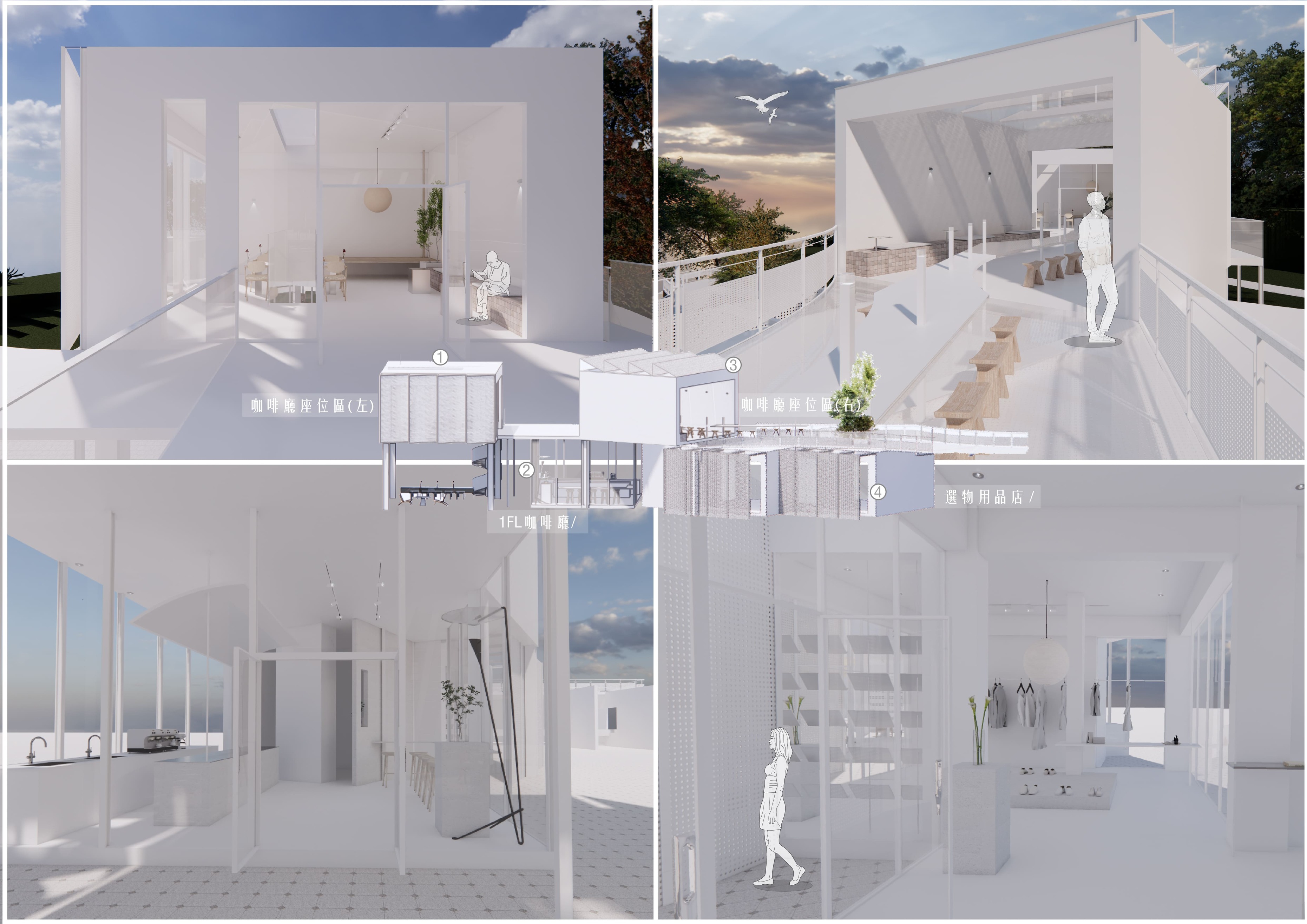
透過對九宮坑道外既有建築(原園區管理處)的改造,承接離開坑道後被釋放的觀看經驗,以建築為媒介重新組織視野架構。
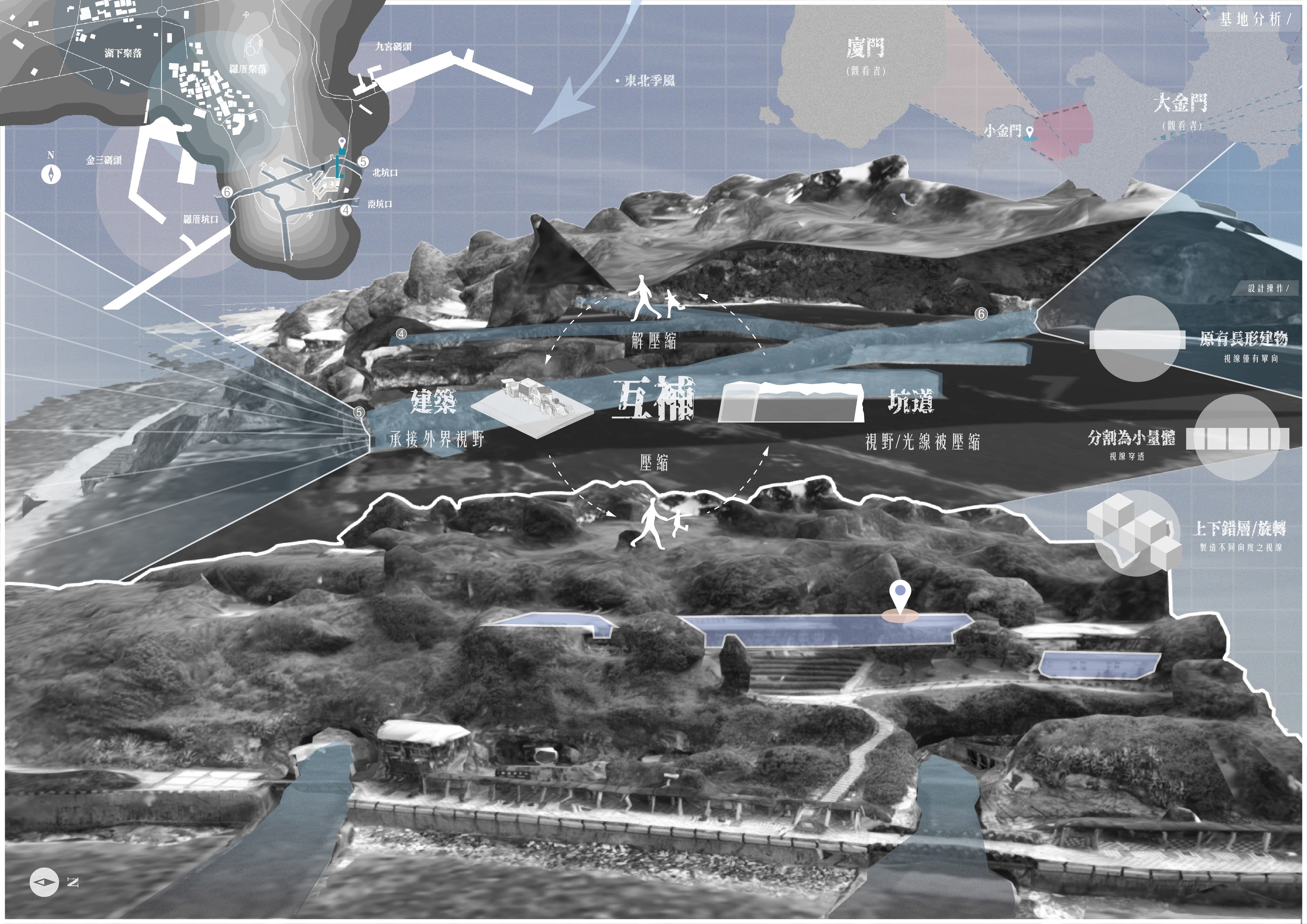
九宮坑道狹長且封閉的空間,使人的視線被壓縮為單一方向,觀看只能沿著坑道軸線前行,當人離開坑道後,受限的視線瞬間面對開闊的地景與海域,多向視野同時展開,觀看狀態由壓縮轉為開放。
本設計並非複製坑道形式,而是回應其所形成的觀看條件,將地景中外放的視野整合進空間中,使建築成為銜接壓縮與開放視野之間的過渡場域,藉由旋轉錯層的量體、開口配置、動線與光線的引導,使不同方向與層次的視野在同一場域中被重新編排。讓人在行徑建築與往返坑道的過程中,逐步感知視線由單向延伸至多向的轉變,進而意識自身正在觀看,以及觀看方式如何隨空間條件而改變。
Reconstruction of Vision.
By renovating the existing buildings outside the Jiugong Tunnel, the design aims to reorganize the visual landscape by accommodating the expanded views gained upon leaving the tunnel. The narrow, enclosed space of the tunnel compresses the line of sight into a single direction. Upon exiting the tunnel, the limited view is instantly met with expansive views of the landscape and sea, opening up multiple perspectives simultaneously and transforming the viewing experience from compressed to open.
This design integrates the expansive views from the landscape into the space, making the building a transitional area between compressed and open views. Through rotating, staggered volumes, the arrangement of openings, circulation routes, and the guidance of light, different levels of visual perception are rearranged within the same space. This allows people to consciously shift their mode of viewing as they move between the tunnel and the building.