陣。行之間 -文化轉譯的社區共構場域-
Formations. In Between - A Community Space for Cultural Translation -
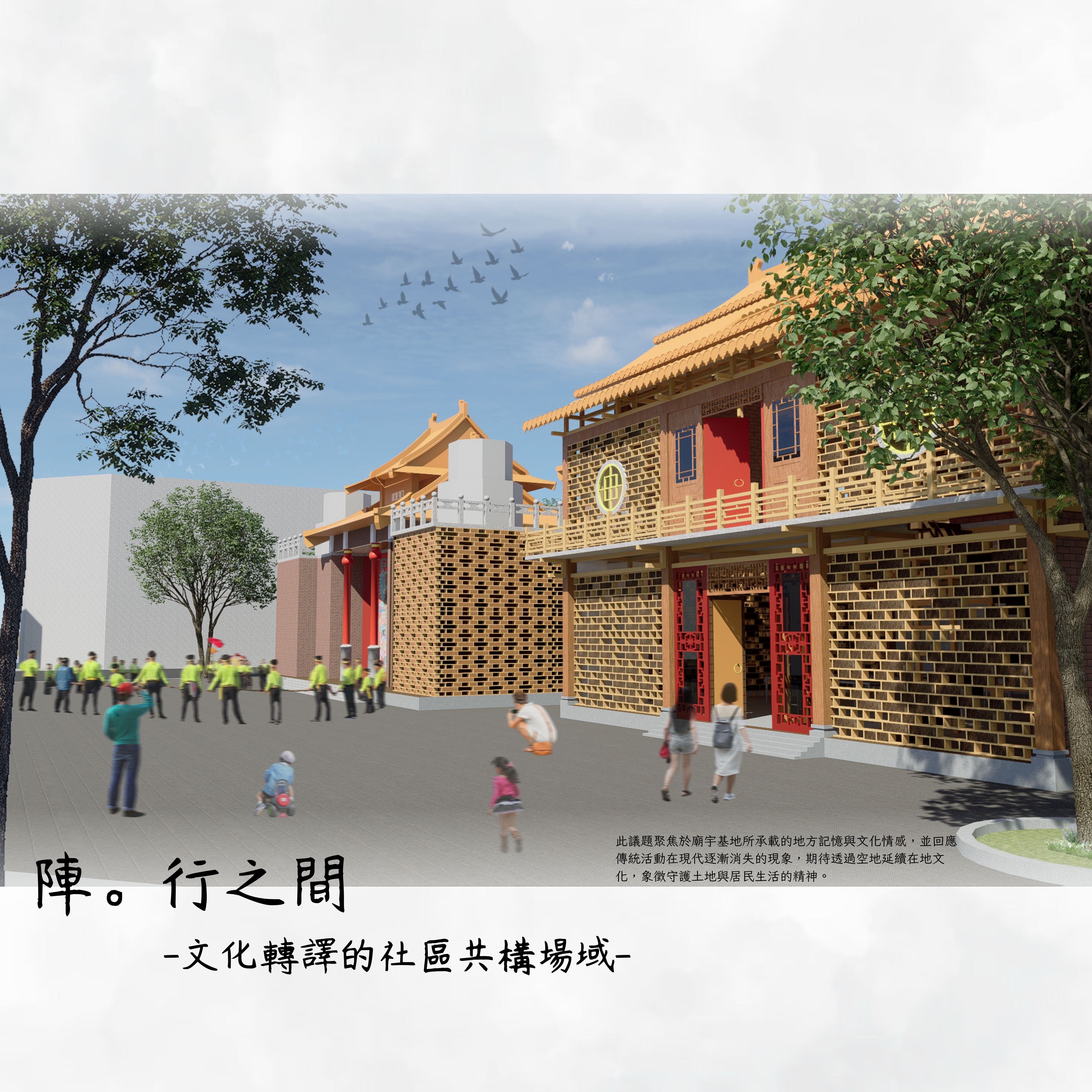
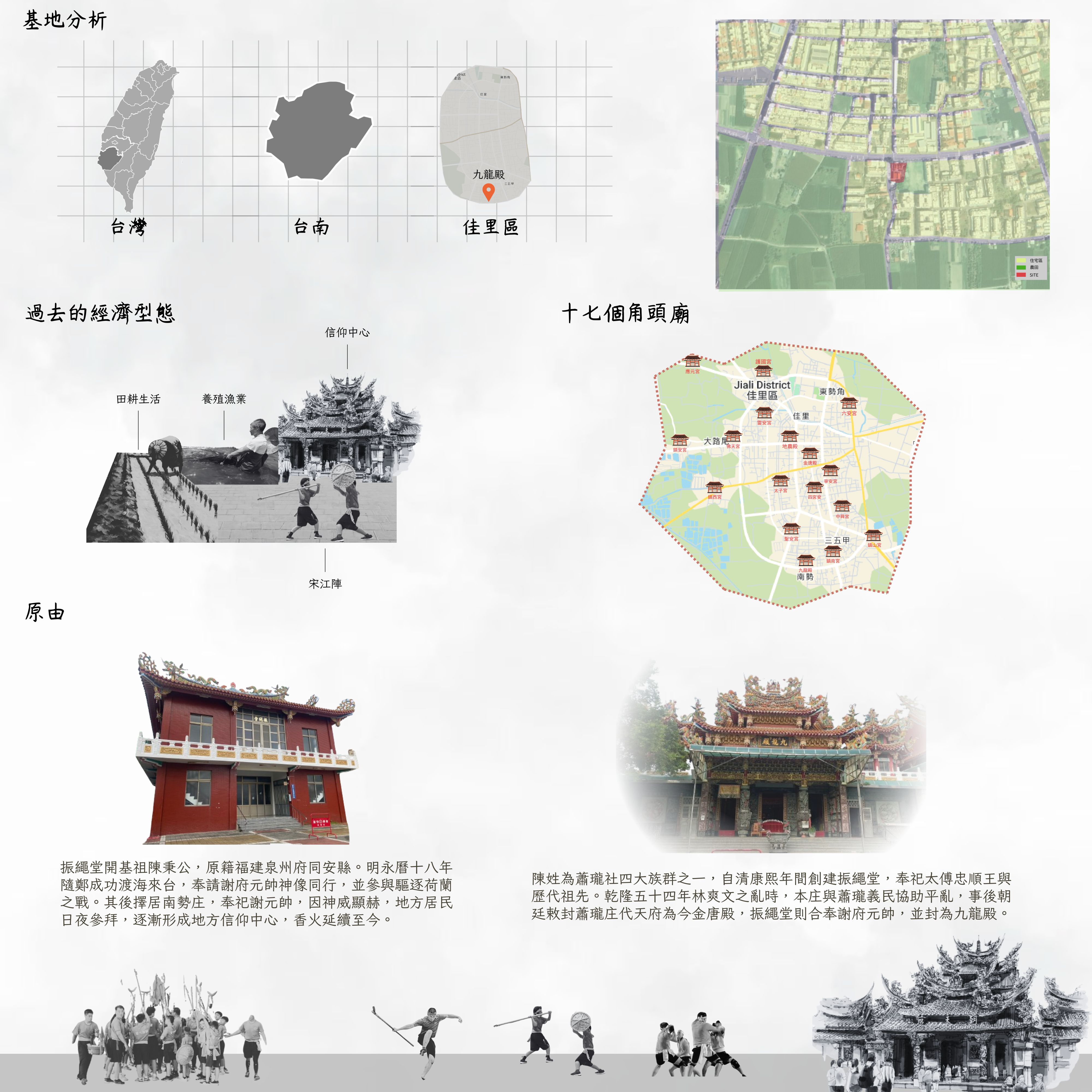
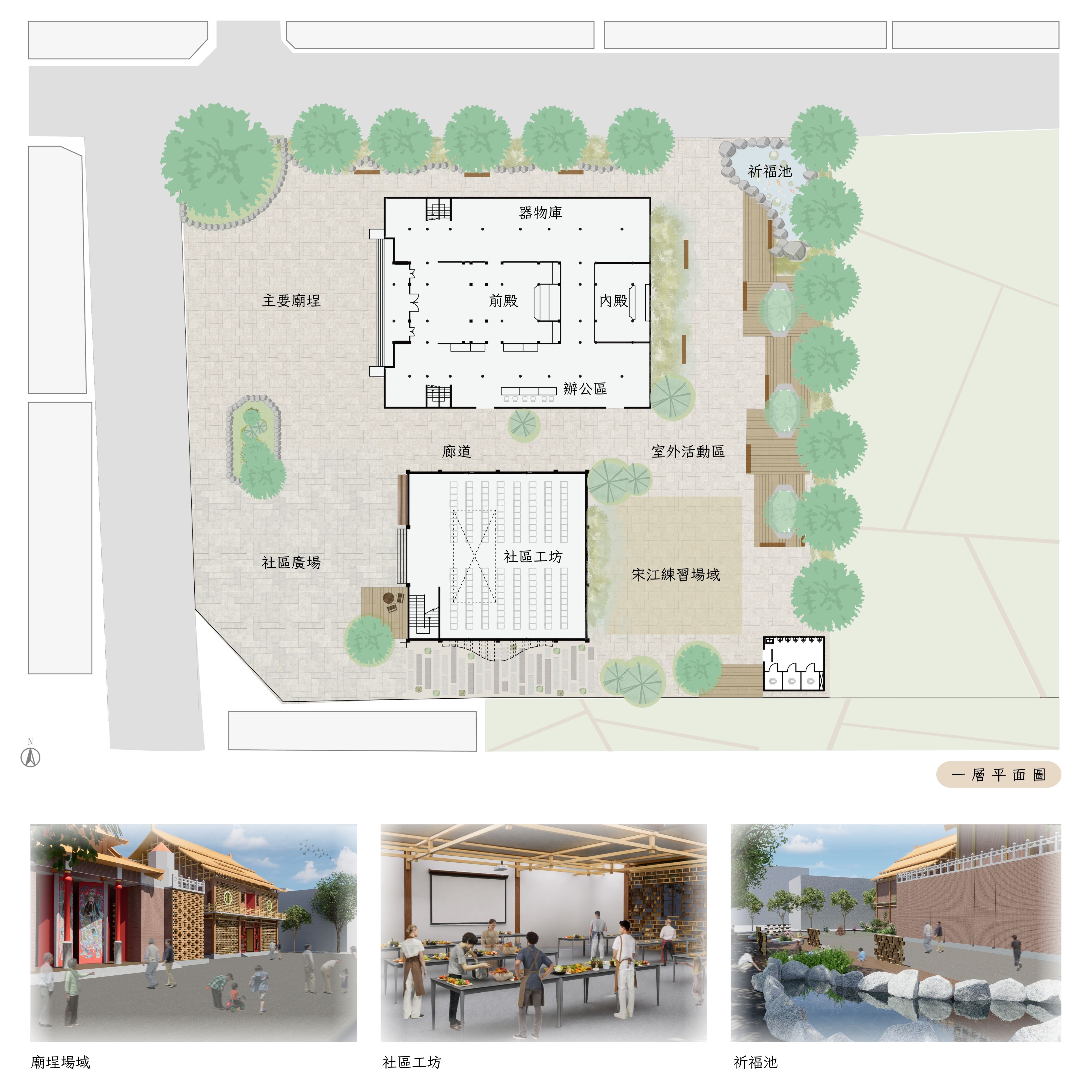
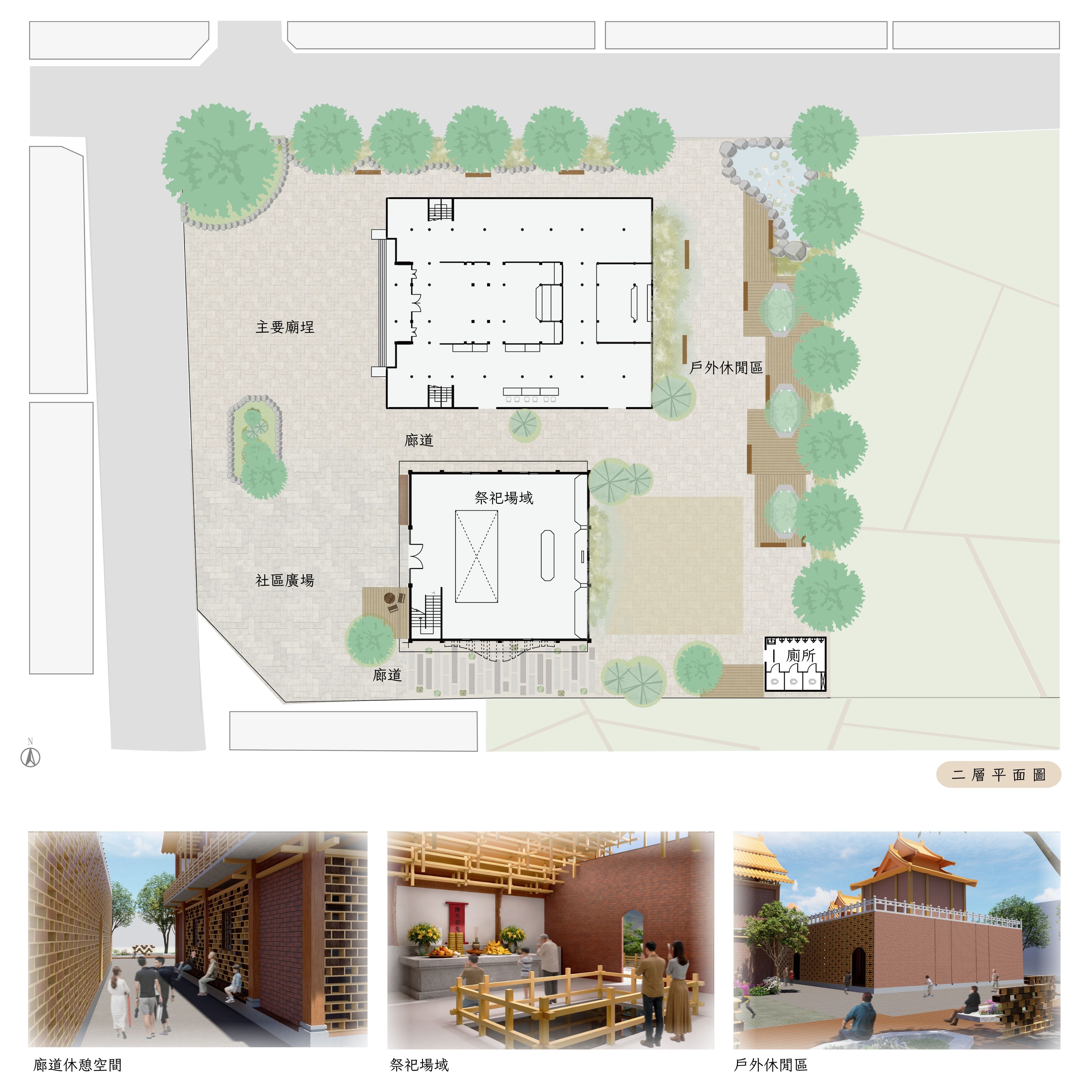
基地中的廟宇空間,不僅是供奉神明的宗教場所,更承載著地方居民長期累積的文化記憶與情感連結,也是民俗活動與傳統儀式的重要載體。然而,隨著世代更替、信仰方式改變與都市化發展,許多依附於廟宇的文化活動正逐漸淡化,地方共同記憶也面臨流失。因此,本設計試圖藉由基地中的一片空地,重新串聯居民、信仰與文化之間的關係,使空間成為延續在地情感與生活記憶的媒介。
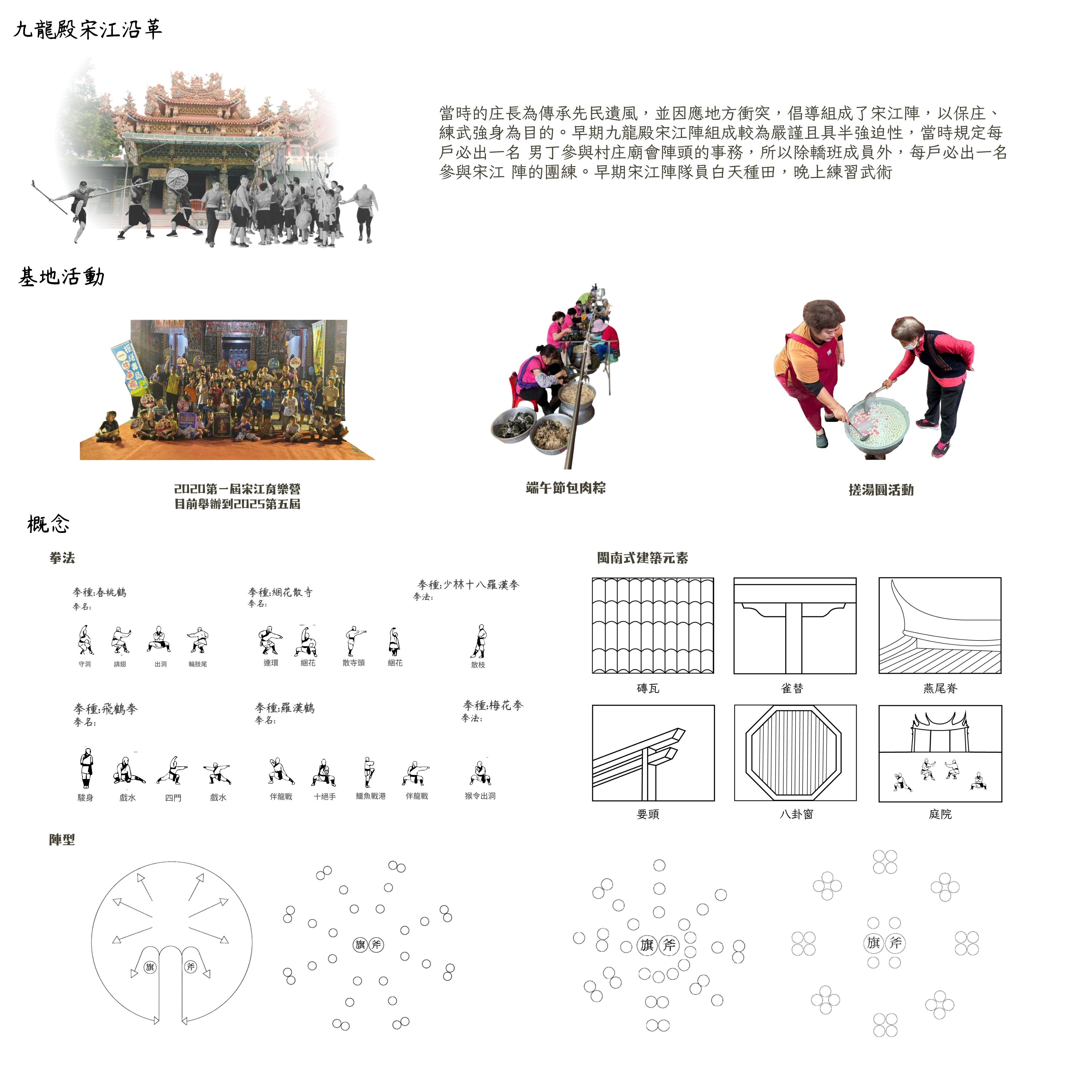
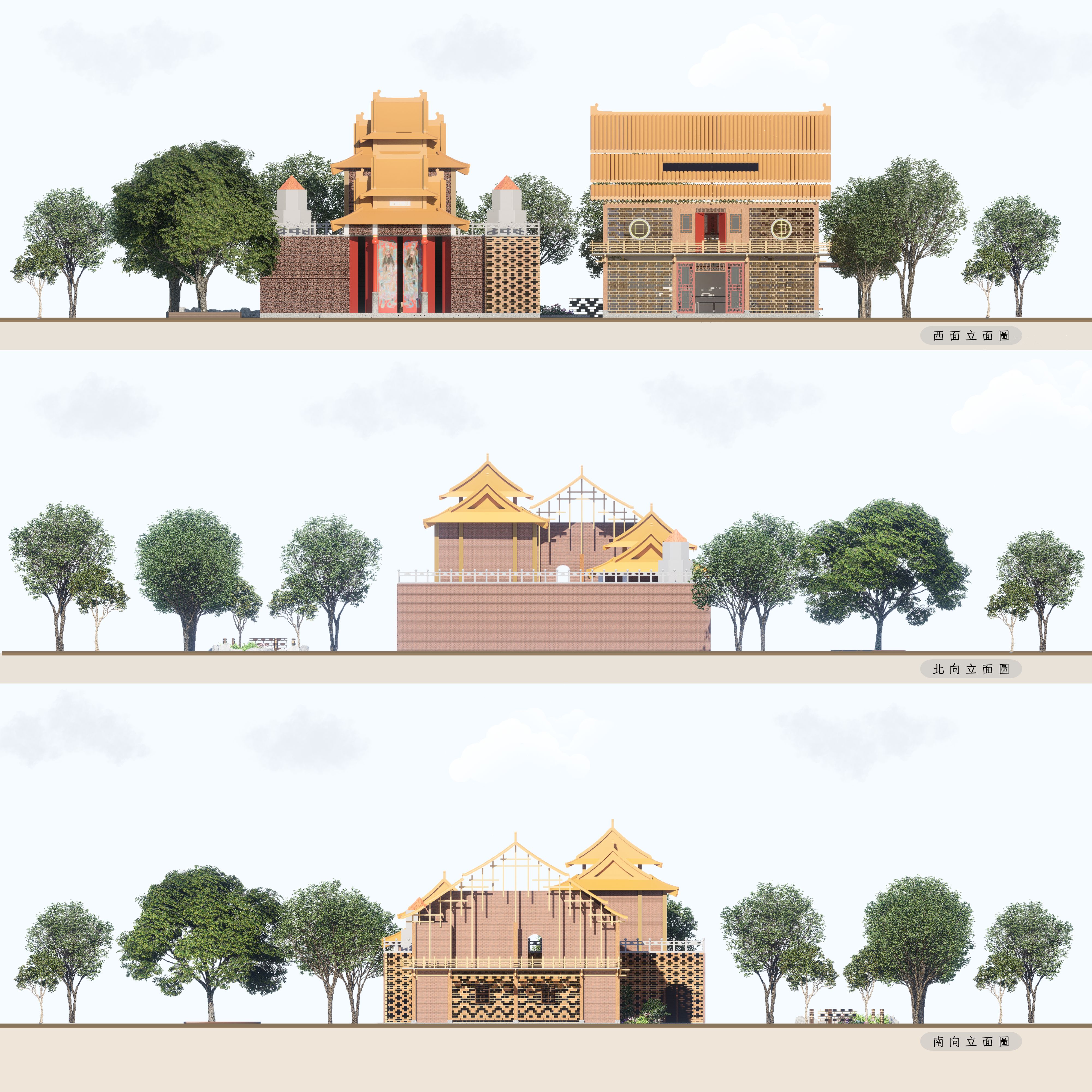
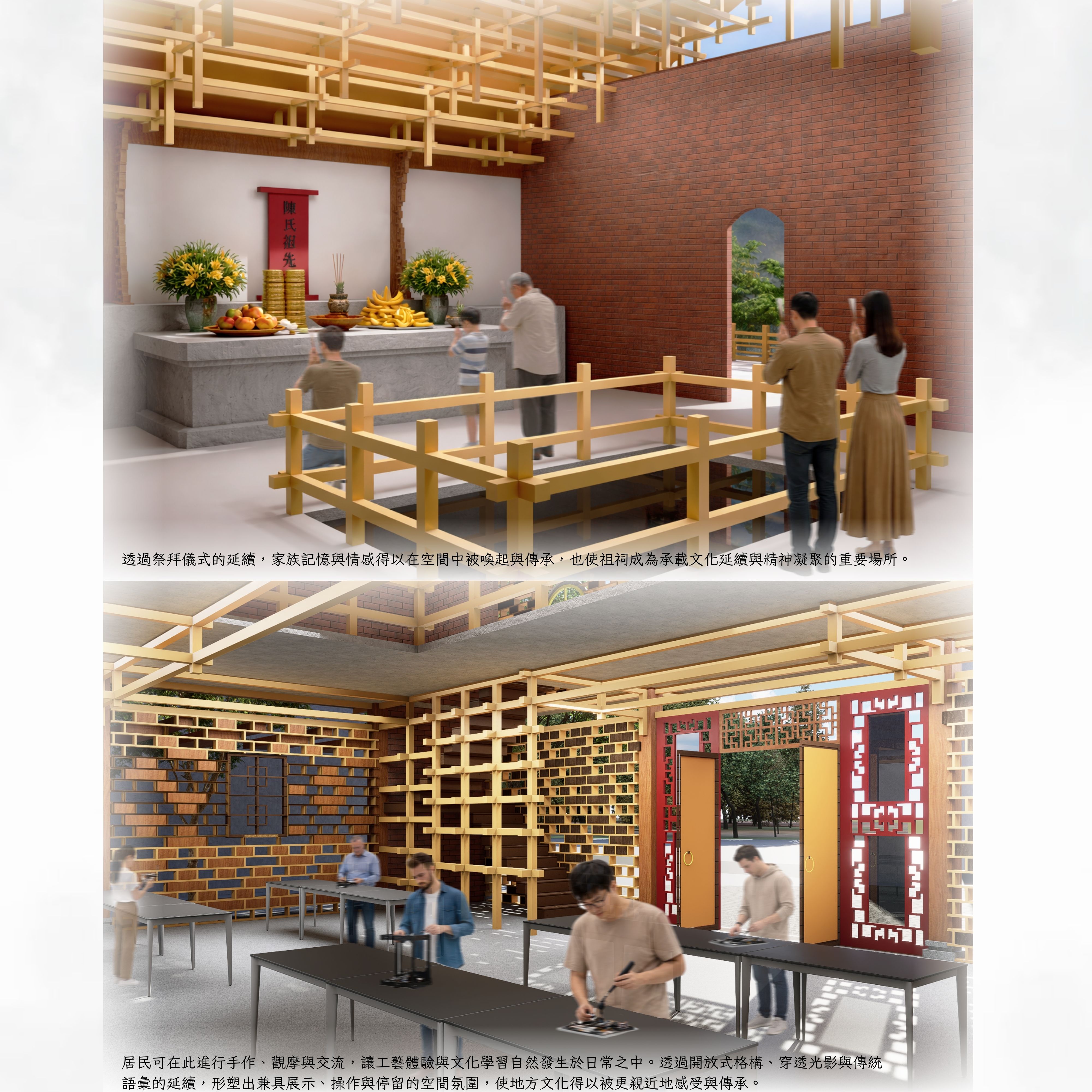
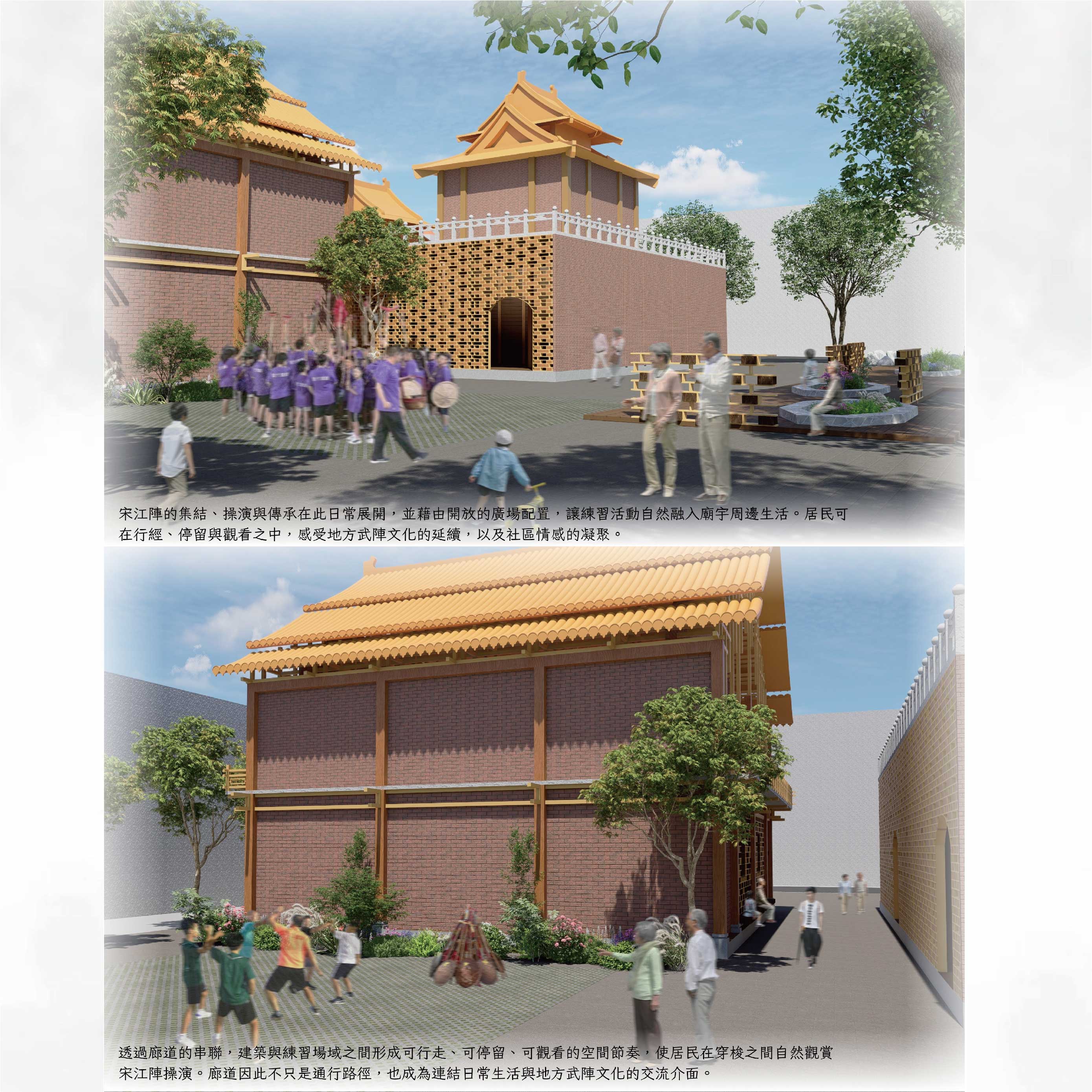
設計以閩南祖祠建築為基礎,延續紅磚牆體與木構架構的傳統語彙。紅磚象徵土地與歷史的累積,木構則延續閩南建築中梁柱與屋架的秩序,透過層層交織與堆疊,形塑出具有節奏感與方向性的空間序列。同時,將宋江陣的旗頭、陣列與弓步姿態轉譯為建築結構邏輯,中央主脊象徵旗頭,兩側木構如陣列展開,屋頂弧形起伏則呼應武陣中攻守之間的動態張力。
祖祠在此不再只是祭祀空間,而是地方文化與武陣精神的核心場域。人們行走其中,如同穿梭於陣形之間,感受空間所傳遞的秩序、守護與凝聚力,進一步回應宋江陣保護土地、連結族群的文化意涵。
Formations. In Between - A Community Space for Cultural Translation -
The temple space on the site is not only a place of worship, but also a carrier of local memory, emotion, and traditional activities. As generations change and urbanization advances, many temple-related traditions are gradually fading. This design uses an open space within the site to reconnect residents, faith, and culture, continuing shared memories and local identity.
Inspired by Minnan ancestral hall architecture, the design adopts red brick walls and wooden frameworks. Red brick symbolizes land and history, while timber reflects the order of traditional beams, columns, and roof trusses. Its spatial logic is also derived from the Songjiang Array: the central ridge represents the flag bearer, the wooden structures unfold like formations, and the curved roof expresses the tension of offense and defense.
The ancestral hall therefore becomes a cultural core, expressing the order, protection, and unity embodied by the Songjiang Array.
崑山科技大學 空間設計系
(四年級) 指導老師 夏O良