海源
Source of the Sea
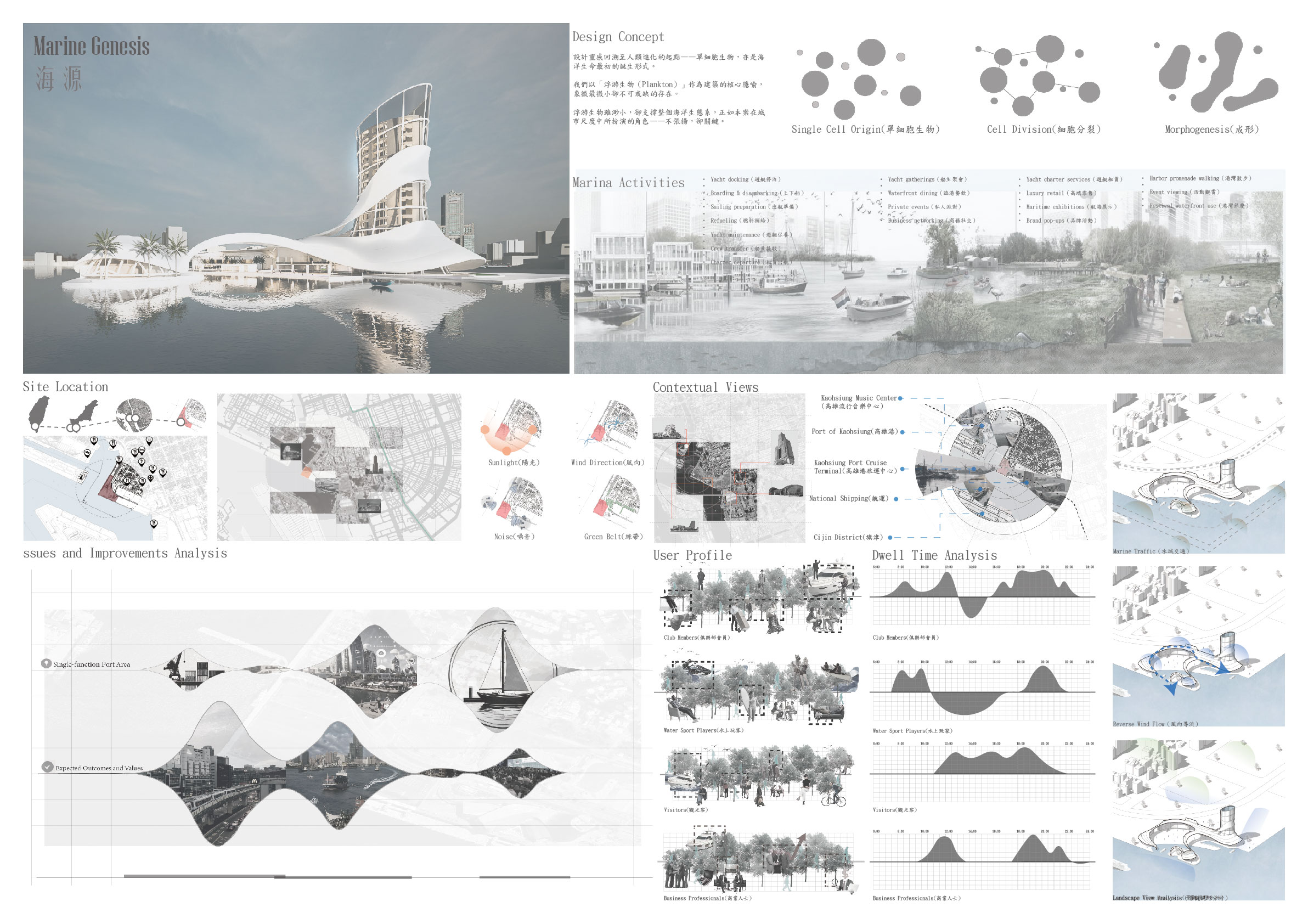
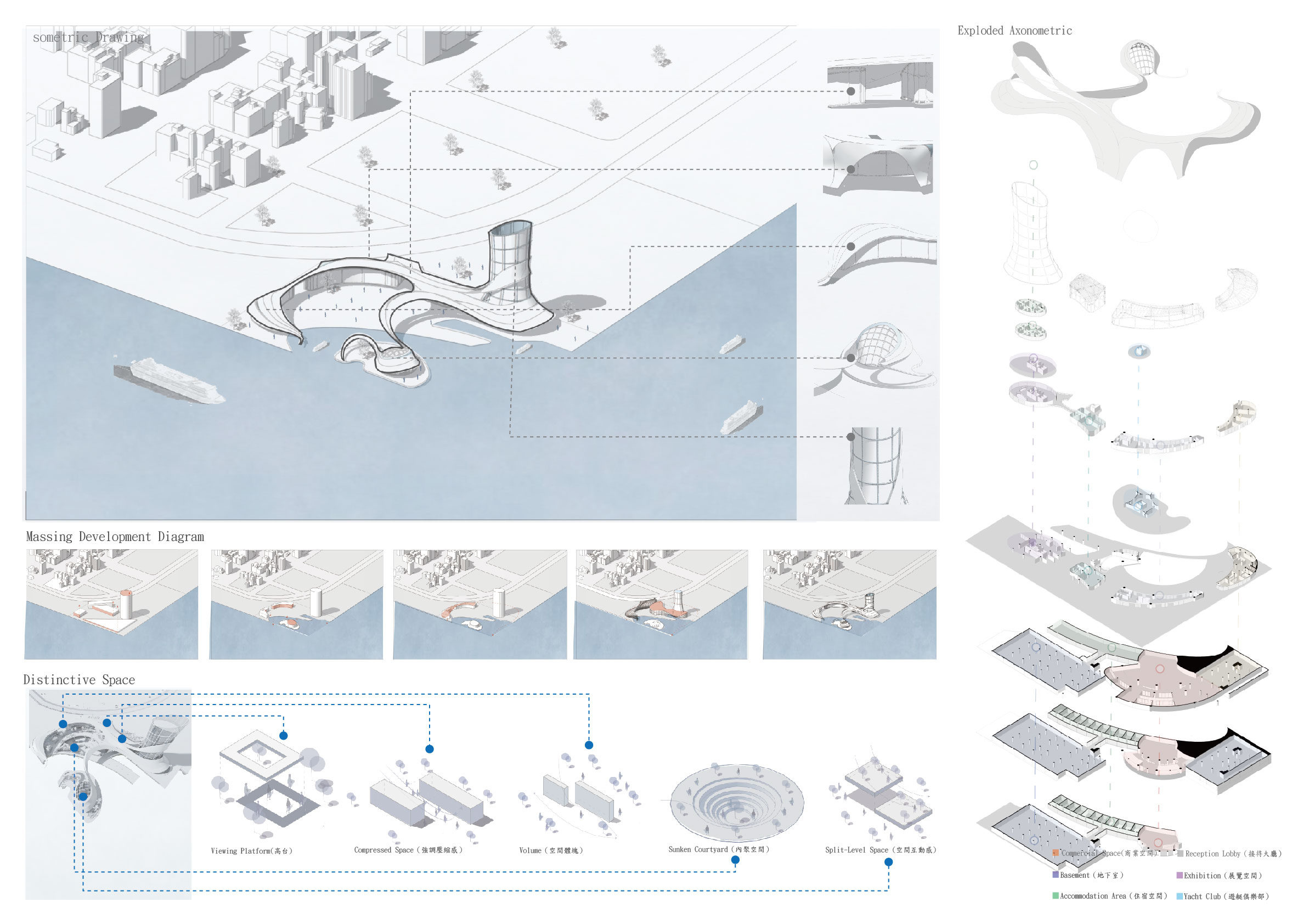
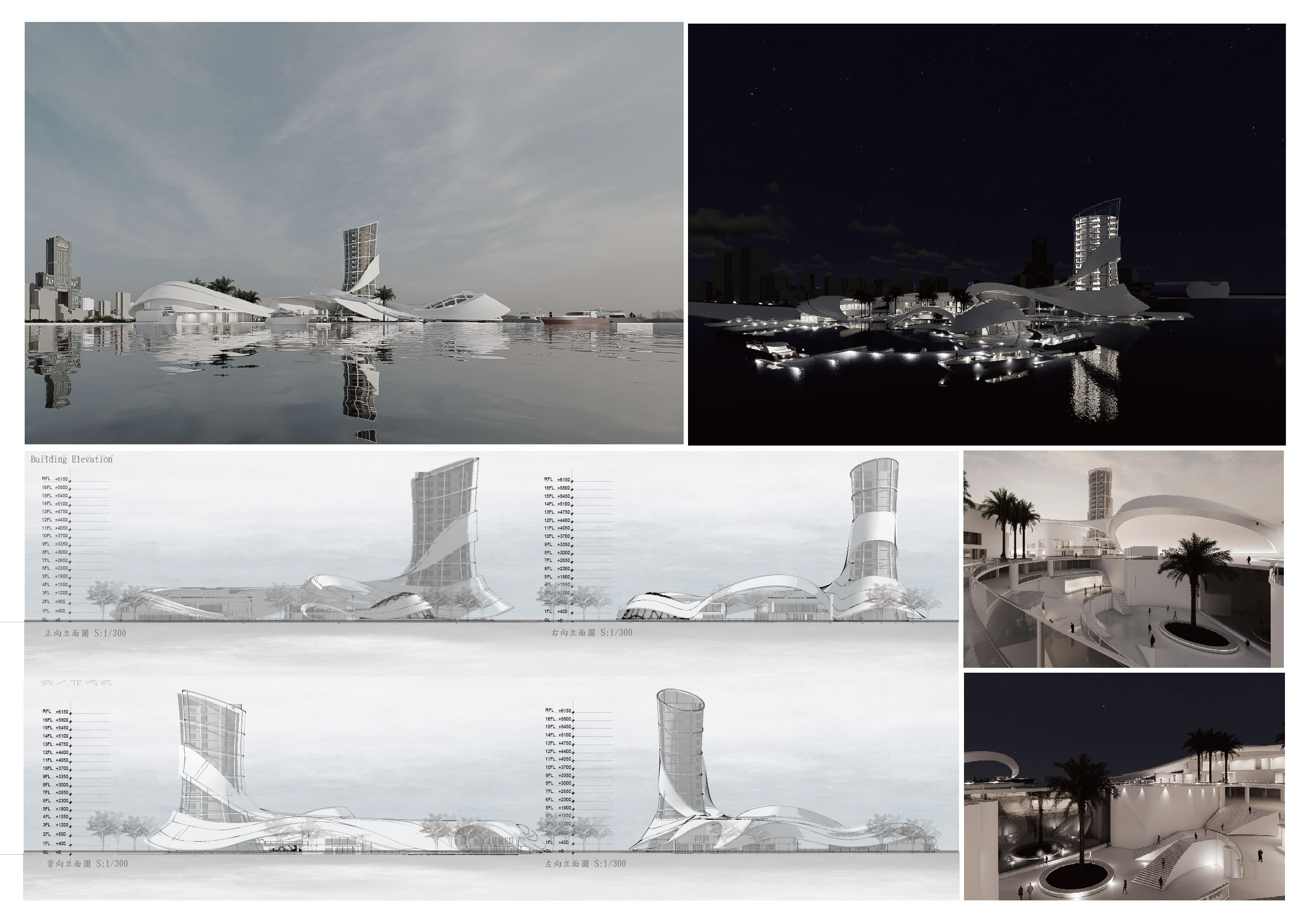
在高雄亞灣區這片城市與海洋交界的場域中,「海源」試圖回應的不只是功能需求,而是一種關於起點與存在的提問。當遊艇俱樂部常被視為象徵階級與奢華的場所,本案反而選擇回到最初——回到海洋生命的源頭。從單細胞生物出發,那些肉眼難以察覺的微小存在,經由分裂、聚集與演化,最終構成整個海洋生態;而建築亦以此為原型,從最小空間單位生成,逐步堆疊、轉化,形成具有秩序卻不封閉的量體系統。
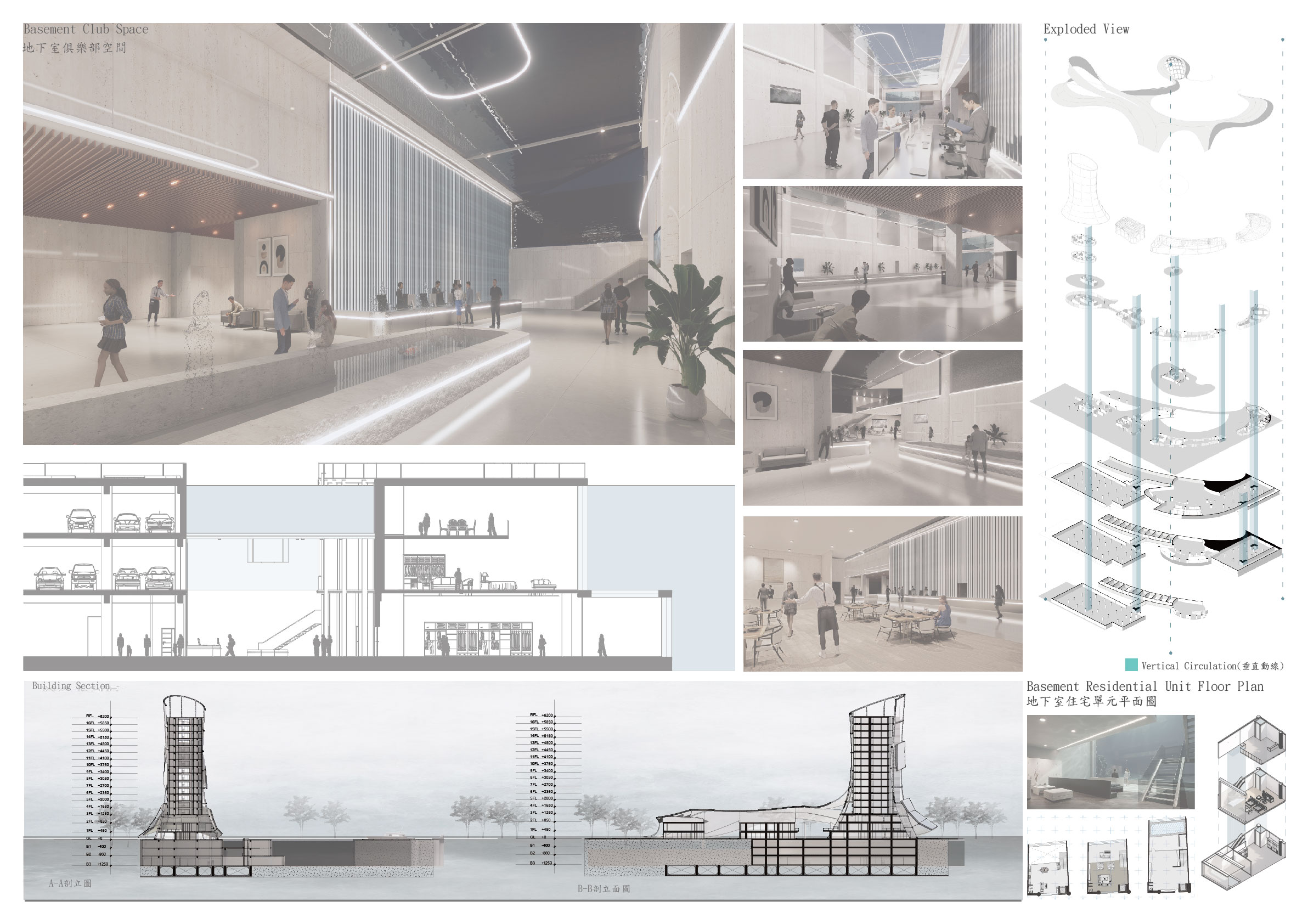
在形式上,設計採取去面化策略,捨棄表層裝飾,以純粹的量體、比例與光影構築空間感受。方塊量體彼此錯動,高台、窄道與圓形下陷空間交織出一種由壓縮至釋放的節奏,使人行走其間,彷彿經歷一次從混沌走向生成的過程。光在牆體與縫隙之間流動,如同水中漂浮的微生物,安靜卻充滿生命力。
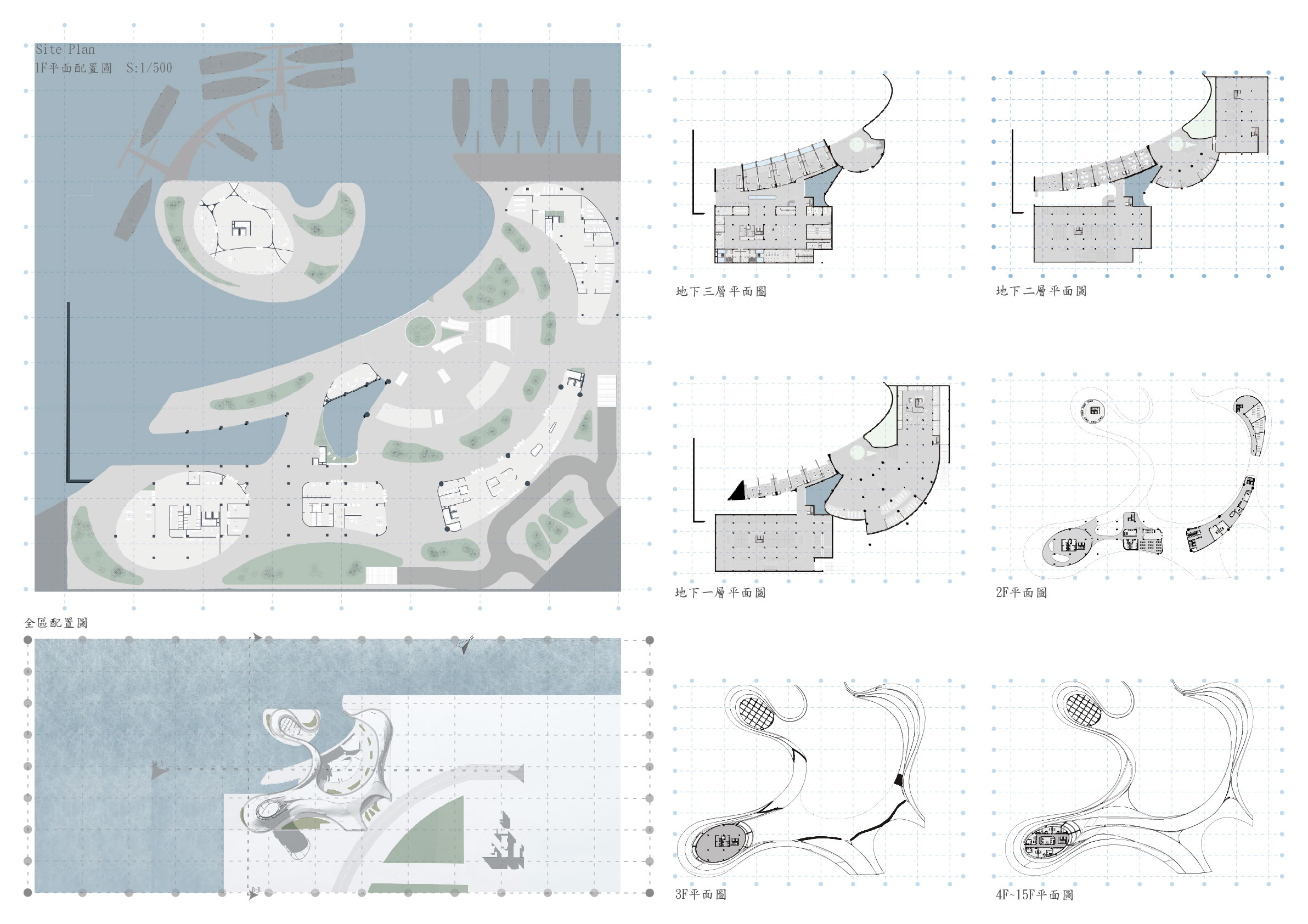
基地位於流行音樂中心與旅運中心之間,兩者皆具有強烈的象徵語言。「海源」不再追求成為另一個被觀看的物件,而是選擇成為一種關係的媒介——如浮游生物般渺小,卻支撐整體環境的運作。建築在城市與港灣之間建立柔性的過渡,讓人流、視線與活動得以自然滲透。
最終,「海源」不只是遊艇俱樂部,而是一種空間的提問:當一切回歸本質,建築是否能如生命一般,從微小中誕生力量,在無聲之中,成為不可或缺的存在。
Source of the Sea
Located in Kaohsiung’s Asia New Bay Area, Marine Origin explores the idea of returning to the origin of life. Instead of expressing luxury, the design is inspired by single-celled organisms—micro units that divide, grow, and form a spatial system. The architecture emerges through this process of cellular generation, creating an open yet ordered massing.
The project adopts a minimal, planar-reduced approach, focusing on pure volumes, proportions, and light. Elevated platforms, narrow passages, and a sunken circular space create a spatial sequence of compression and release, shaping a dynamic experience.
Positioned between two iconic landmarks, the building acts as a mediator rather than a dominant object. Like plankton in the ocean, it is subtle yet essential—forming connections between the city, the harbor, and its users.
正修科技大學 建築與室內設計系
(三年級)
殷O澤
正修科技大學 建築與室內設計系
(三年級) 指導老師 陳O勇