都市與農業時代之間的牆
The wall between the urban and agricultural eras.
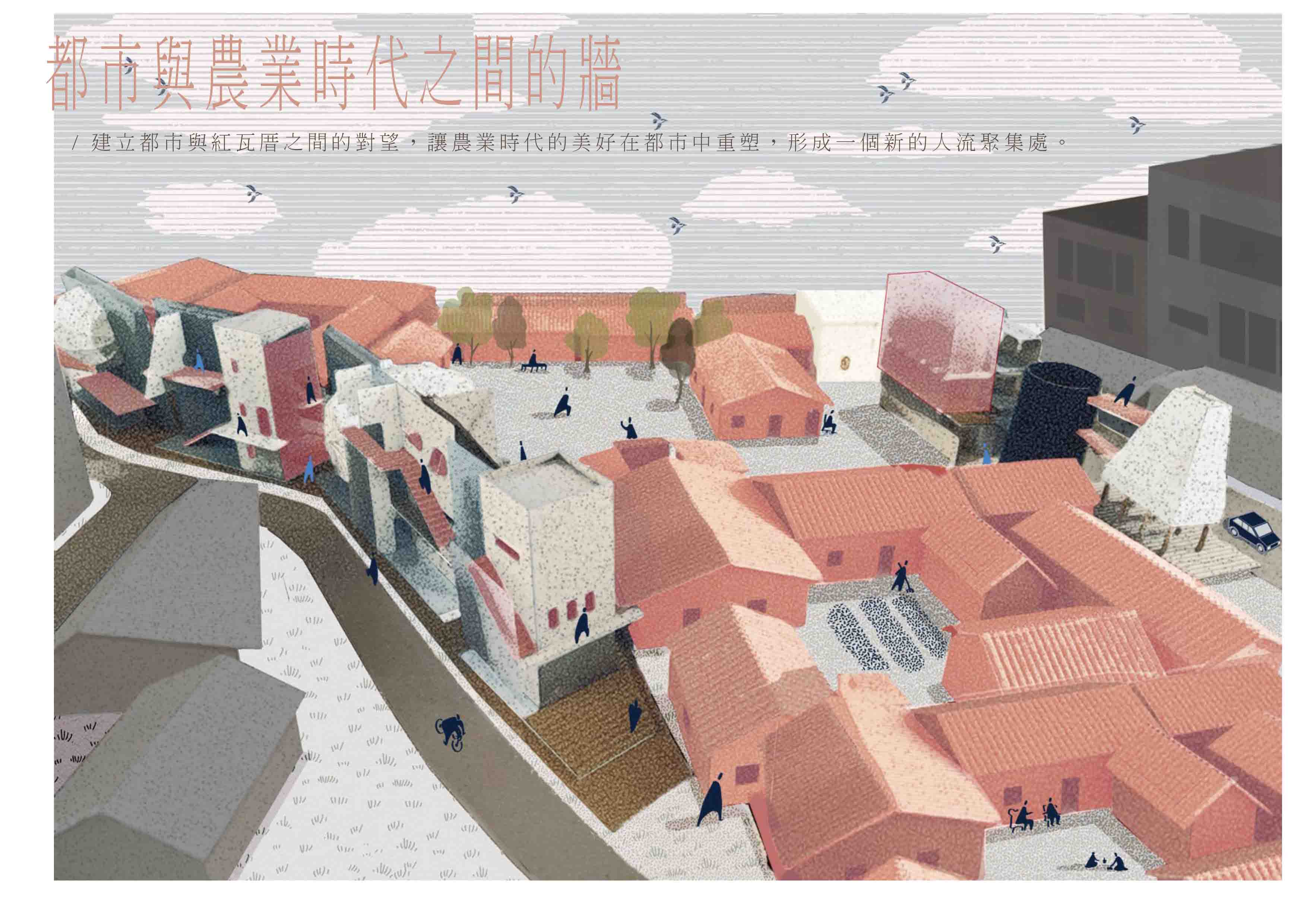
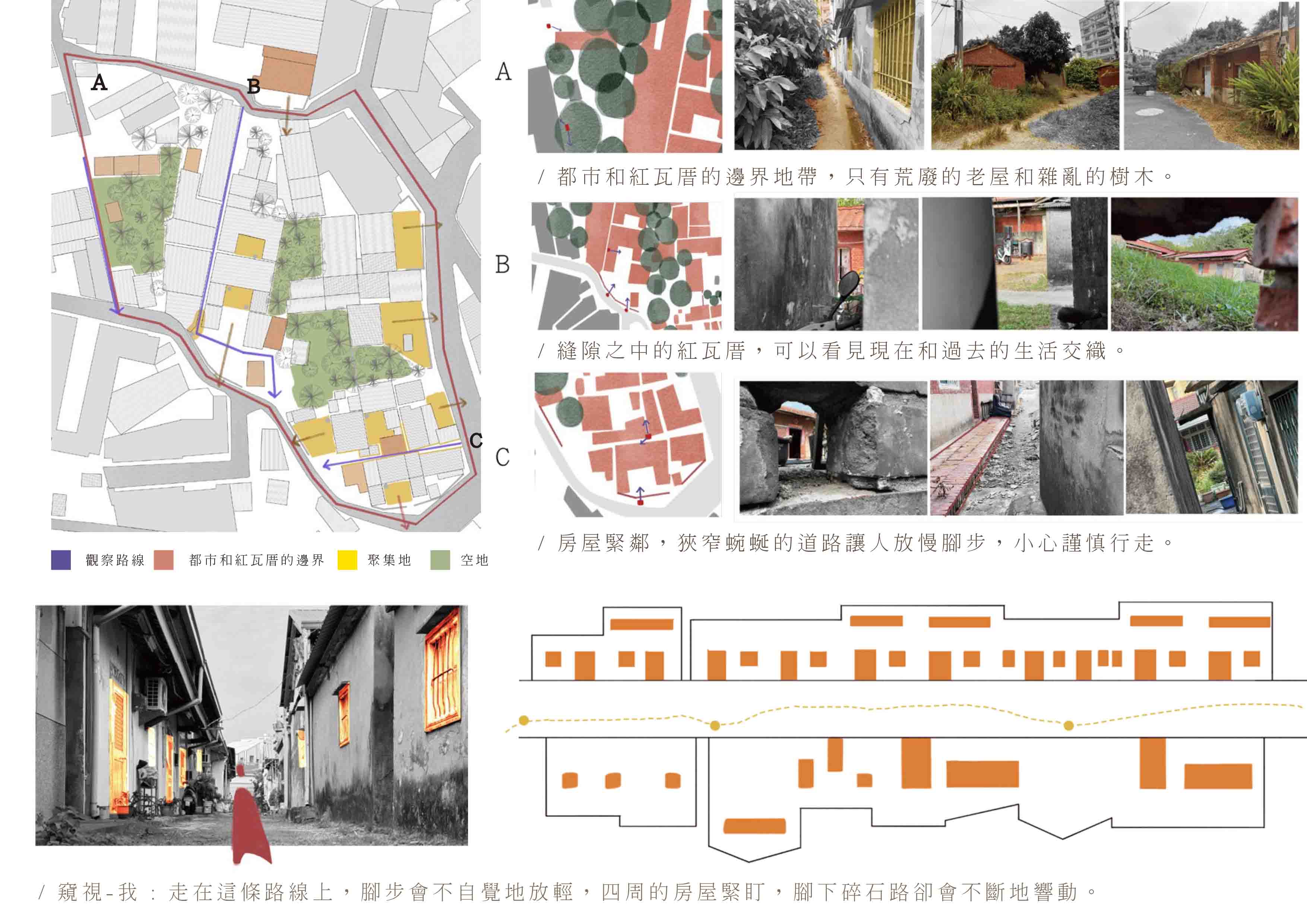
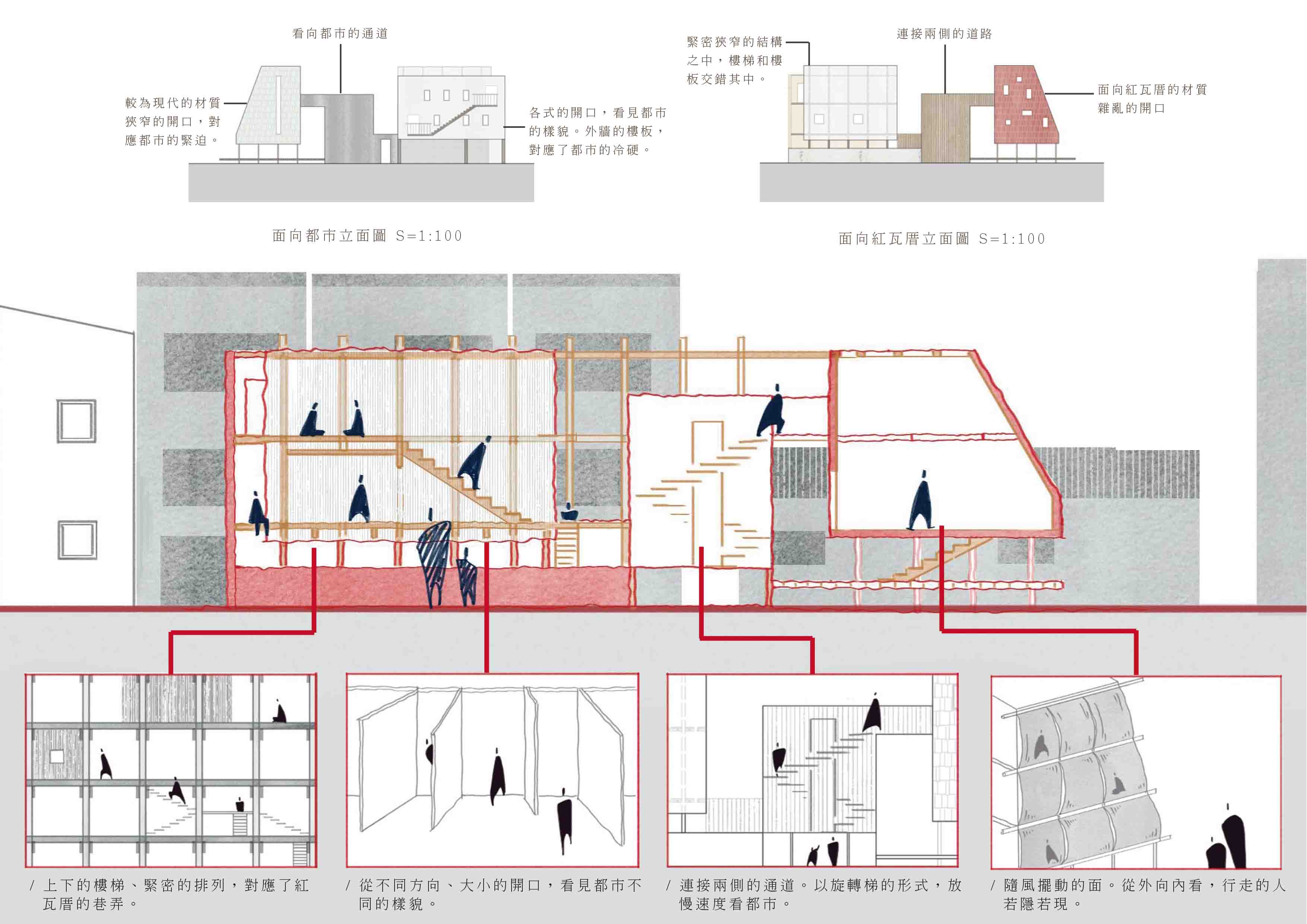
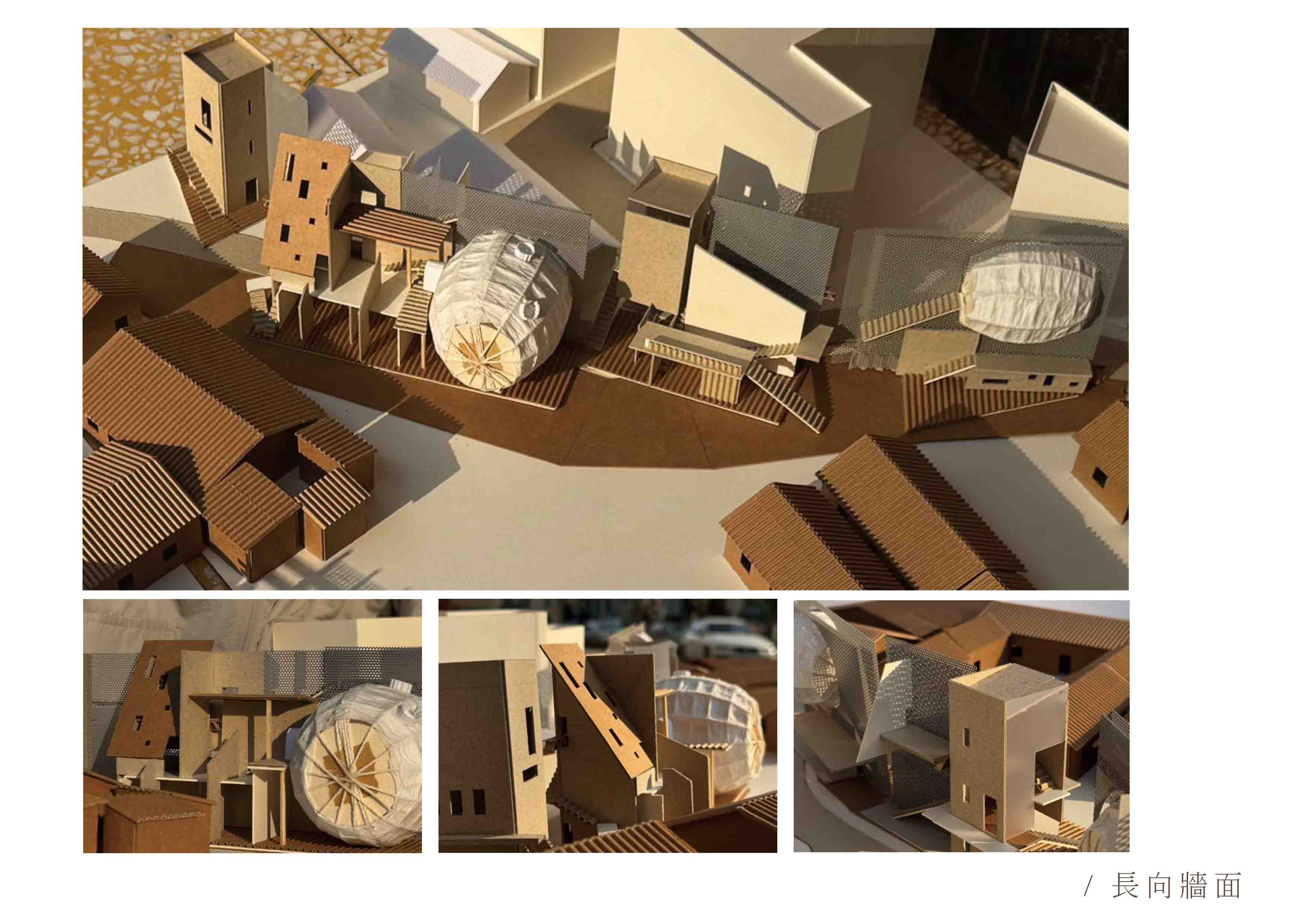
紅瓦厝不僅是歸仁在地深層的集體記憶,更曾是農業社會中豐饒與富庶的具體象徵。然而,隨著時代巨輪的推進,這片曾經輝煌的磚紅景觀在現代化的進程中逐漸褪色、沒落,最終成為被都市邊緣化的孤島。
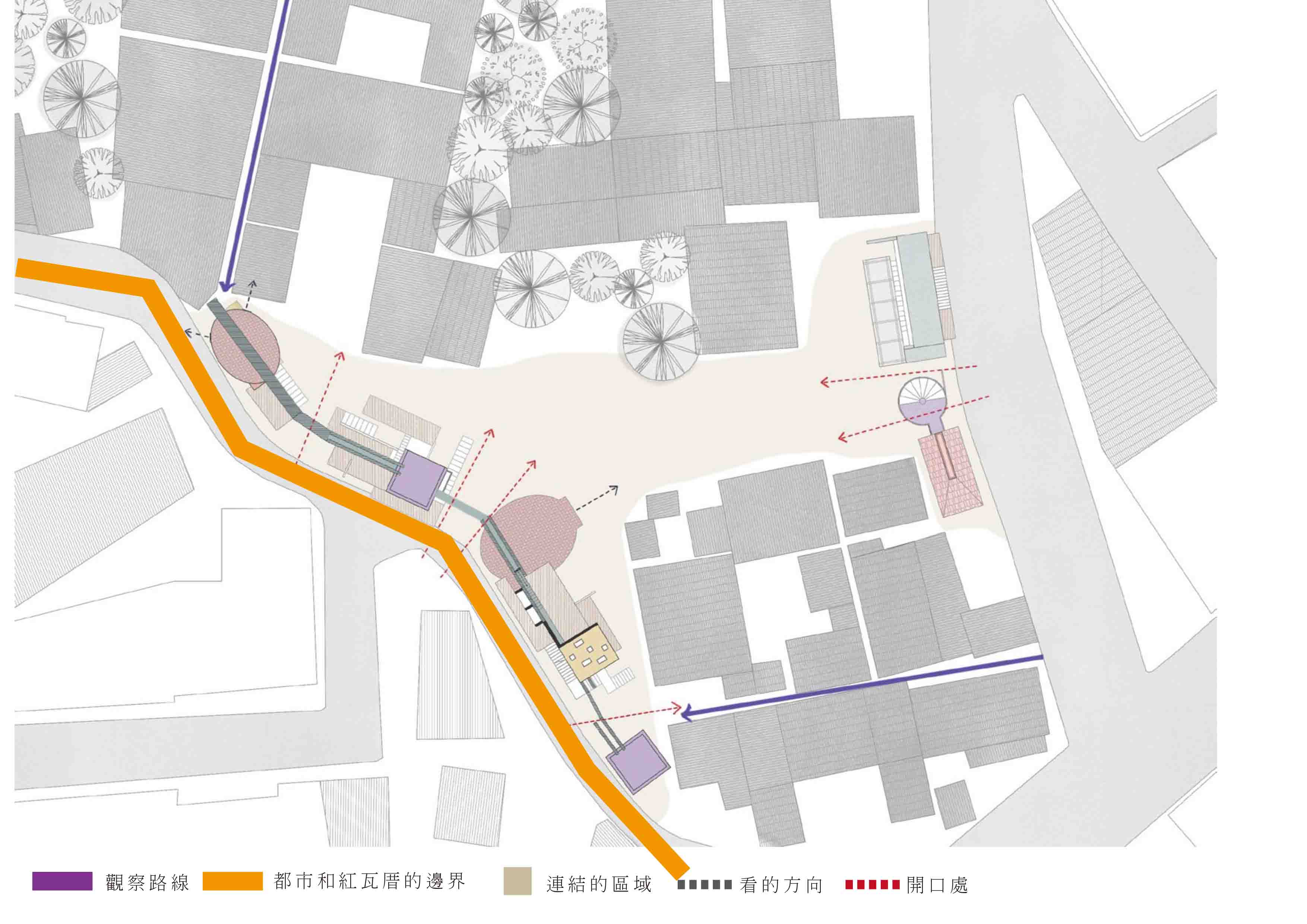
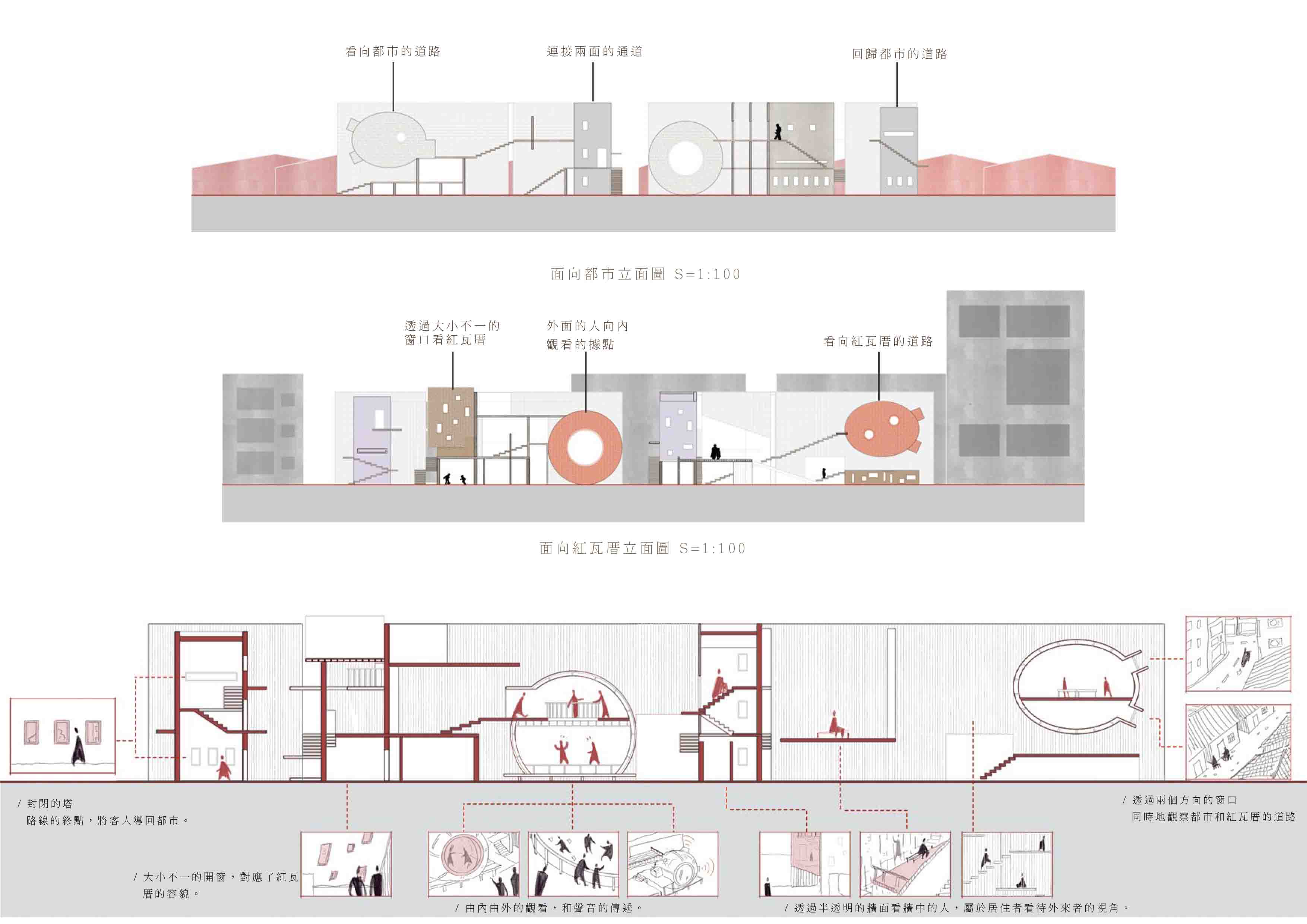
為了找回這份失落的美好記憶,在繁雜的都市中,以紅瓦厝為核心元素重塑一座新的感官聚點。我們不只是重建建築,更是透過空間的引導,觸發人們最原始的身體感知。藉由材質的觸碰與視覺的導引,誘發都市中的行人主動跨越那道無形的牆,踏入這片代表著過去、充滿生命力的土地,重新開啟人與歷史、人與土地之間的深度連結。
透過建築語彙的轉譯,讓過去的農業時代不再只是教科書上的名詞,而是在都市中心重塑、生長,形成一個揉合新舊記憶的人流聚集處,讓文化在現代生活中找到新的棲息地。
The wall between the urban and agricultural eras.
The Red-Tile House is more than just a deep-seated collective memory of Gueiren; it once stood as a tangible symbol of prosperity and abundance within the agrarian society. However, as the gears of time marched forward, these once-vibrant crimson landscapes gradually faded under the relentless tide of modernization, eventually becoming isolated islands marginalized by the expanding city.
To reclaim these lost, beautiful memories, this project adopts the Red-Tile House as its core element to reshape a new sensory anchor within the complex urban fabric. Our goal is not merely to reconstruct a physical structure, but to trigger primal bodily perceptions through spatial guidance. By utilizing tactile materials and visual cues, we entice urban passersby to actively cross that invisible wall and step onto this ancestral soil—a land that represents the past yet remains pulse with life—thereby forging a profound new connection between people, history, and the earth.