我醒來的時候,事情還沒睡
When I woke up,the work was still awake.
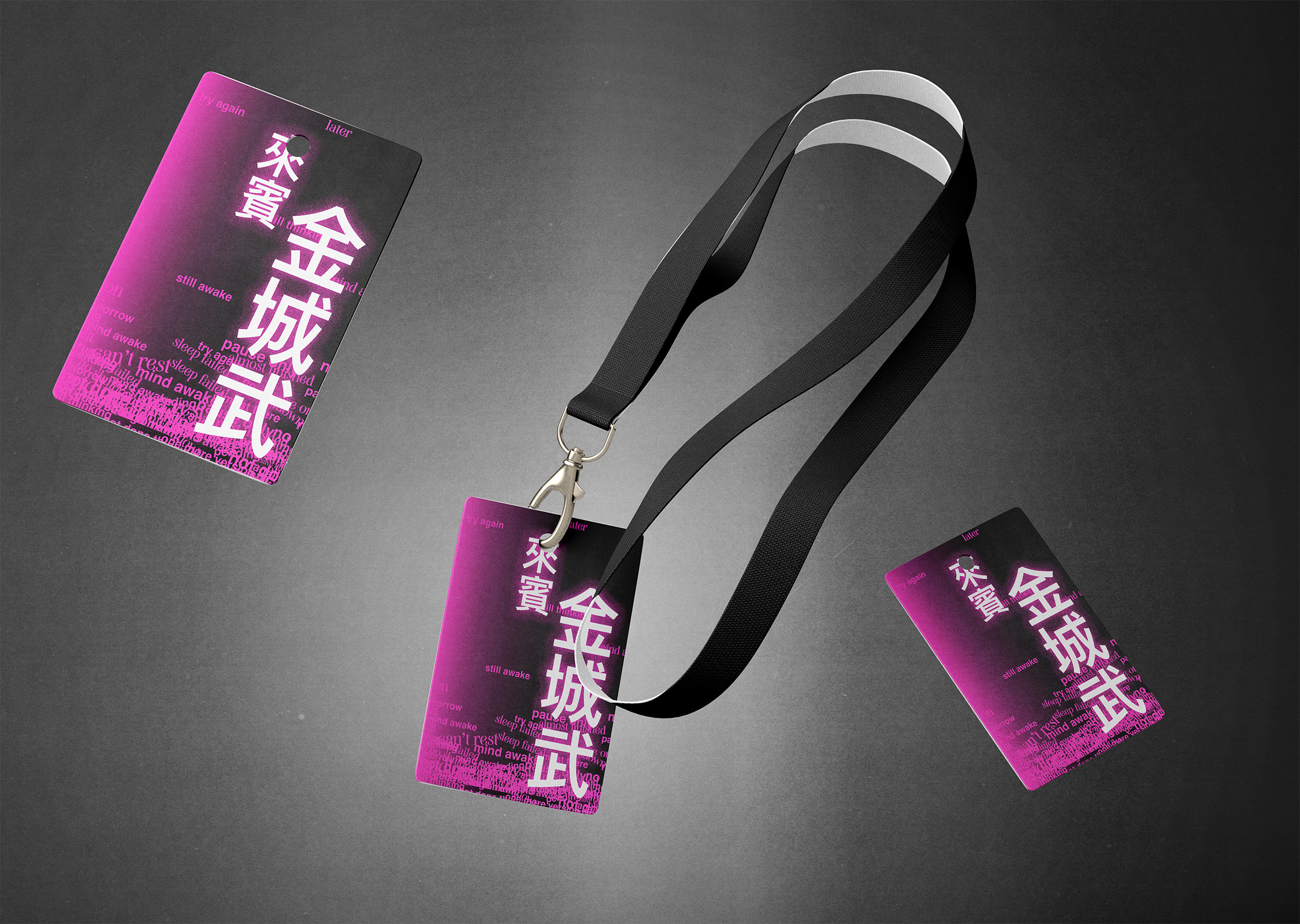
[人都要風化了,事情還是存在]
睜開佈滿眼屎的眼睛,第一個打招呼的不是窗外的陽光,也不是鬧鐘,而是那些永遠做不完的事情。它們盤踞在桌上、手機裡、腦袋裡,沒有聲音,卻始終在場。試著把它們丟給明天,結果隔天早上依然原封不動;甚至想像把它們交給平行宇宙的自己,但那個版本的我,大概也只能無奈地兩手一攤。
對創作者而言,每一次回到那些尚未完成的畫面,不只是因為它們還沒做完,也是因為我們仍然在意。事情不會隨著休息而停止,即使醒來,工作與思考仍持續存在,維持在一種未完成的狀態。設計很少有真正結束的時刻,暫停與離開往往只是暫時擱置,而不是終止。
因此,「事情還沒睡」既是一種壓力,也是一種證明創作仍在發生,思考仍在延續。那些未完成的部分,並非失敗,而是持續調整與靠近的過程。
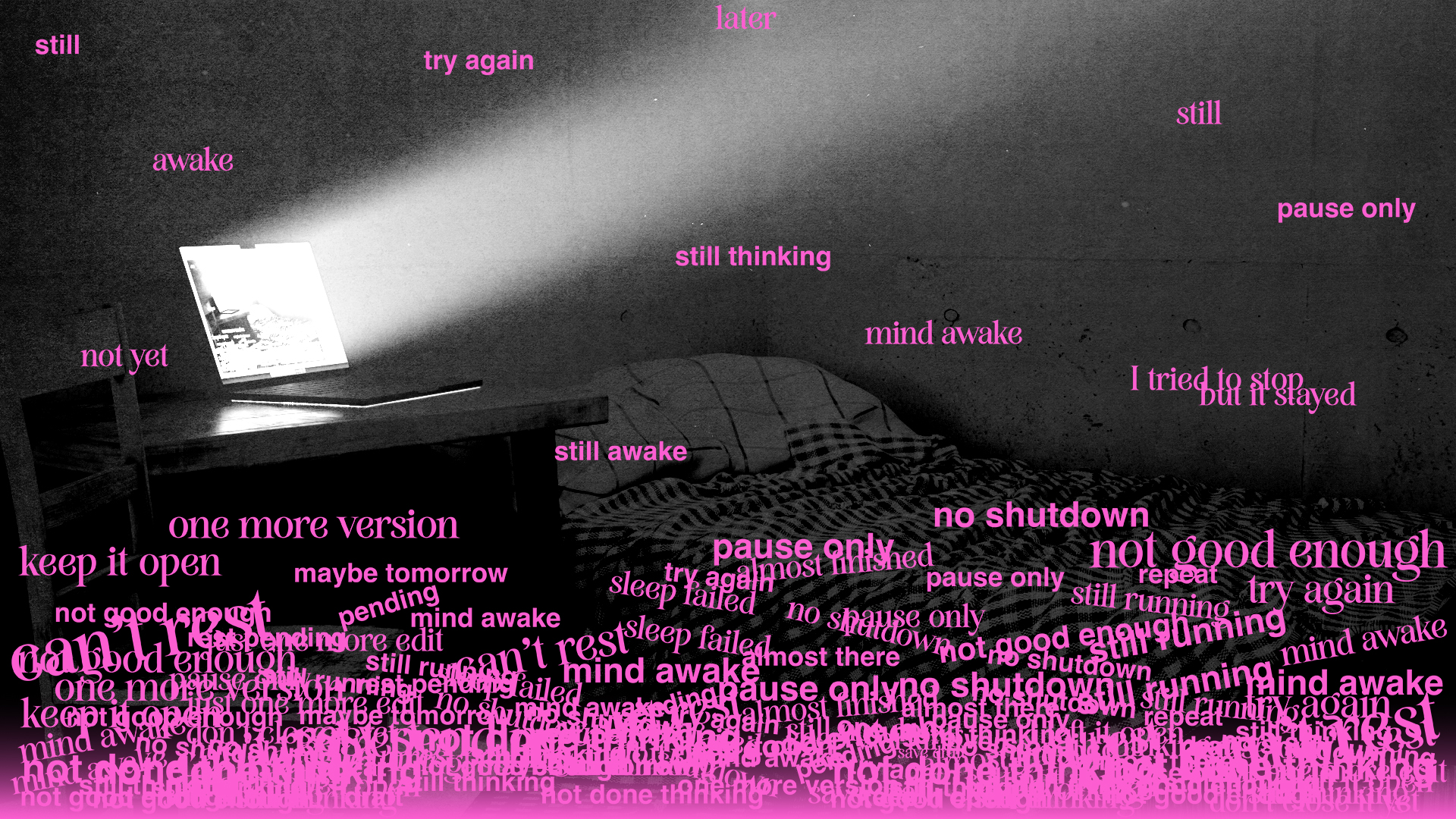
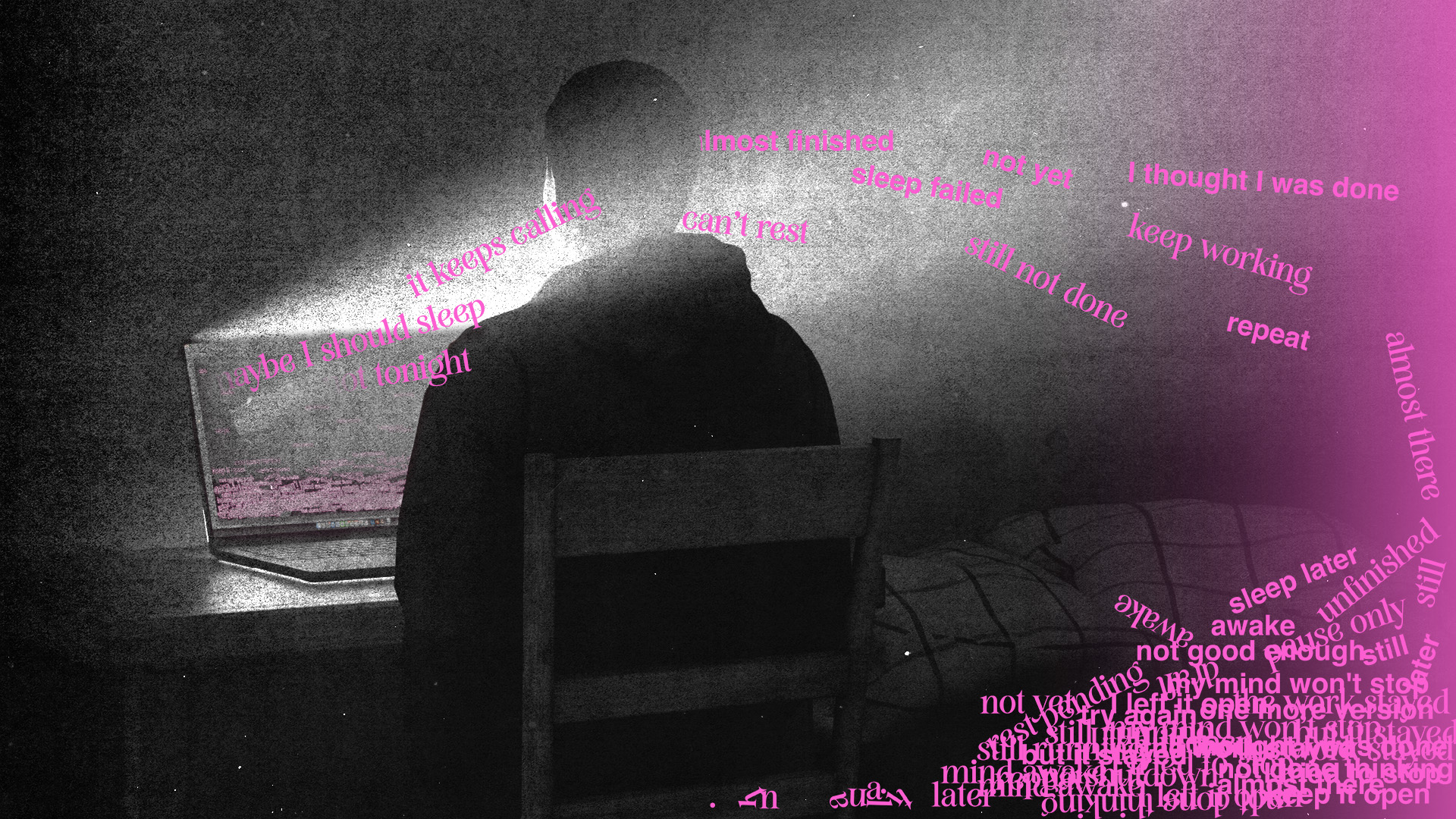
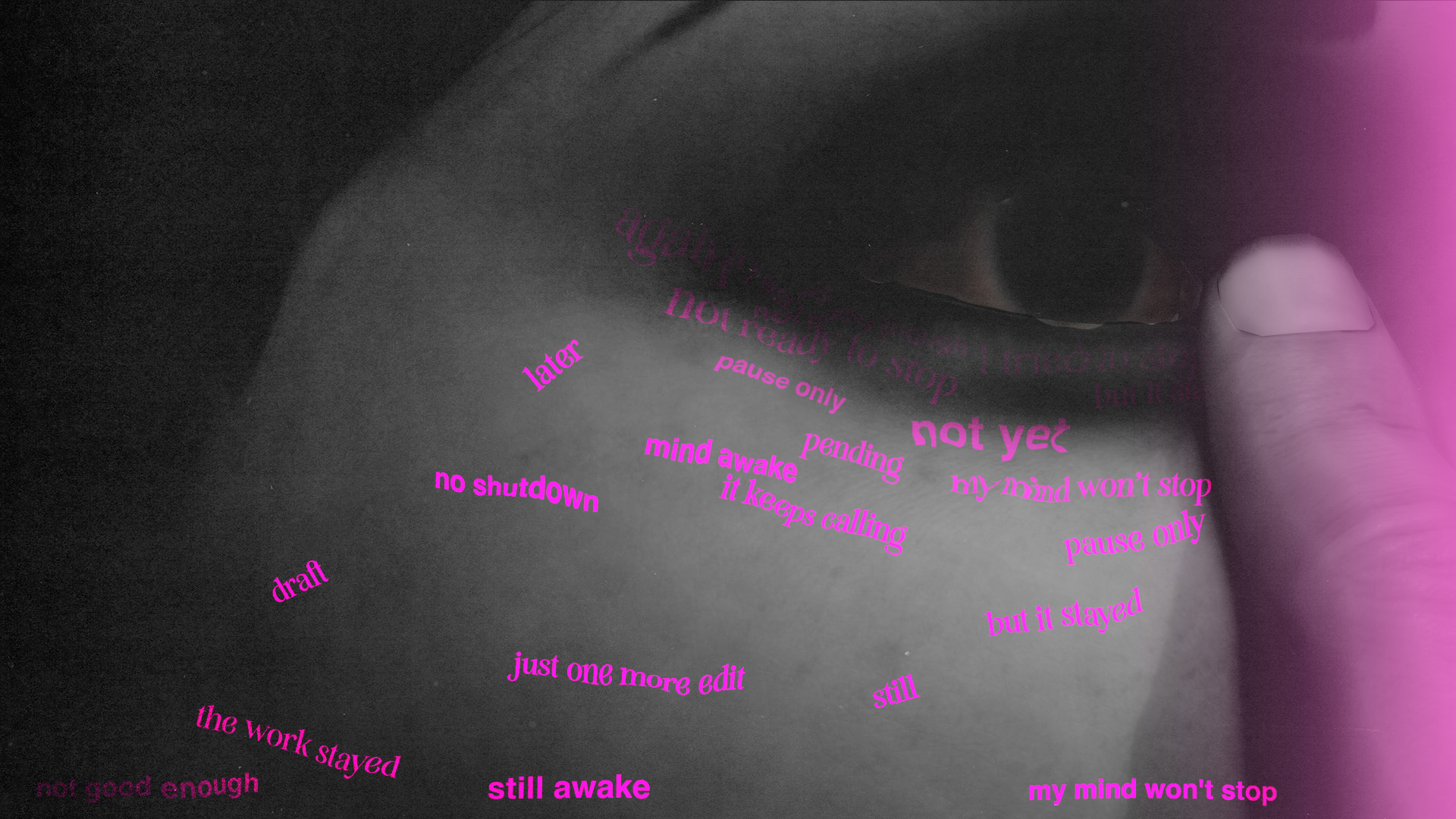
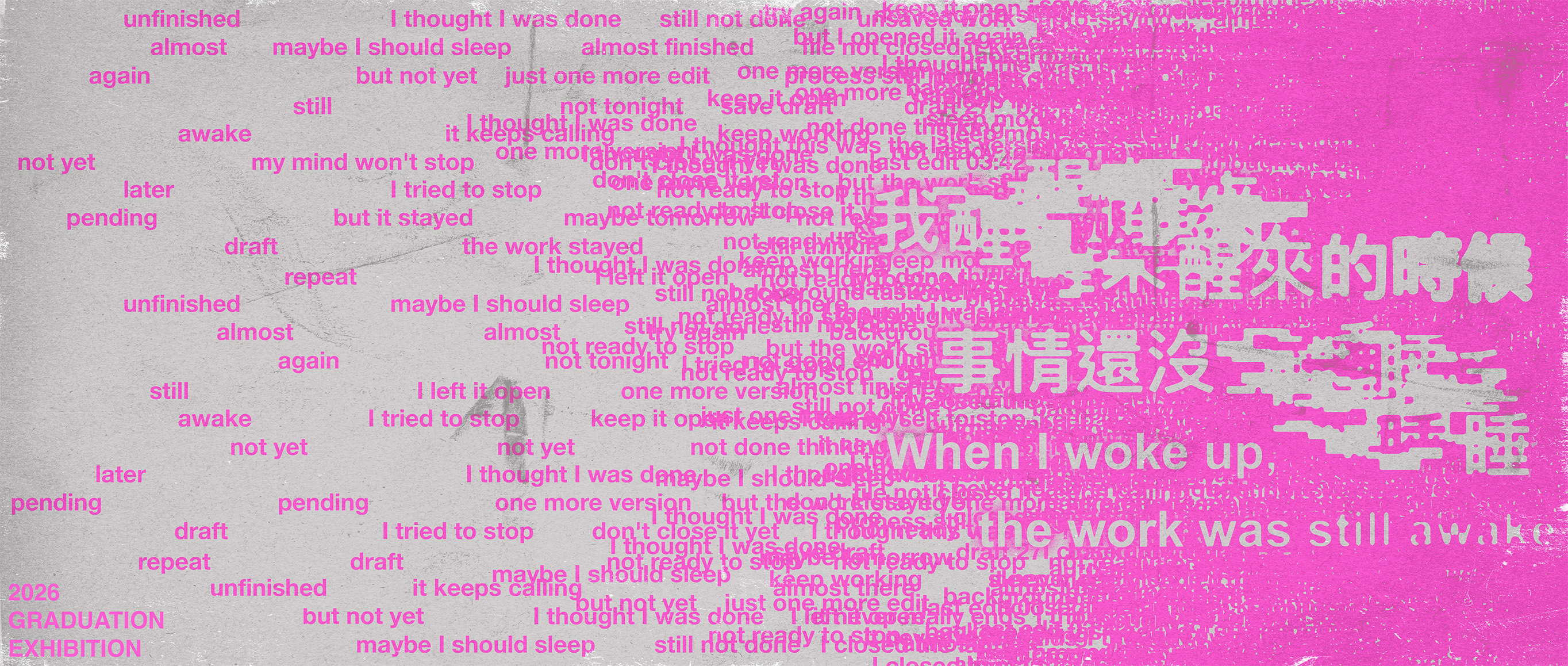
主視覺以「長時間未關機」的狀態與光影對比作為設計主軸。在持續運作的系統中,感知逐漸混沌,畫面與文字產生錯位、殘影與模糊,如同過度使用後的螢幕痕跡。這些視覺現象不僅是形式上的變化,更回應主題「當人醒來時,事情仍保持清醒」。
When I woke up,the work was still awake.
“We are wearing away, yet the work remains.”
When I open my eyes, the first thing that greets me is not sunlight or an alarm, but the things that are never quite finished. They occupy the desk, the phone, and the back of my mind—silent, yet always present. I try to leave them for tomorrow, only to find them unchanged the next morning.
For creators, unfinished work persists not only because it is incomplete, but because we still care. Work does not stop with rest. Even after waking, thoughts and processes remain in an unresolved state. In design, there is rarely a true sense of completion.
“The work is still awake” reflects both pressure and continuity. What remains unfinished is not failure, but part of an ongoing process.
The key visual draws on the idea of a system left running for too long, where text and imagery begin to shift, blur, and leave afterimages—suggesting that while we wake, the work continues, awake and unresolved.
南臺科技大學 視覺傳達設計系
(四年級)
陳O曄
南臺科技大學 視覺傳達設計系
(四年級)
王O詅
南臺科技大學 視覺傳達設計系
(四年級) 指導老師 黃O怡