築巷新聲
Alley Echo
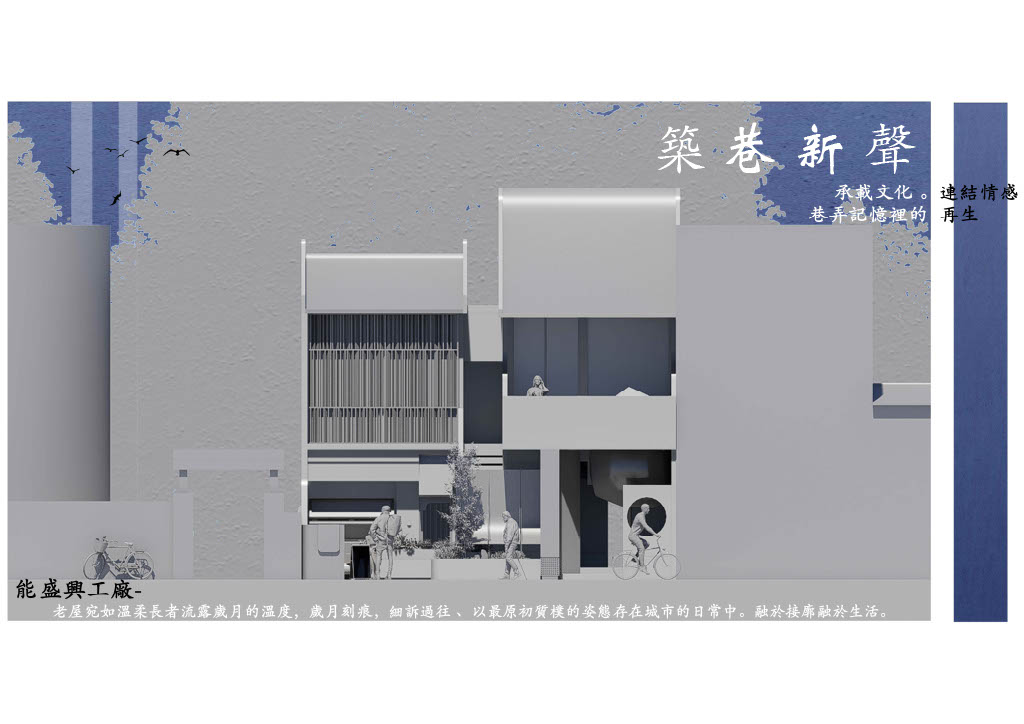
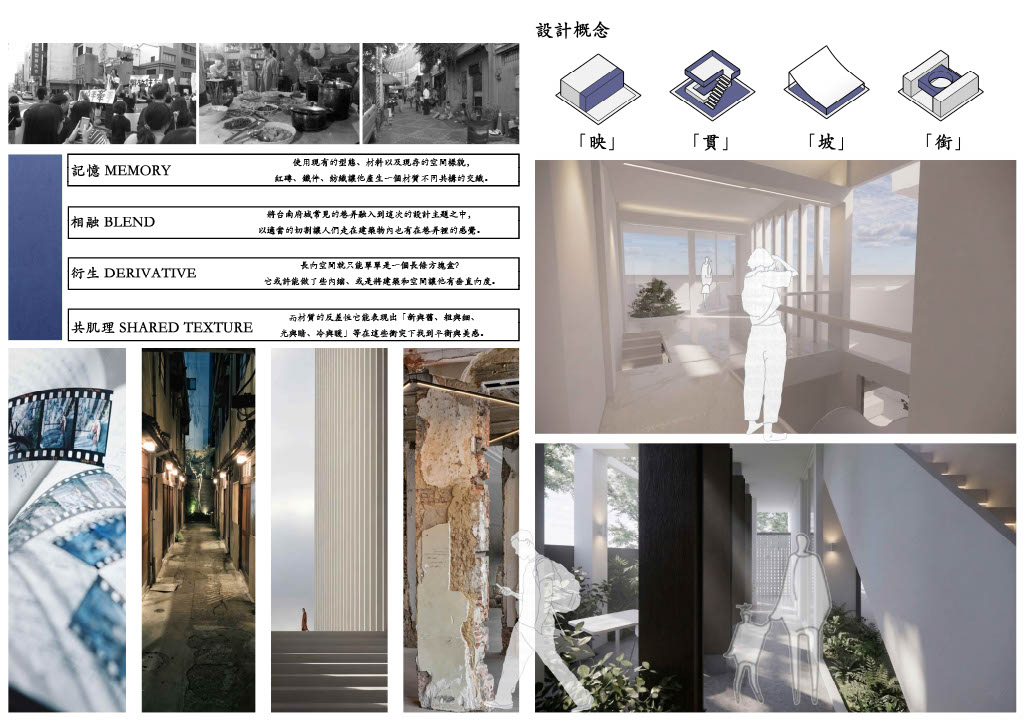
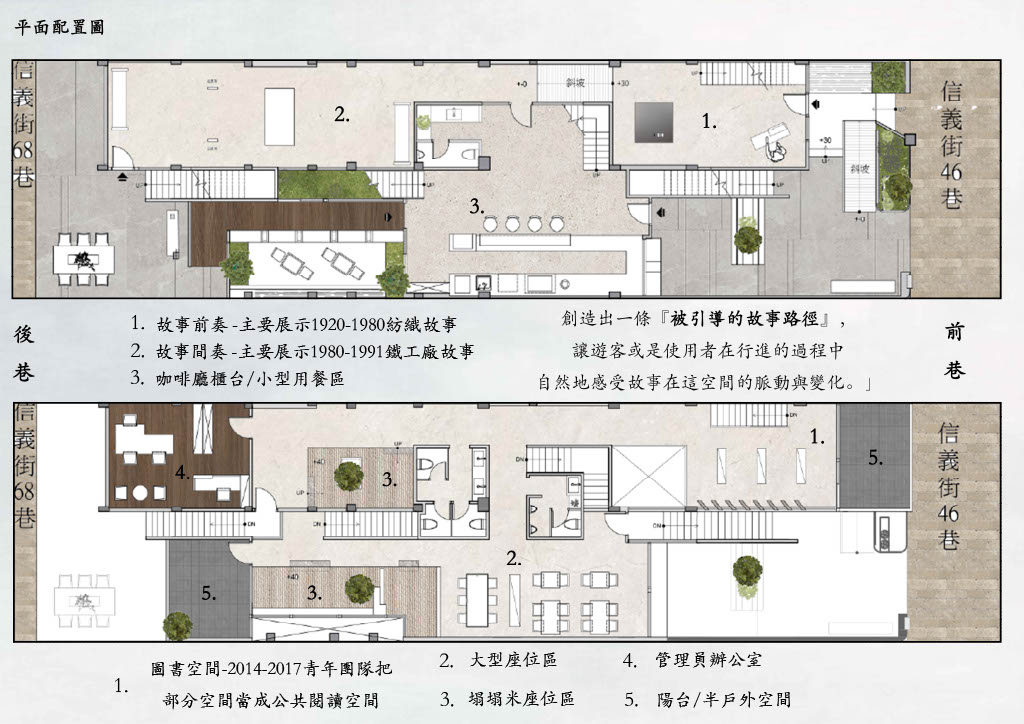
我的設計採用垂直長向空間的規劃方式,讓空間以線性的節奏來去延展。那像是以故事館來說的話 我透過縱深的空間軸線,我希望創造出一條被引導的故事路徑,讓使用者在行進的過程中自然地感受故事在這空間的脈動與變化。
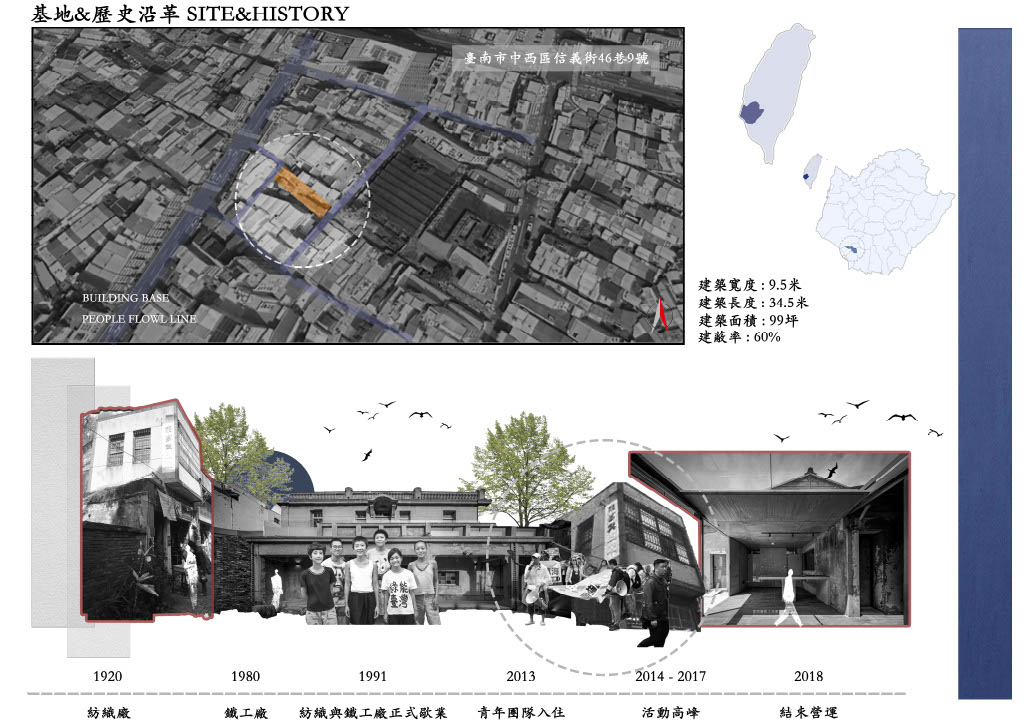
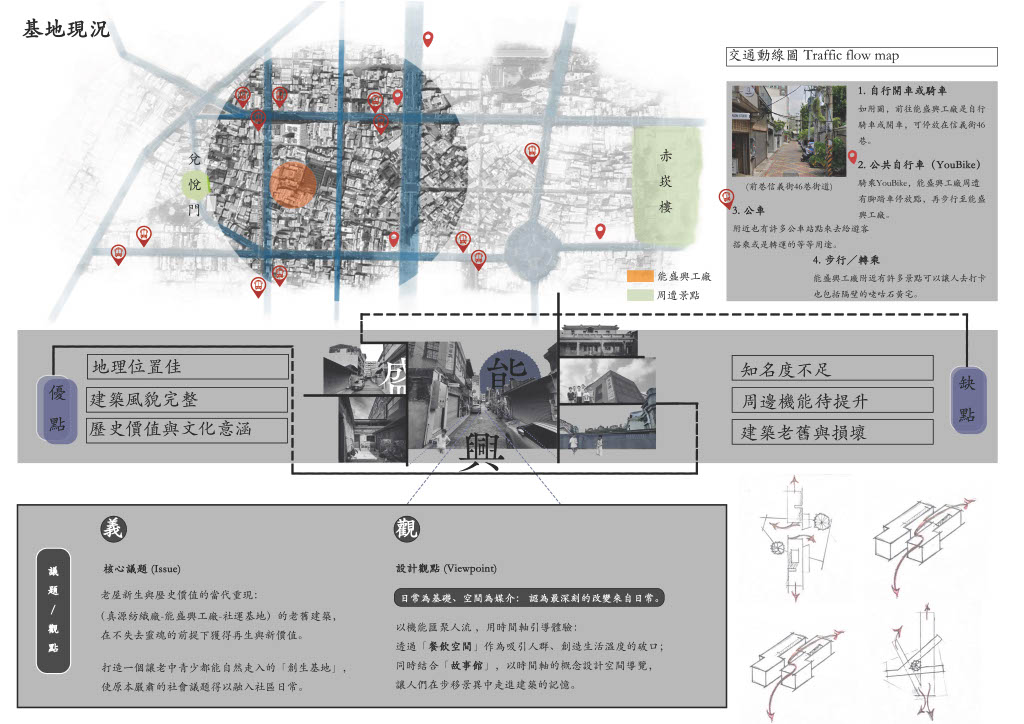
那面對我的空間機能我是已故事館以及咖啡廳來做構想所以我讓我的故事館擺在舊有的空間那讓故事的嚴格與時間軸再搭配我的空間前進的次序紡織廠再到鐵工廠。因此面對於舊空間 ,我們讓它保持原來的入口動線長向然後麵對新色的咖啡廳讓他獨立的入口。
那面對於二樓 我在後端置入了一個管理中心的辦公室 在二樓的一跟三的位置我設置成咖啡的大型座位區同時也是仿社運他可以是個一個彈性空間讓人可以在這裡可以注入一個多人的交流場所
其次面對於平面配置可以看出一樓能盛行鐵工廠一個時間軸續 從紡織再到鐵工廠 然後咖啡廳彼此之間可以從新空間在到舊空間或是也可以就空間的新空間,甚至人也可以從一樓直接平行向度進到我的左右側也可以從前後都樓梯垂直向度進到我的二樓
主要就是讓人可以自由穿梭在空間當中
Alley Echo
My design adopts a vertically elongated spatial layout, allowing the space to extend with a linear rhythm. Taking the Storyhouse as an example, I utilize the deep spatial axis to create a guided narrative path. This allows visitors to naturally experience the pulse and progression of the story as they move through the space.
In terms of spatial function, my concept revolves around a Storyhouse and a Cafe. I positioned the Storyhouse within the existing building, aligning the historical timeline of the narrative with the forward sequence of the space—transitioning from the era of the textile mill to the ironworks. Therefore, we retained the original elongated entrance circulation for the old space, while providing an independent entrance for the newly built cafe.
Ultimately, the primary goal of this design is to allow people to freely weave and wander throughout the entire space.