街巷阡陌-鹿港拾光
Intertwined Alleys: Reclaiming Light in Lukang
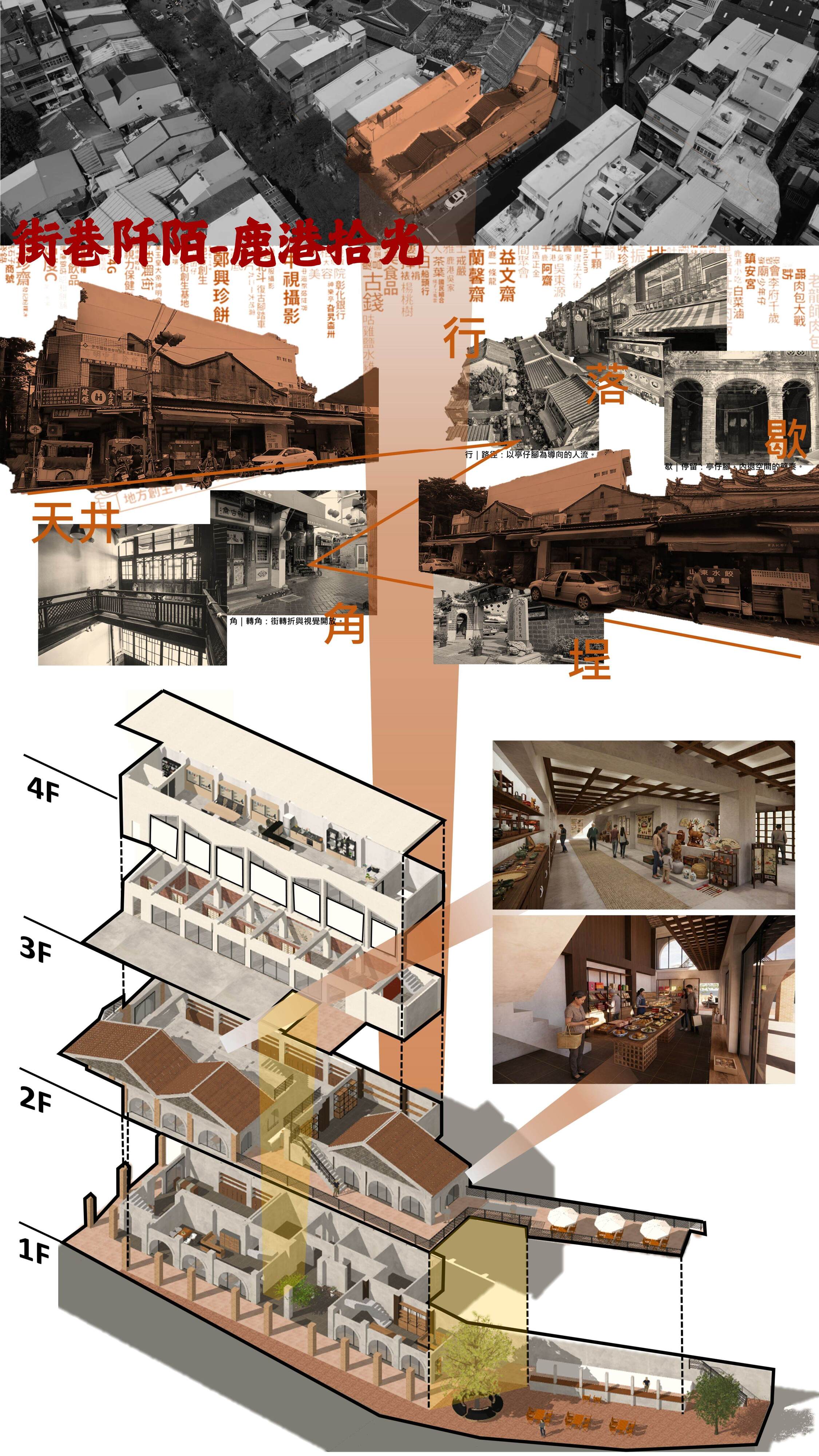
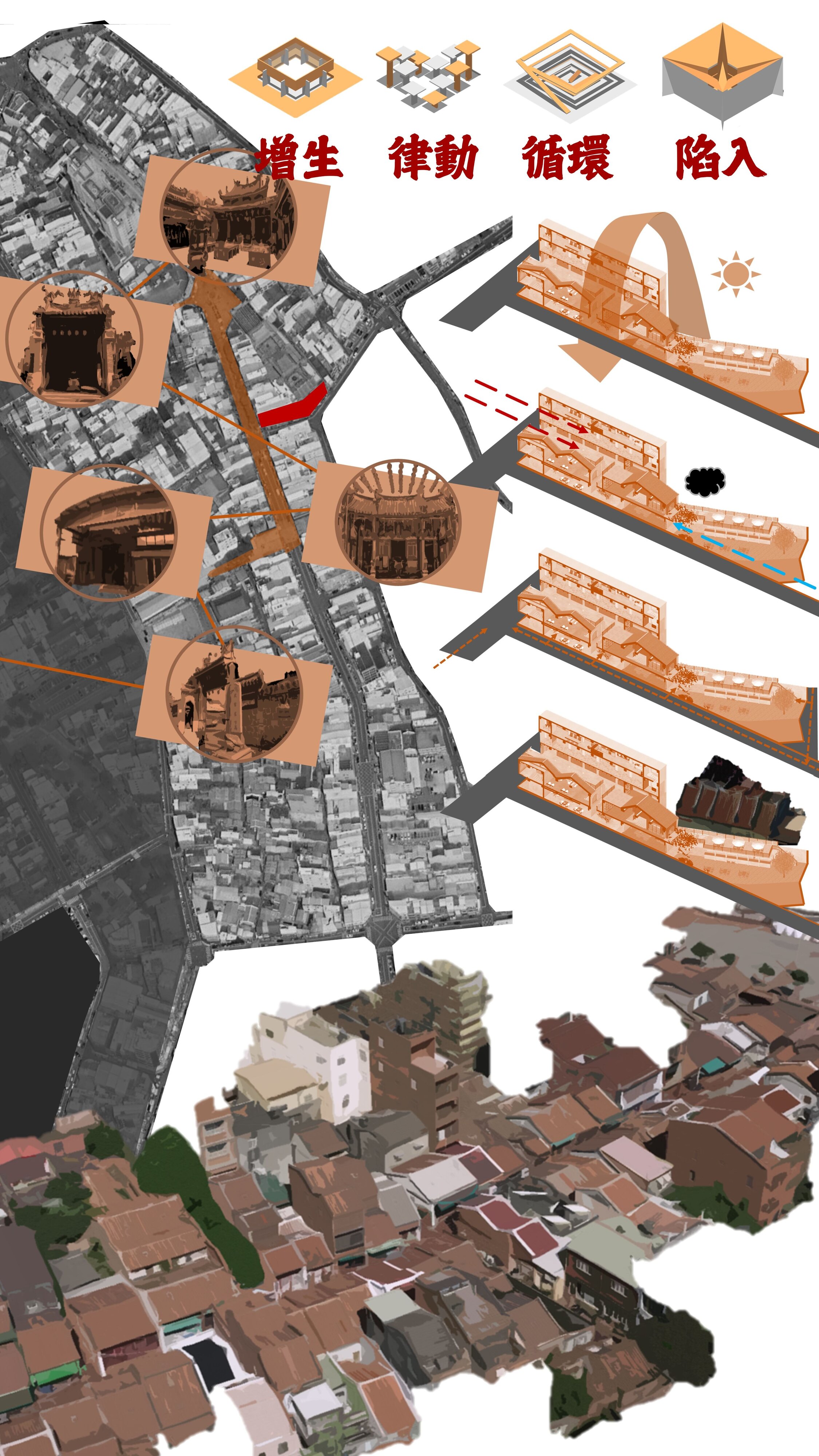
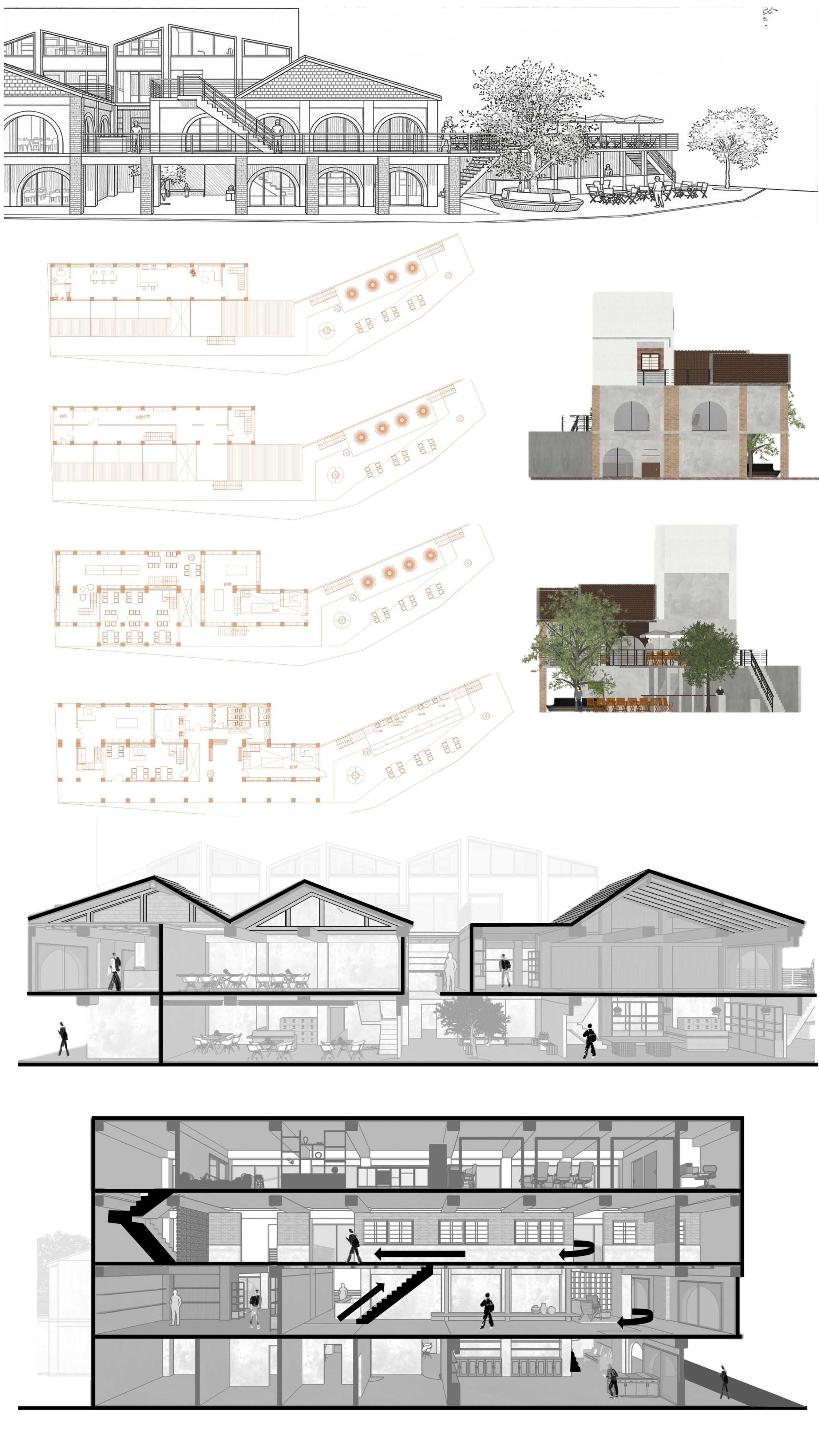
本設計位於鹿港古城核心區位,基地承載著寺廟信仰動線與狹長街屋的歷史紋理。設計核心挑戰在於:如何在密集的舊城紋理中,透過三棟連棟建築(4層、2層、1層)的量體配置,重新定義現代街屋的內部秩序與外部聯繫。
我們提取鹿港傳統「進進深」的空間邏輯,轉化為垂直向度的層次變化。透過量體的高度退縮,創造出與鄰房共生的天際線。展現了結構系統與外殼介面的交織,新舊材質的碰撞不僅是對歷史的致敬,更是對「拾光」的實踐。
基地位於鹿港老街周邊,是由三棟街屋所構成。關注的不是單一建築,而是鹿港街道如何在建築裡繼續存在。
鹿港是一座以「行走」構成的城市。人們為了吃、拜拜、購物,在街道之間不斷移動與停留。
我選擇這三棟街屋,正好位於人流交會的位置,卻沒有被真正走進。
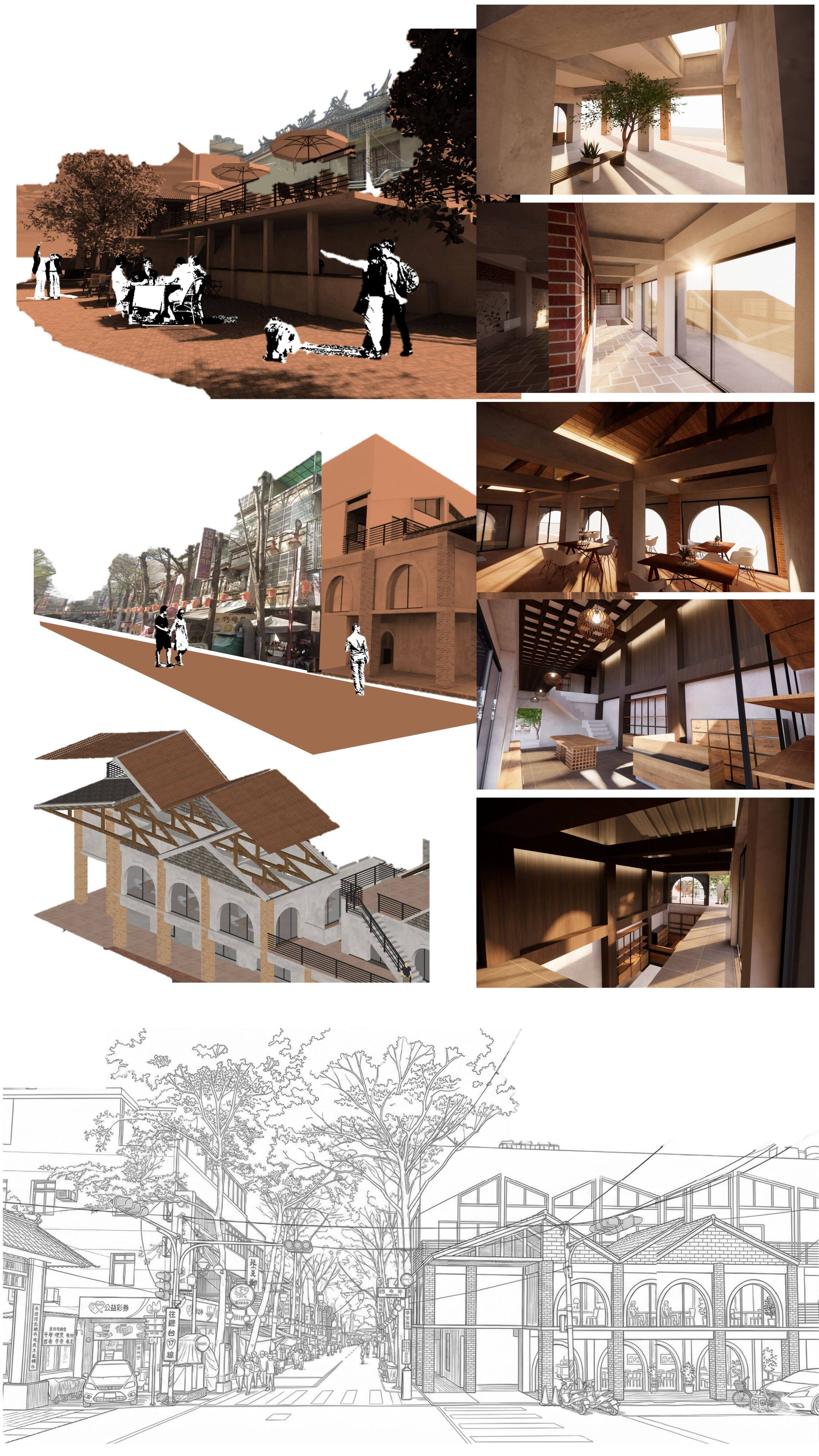
空間中引入餐飲、糕餅、小吃與藝品店,這些都是鹿港原本就存在的生活行為,建築只是提供一個讓它們被更好使用的空間結構。
這個設計不是要複製鹿港的街道,而是讓街道進入建築,讓流動的生活有新的落腳方式。
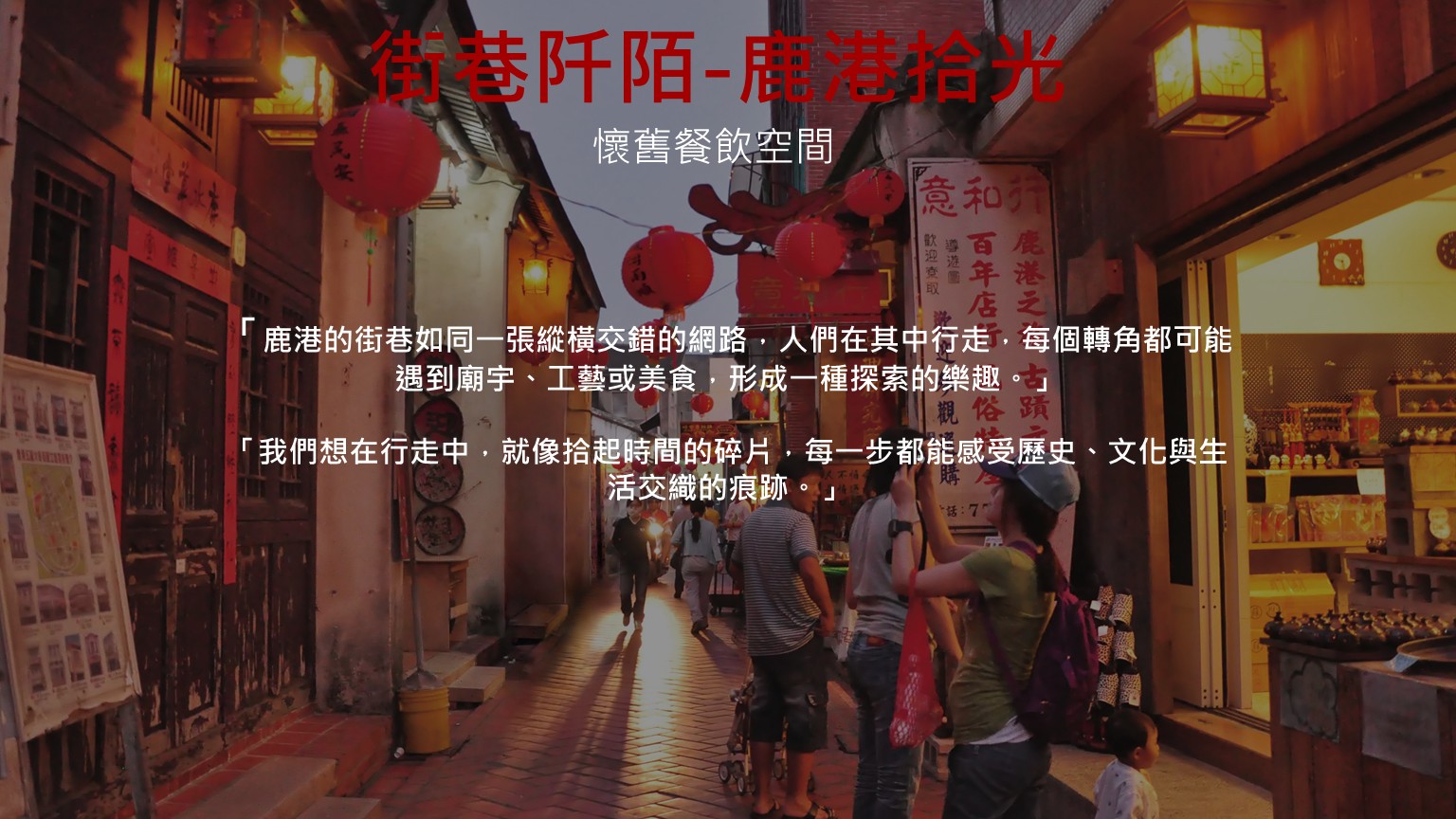
「鹿港的街巷如同一張縱橫交錯的網路,人們在其中行走,每個轉角都可能遇到廟宇、工藝或美食,形成一種探索的樂趣。」
「我們想在行走中,就像拾起時間的碎片,每一步都能感受歷史、文化與生活交織的痕跡。」
Intertwined Alleys: Reclaiming Light in Lukang
Intertwined Alleys: Reclaiming Light in Lukang
Concept & Form
Located at Lukang’s historic core, this project redefines the modern shophouse through a 4-2-1 story tripartite composition. By translating traditional "Jin-Shen" (sequential depth) into a vertical hierarchy with strategic setbacks, the design harmonizes with the skyline while reclaiming natural light within the dense urban fabric.
Urban Integration
The architecture functions as a spatial framework that invites the street into the building. Situated at a pilgrimage intersection, it preserves Lukang’s culture of "walking" by integrating local dining and crafts—allowing the fluid rhythms of history and daily life to persist within a new structural order.
Philosophy
"Navigating Lukang is like picking up fragments of time—every step reveals intertwined traces of history, culture, and life."
正修科技大學 建築與室內設計系
(四年級)
梁O淳
正修科技大學 建築與室內設計系
(四年級) 指導老師 郭O紅