(逃離)n 的片刻
A moment of escaping to the power of n
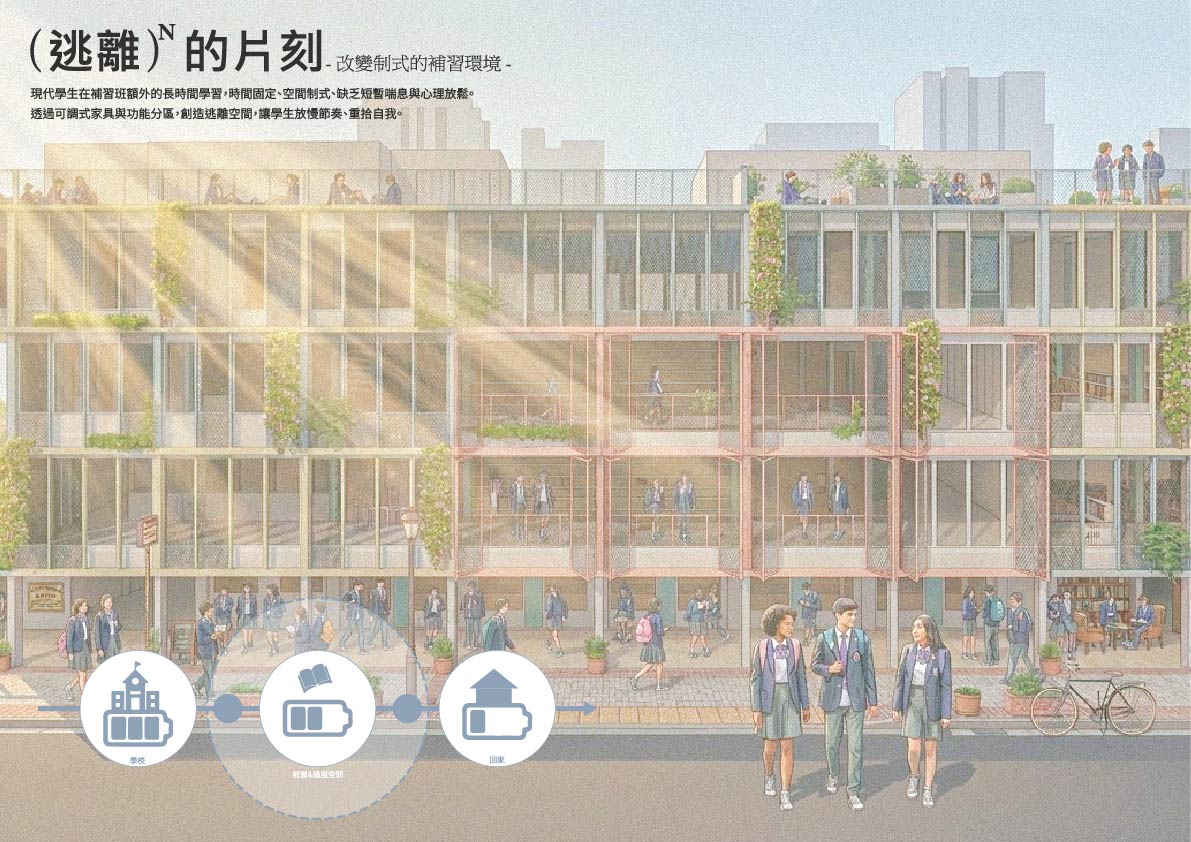
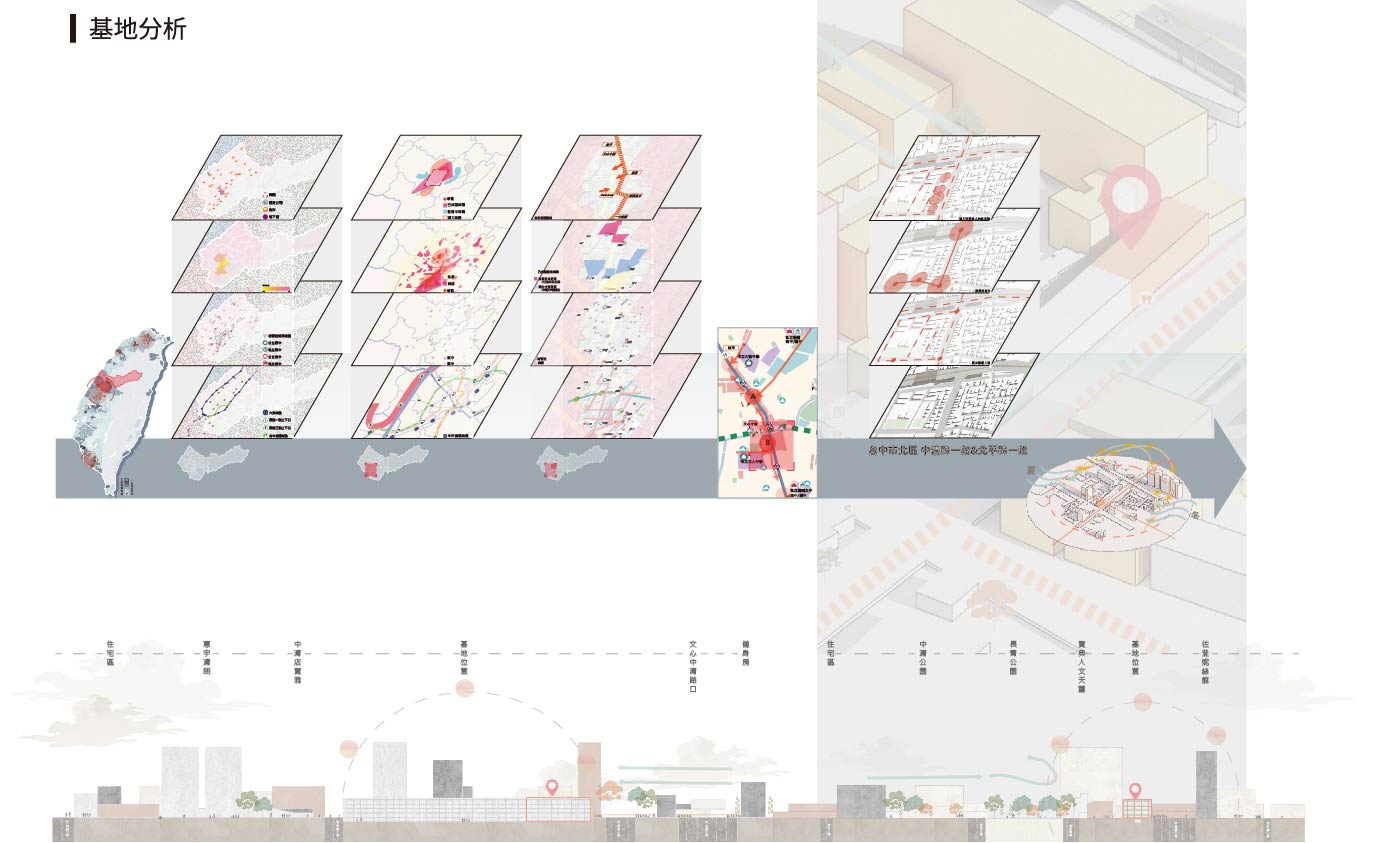
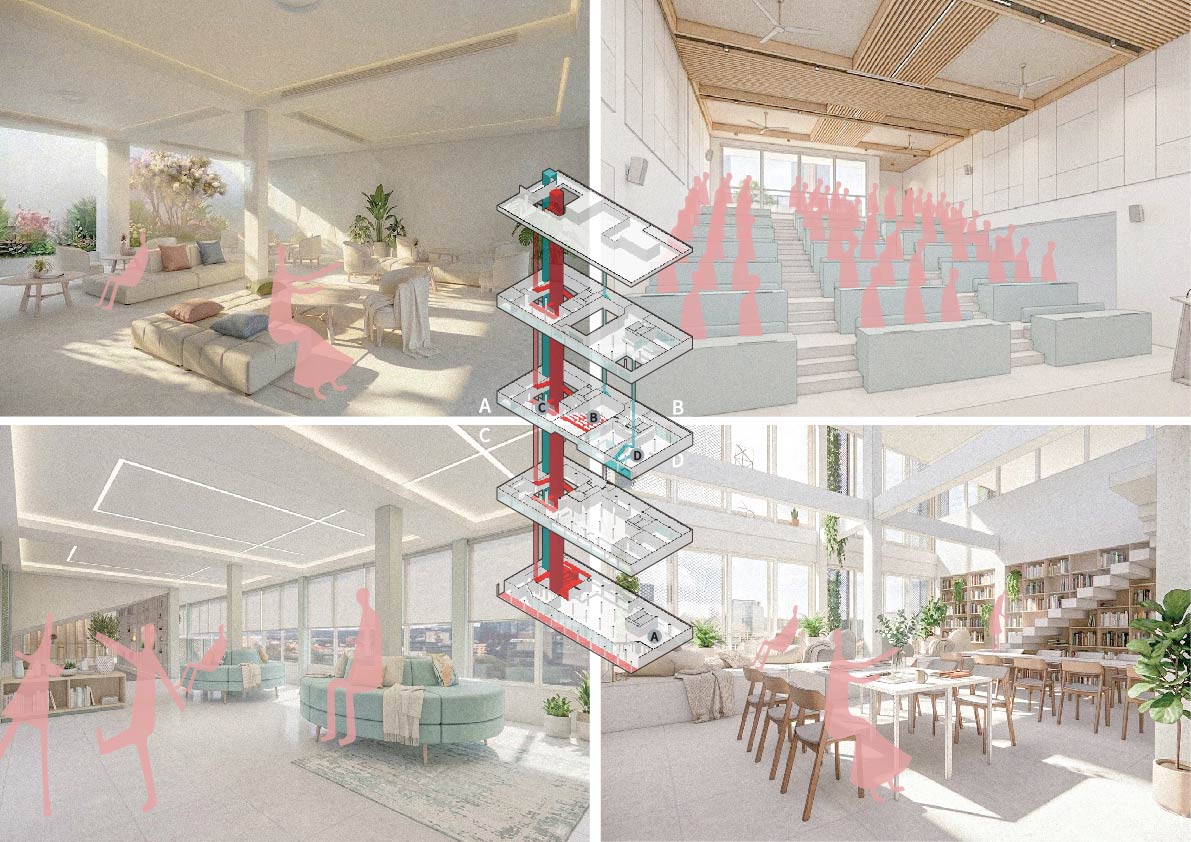
本設計以補習教育空間為核心,重新思考現代學生在補習班中的使用模式,關注其除正式課程之外的停留需求,試圖突破傳統補習班僅作為單一教學場所的空間限制。隨著學生在課前、課後及課堂空檔中停留時間增加,補習空間不再只是短暫進出,而逐漸形成兼具學習、等待、交流與休息的複合型日常場域,因此導入「第三空間」概念,建立介於家庭與學校之外的過渡環境,使學生能在不同時間與情境中獲得更彈性的使用體驗。
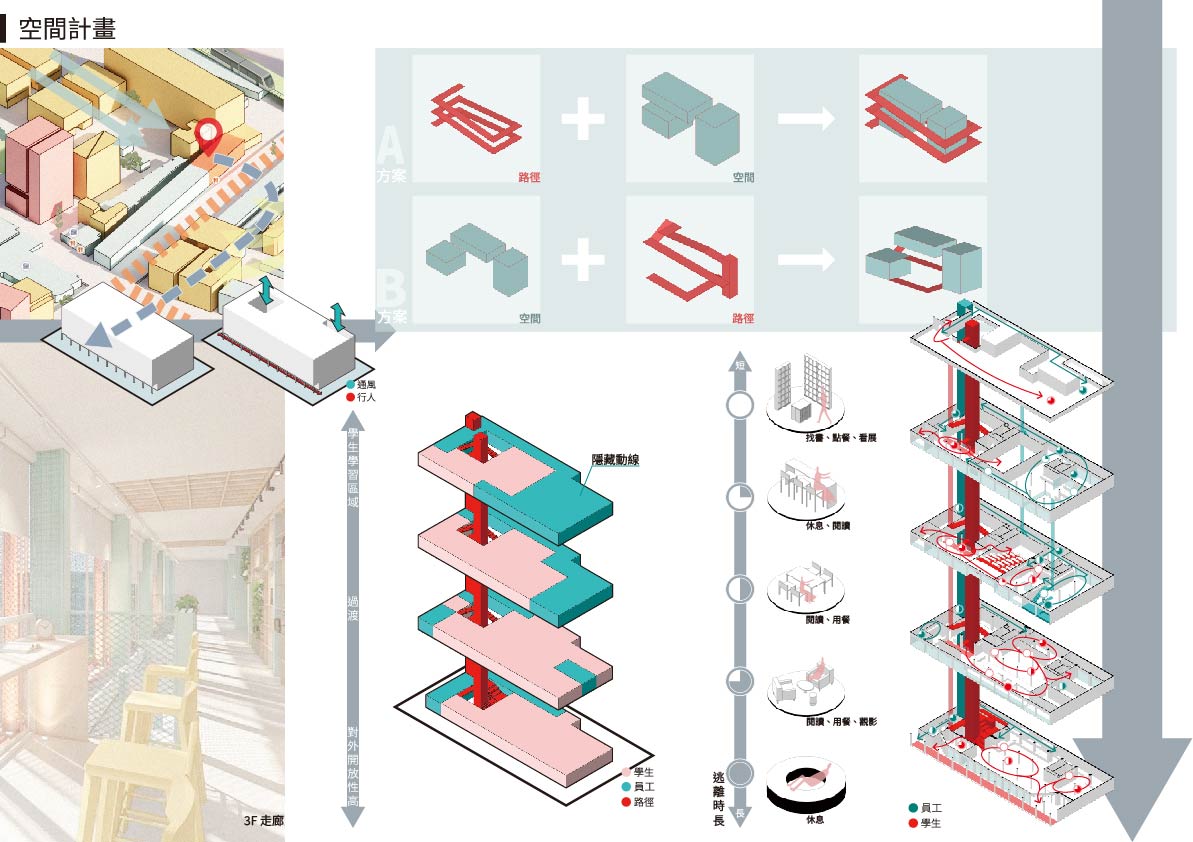
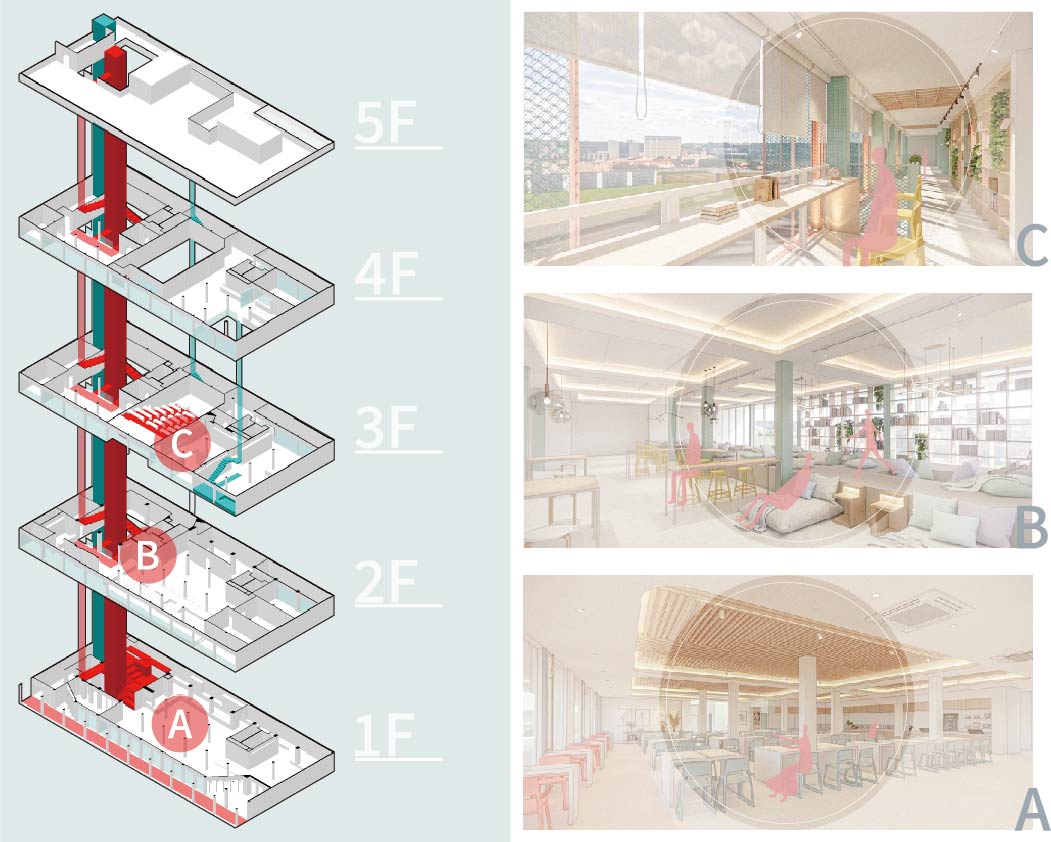
空間規劃上透過垂直樓層分層與節點配置,依不同使用強度安排多元停留層次,使各樓層分別承載專注學習、自主討論、短暫休息與生活交流等功能。動線設計不僅連結主要教學區域,也在過渡空間中形成可停留的節點,提升空間使用的連續性與互動性。同時結合可移動家具與彈性配置,使部分場域可因應平日教學、課後停留及特殊時段活動需求進行轉換,增加整體空間的適應能力,並藉由不同尺度的停留空間回應學生在學習節奏、社交互動與情緒轉換上的多樣需求,使補習班成為更貼近日常生活的支持性學習場域。
A moment of escaping to the power of n
This project focuses on designing a cram school space that supports more than formal classes. With students staying before, after, and between lessons, the school becomes a daily space for learning, waiting, interaction, and rest. The concept of a third space is applied to create a transitional environment between home and school, giving students flexible experiences across time and context.
Vertical floor organization and node placement create varied staying levels. Floors support focused study, discussion, short breaks, and social interaction. Circulation links teaching areas and pause points, enhancing continuity and engagement. Movable furniture and flexible layouts allow areas to adapt to lessons, after-class staying, and special activities, making the space a supportive environment integrated with daily life.
臺中科技大學 室內設計系
(四年級)
劉O驊
臺中科技大學 室內設計系
(四年級) 指導老師 鄭O仁