波鱗之間|起伏與空間展開
Between the ripples | Ripples and the unfolding of space
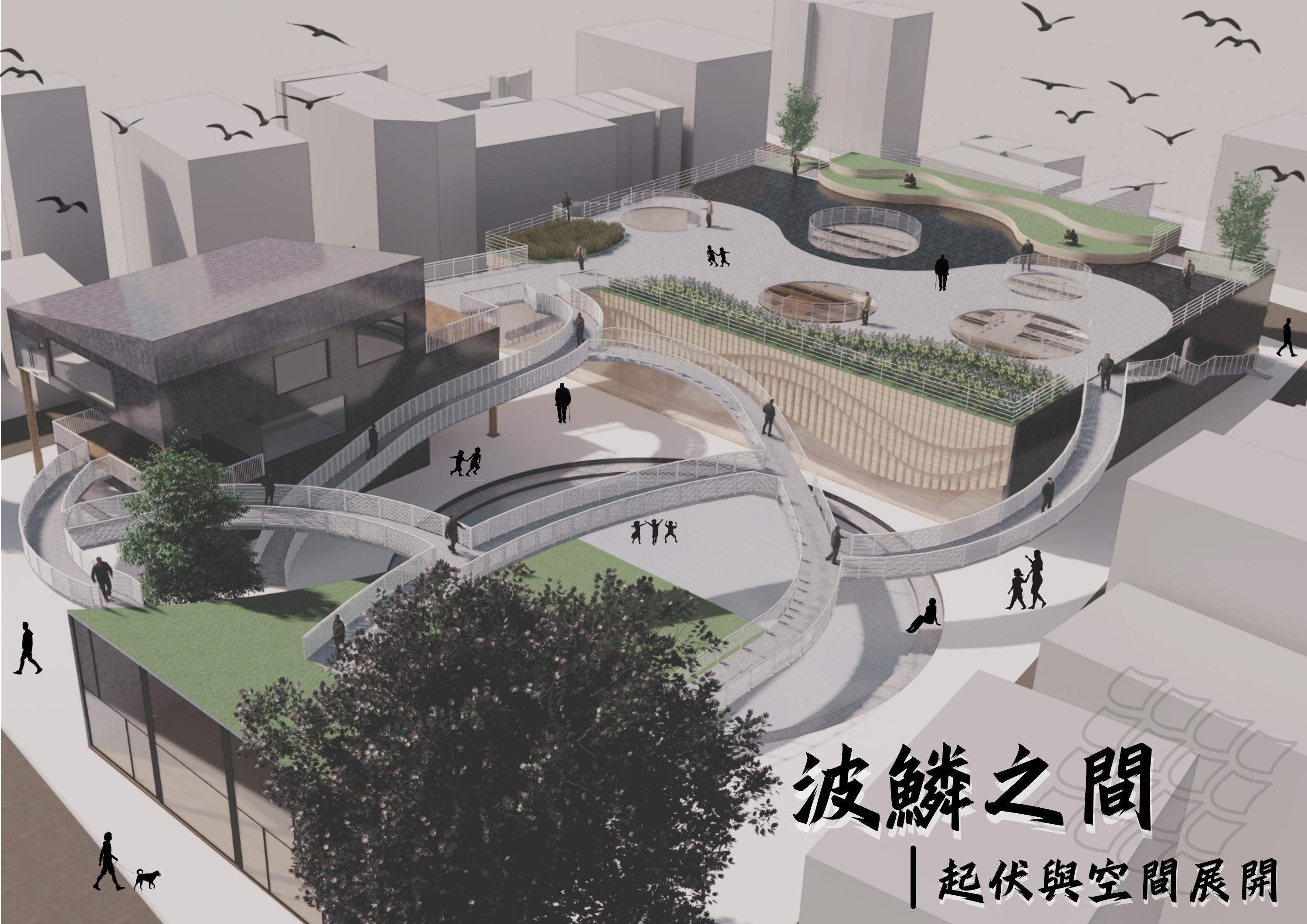
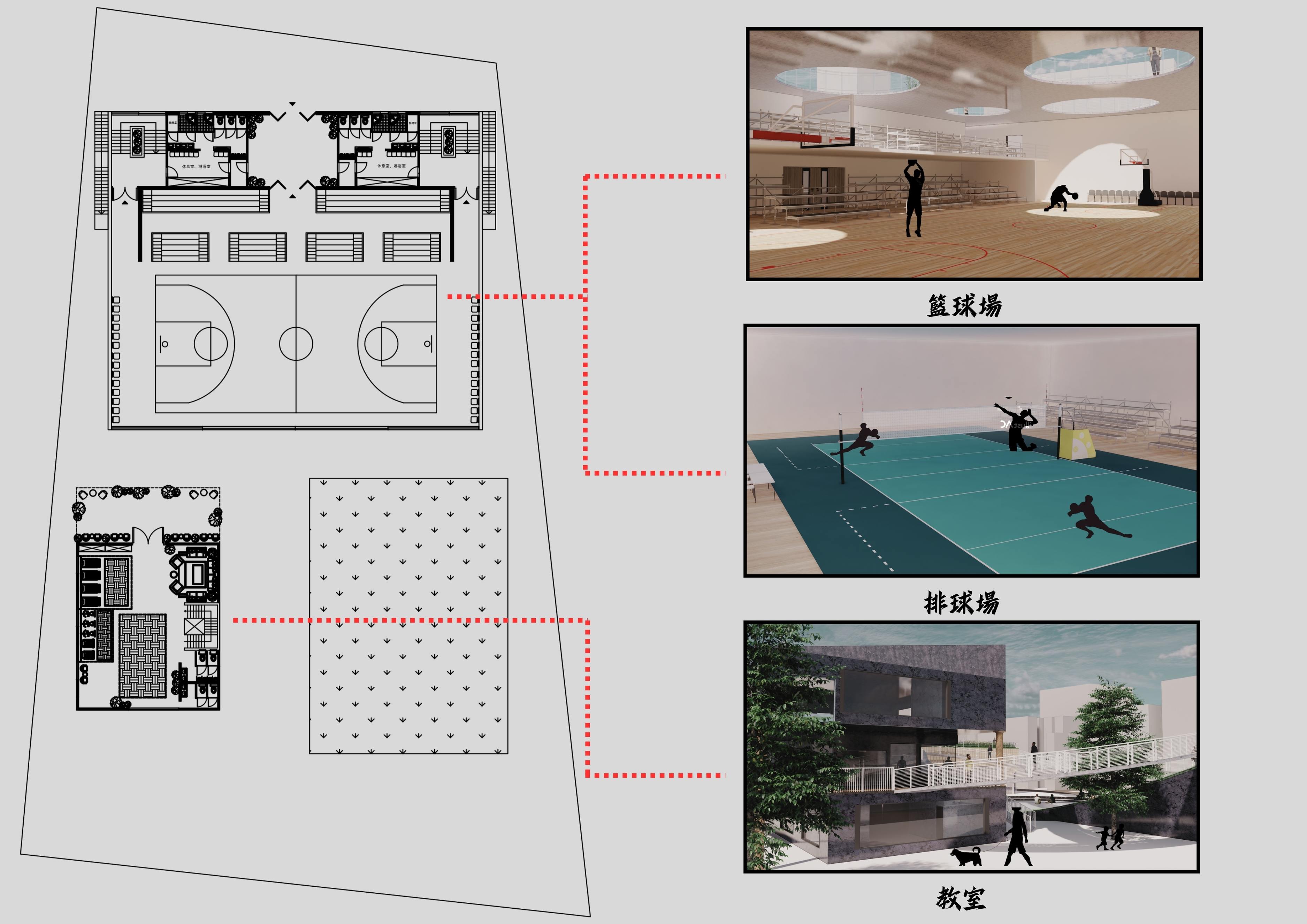
本設計位於學甲地區,回應在地因人口外移所產生的高齡化趨勢,以及公共空間使用逐漸轉向日常化與多元化的需求。現有體育館與周邊公園多以單一機能為主,缺乏彈性與連續性,導致不同族群在使用上彼此分離,難以形成共享的生活場域。因此,本設計試圖重新整合運動與休憩機能,打造一個能同時承載活動、停留與交流的複合型公共空間。
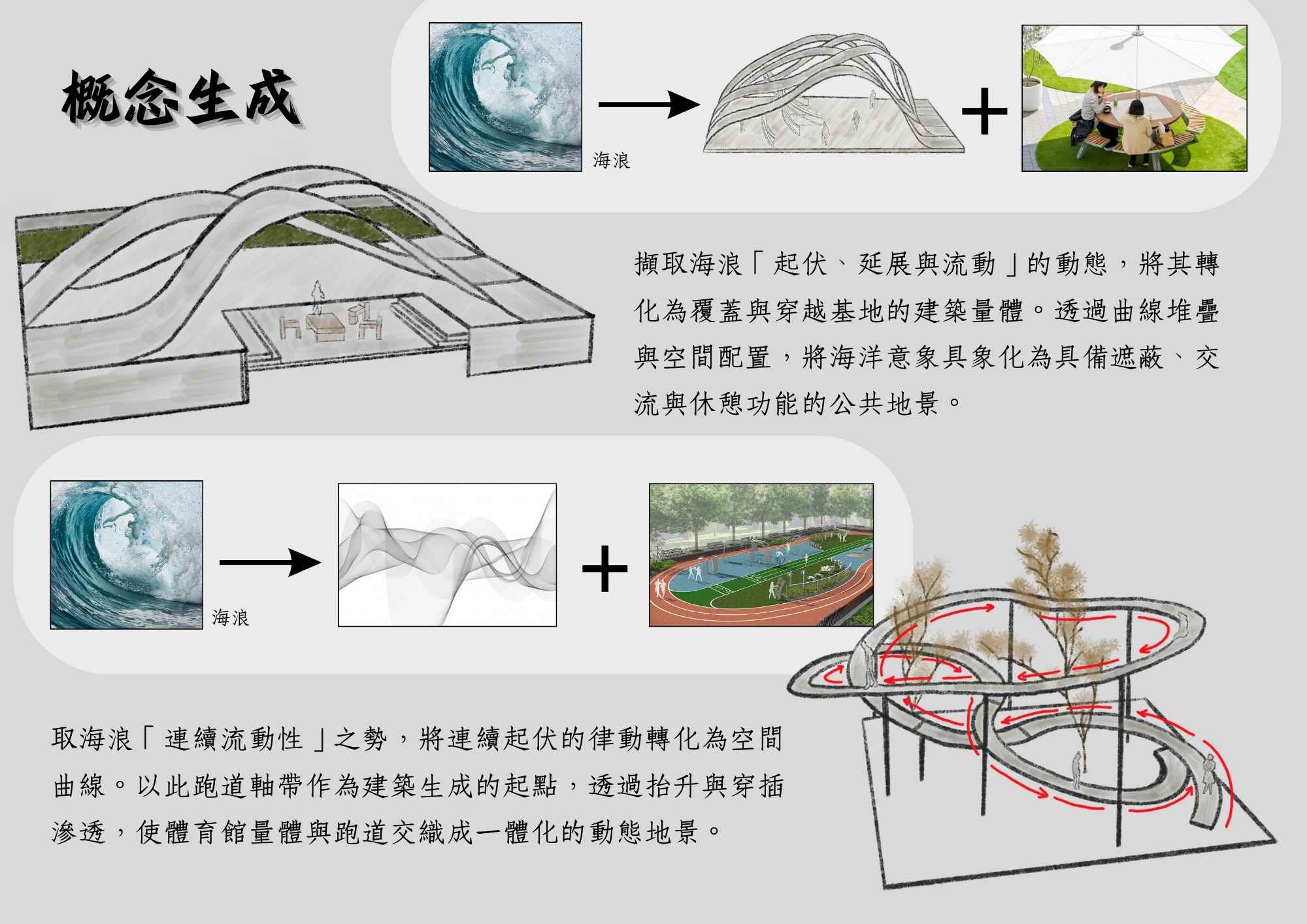
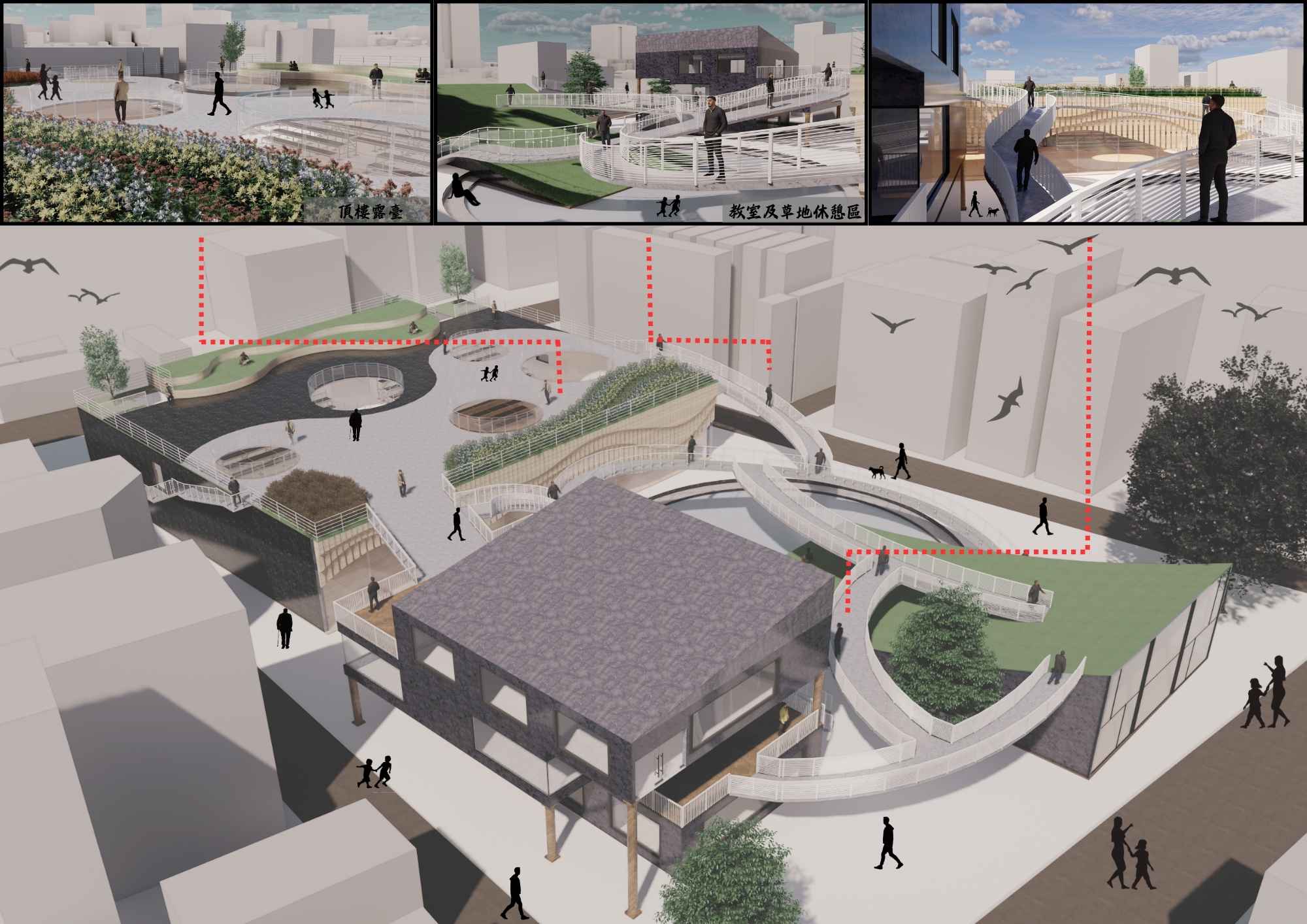
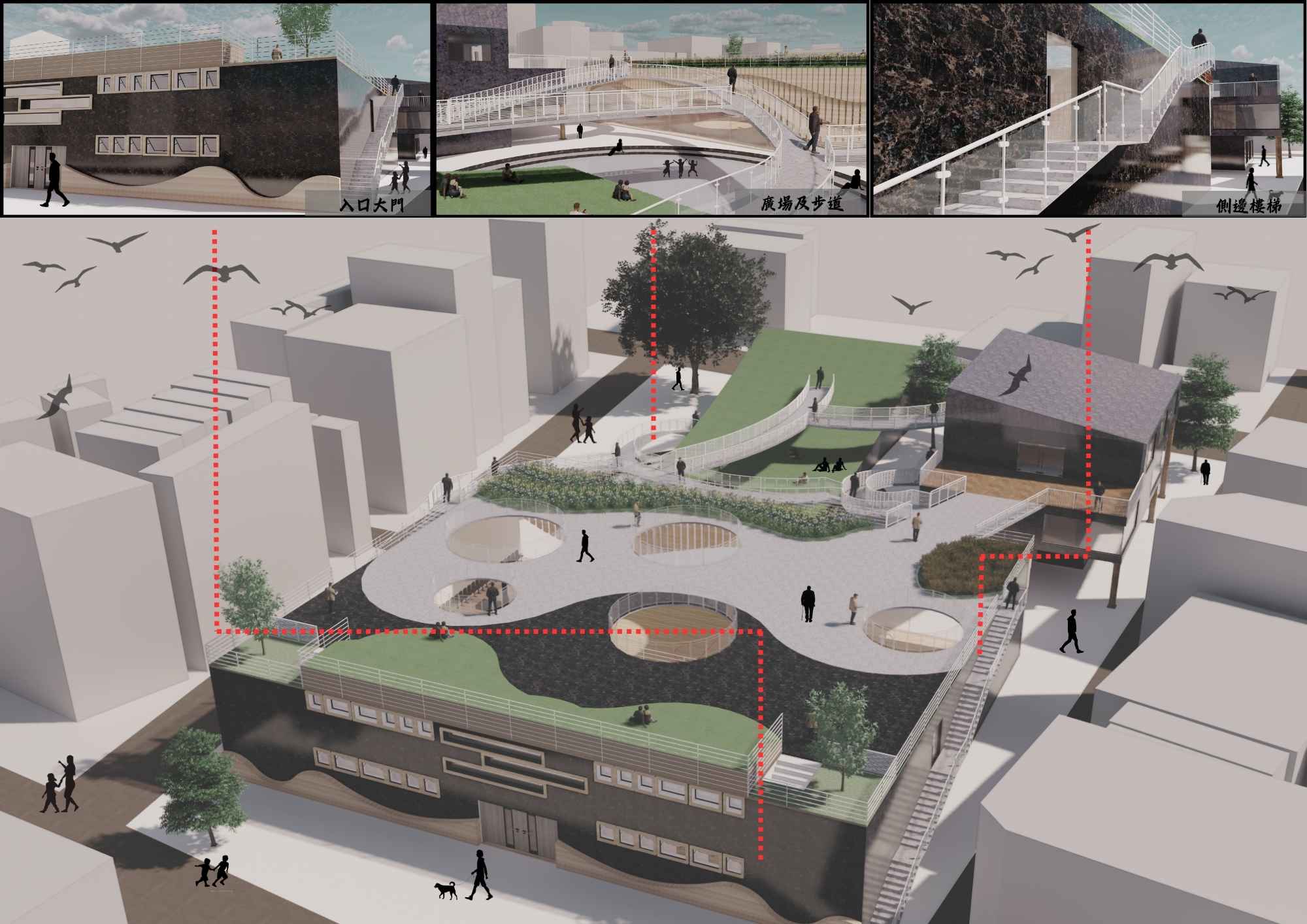
空間規劃以「跑道」作為整體架構的核心主軸,透過連續且流動的動線系統,串聯建築內外各層空間。跑道不再只是單一運動設施,而是轉化為引導人流、組織空間的關鍵元素,穿梭於建築之中並延伸至戶外,使不同活動在同一系統中自然發生。建築量體則順應此動線生成,以曲線形式回應學甲沿海的地景意象,形塑出具有流動感與方向性的空間語彙。
透過此設計,體育館不僅作為運動場所,更成為一個融入日常生活的公共平台,使不同年齡層與使用需求得以在同一空間中共存,進一步提升整體環境的開放性與使用彈性。
Between the ripples | Ripples and the unfolding of space
This project is located in Xuejia and responds to the issues of population decline and an aging society, which have gradually changed the way public spaces are used. Existing sports facilities and parks are often functionally separated and lack flexibility, making it difficult to support diverse daily activities.
Therefore, this design takes the running track as the primary organizing element, creating a continuous and dynamic circulation system that connects both interior and exterior spaces. The track is no longer treated as a standalone sports facility but is redefined as a spatial framework that guides movement and integrates different programs.
The building form is generated in response to this circulation, adopting fluid curves inspired by the local coastal landscape. This approach enhances spatial continuity and reinforces a sense of movement throughout the project.