雙嶼記:對立、抽離、重塑
Two Islands : Opposition, Retreat , Reimagine
設計起源 (Design Origin)
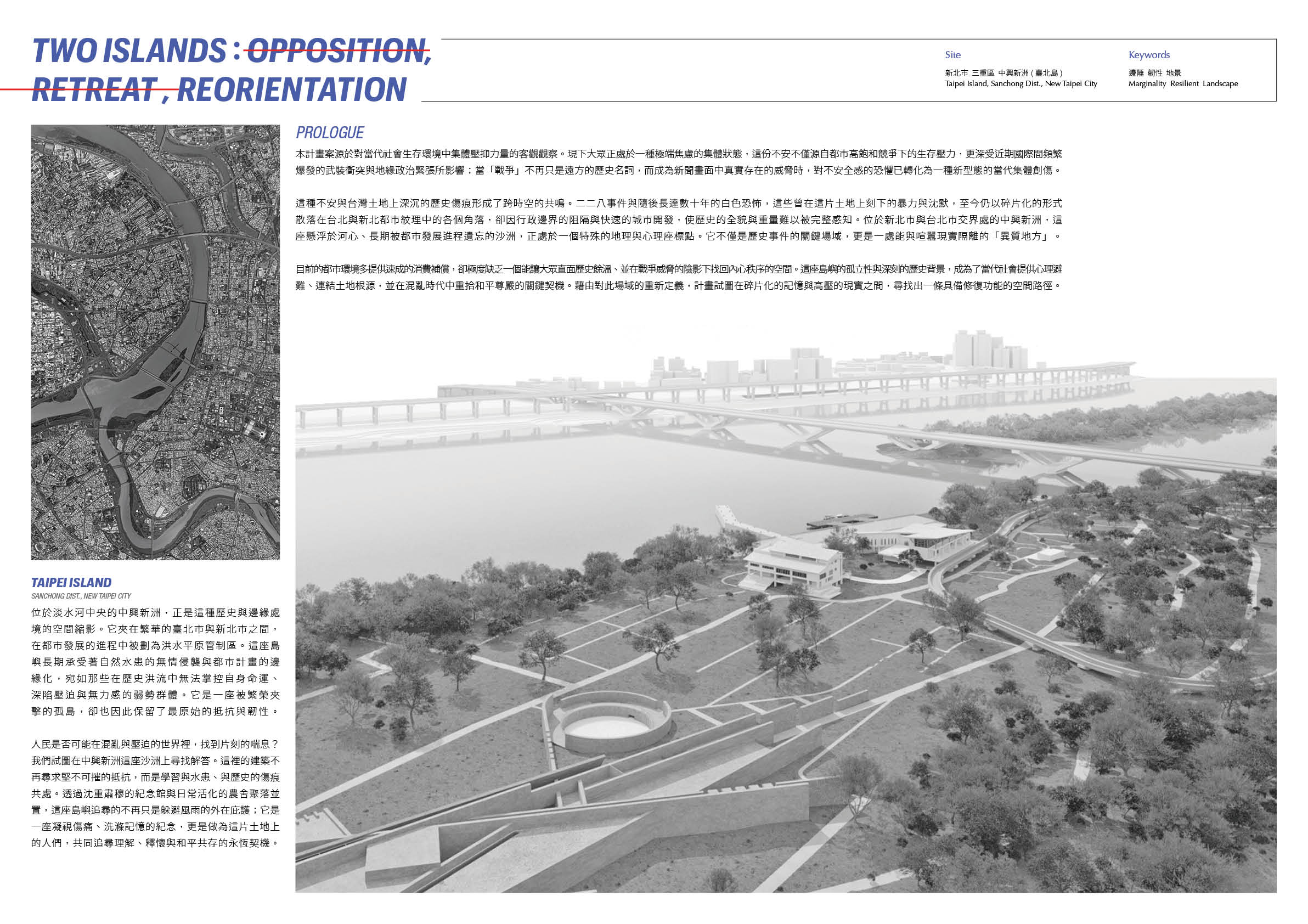
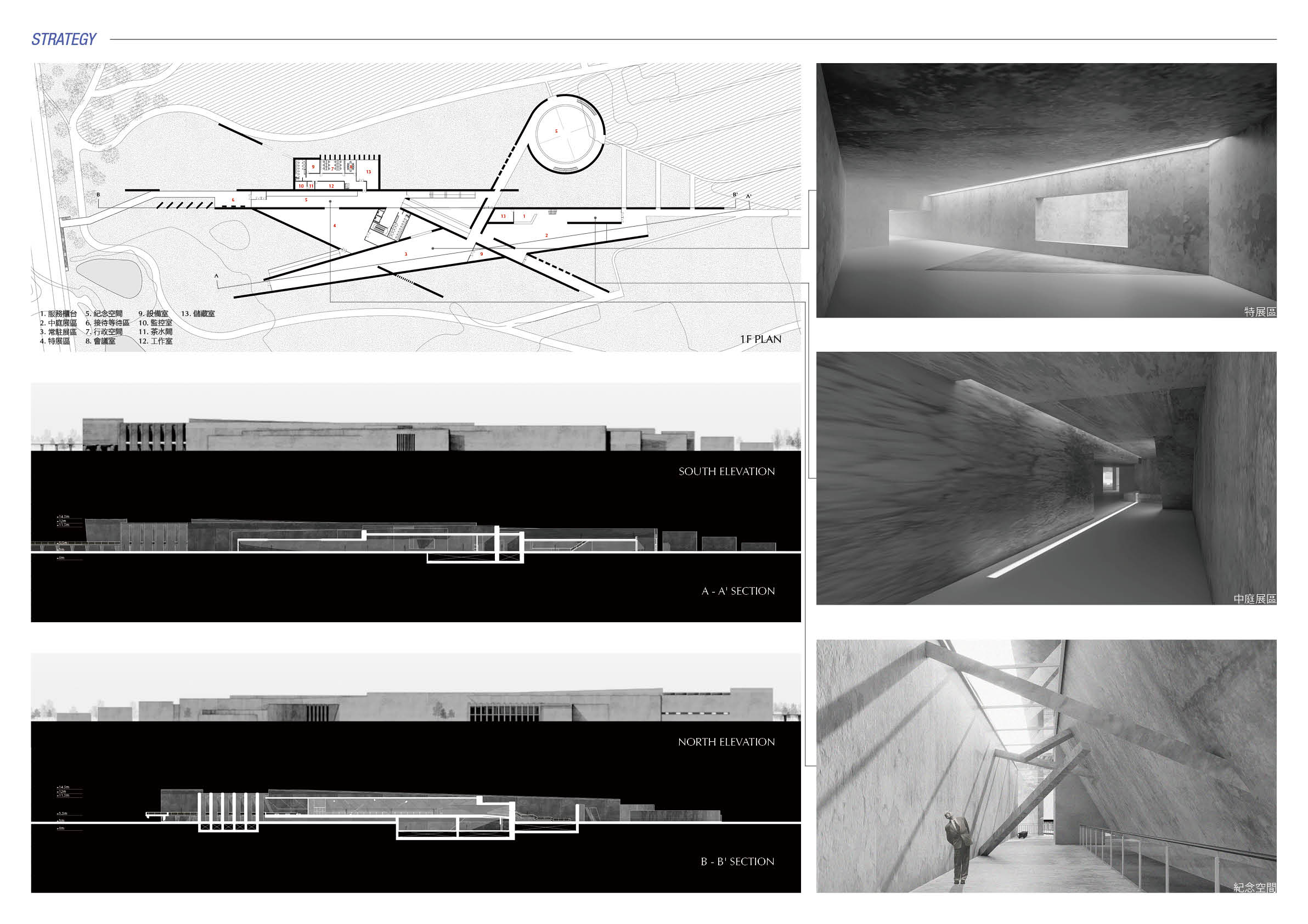
本案起源於對「集體創傷」與「現實壓力」的空間回應 。在充滿戰爭威脅、社會焦慮與都市高壓的當代背景下,我們選址於新北與台北交界的中興新洲,試圖將這片被遺忘的沙洲轉化為心靈避難所。設計核心建立在對二二八事件與白色恐怖歷史的追溯,以事發地點為原點建構建築軸線,旨在透過空間的序列與對話,讓歷史的傷痕與當代的疲憊在此得到轉化與慰藉。
設計說明 (Project Description)
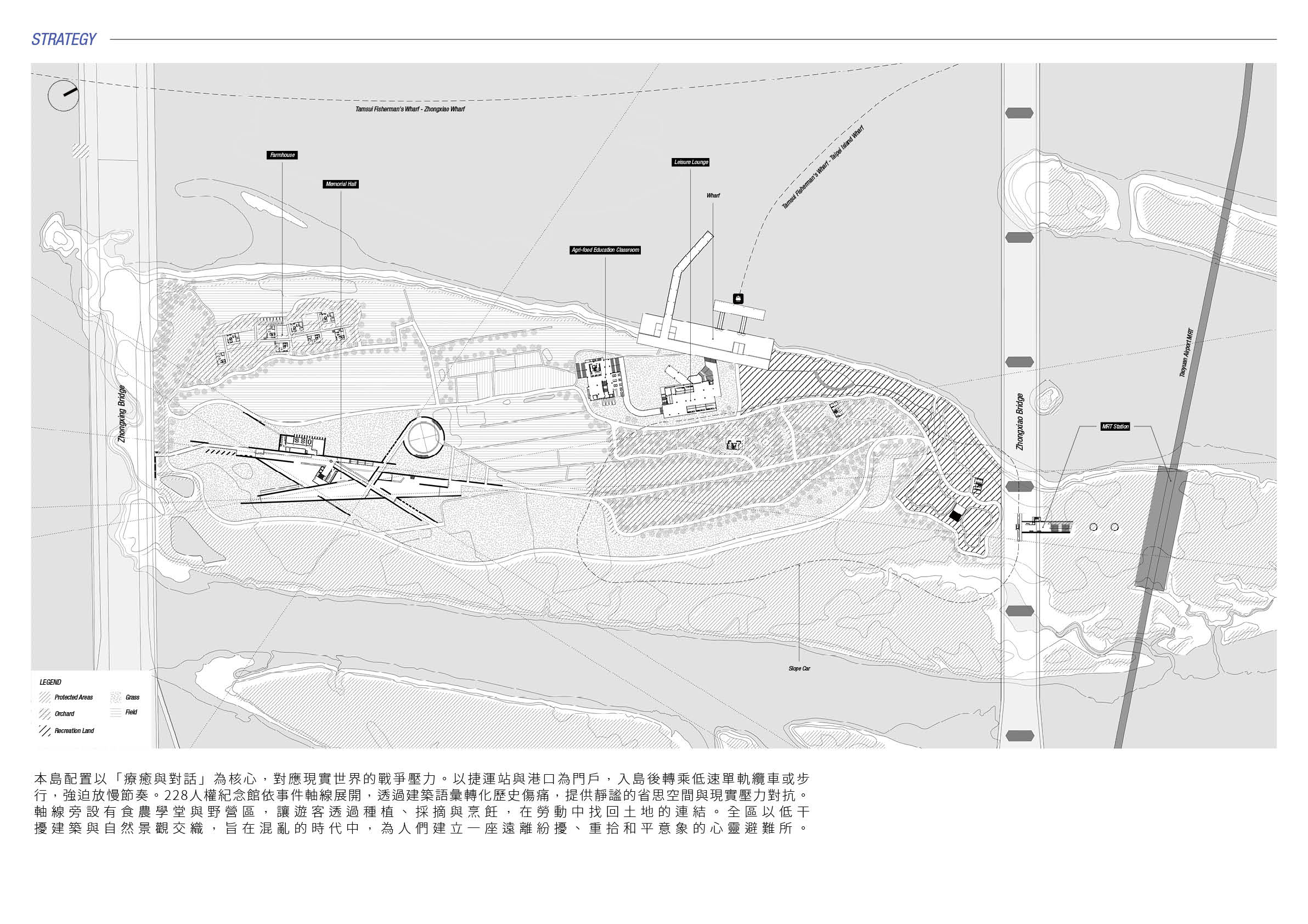
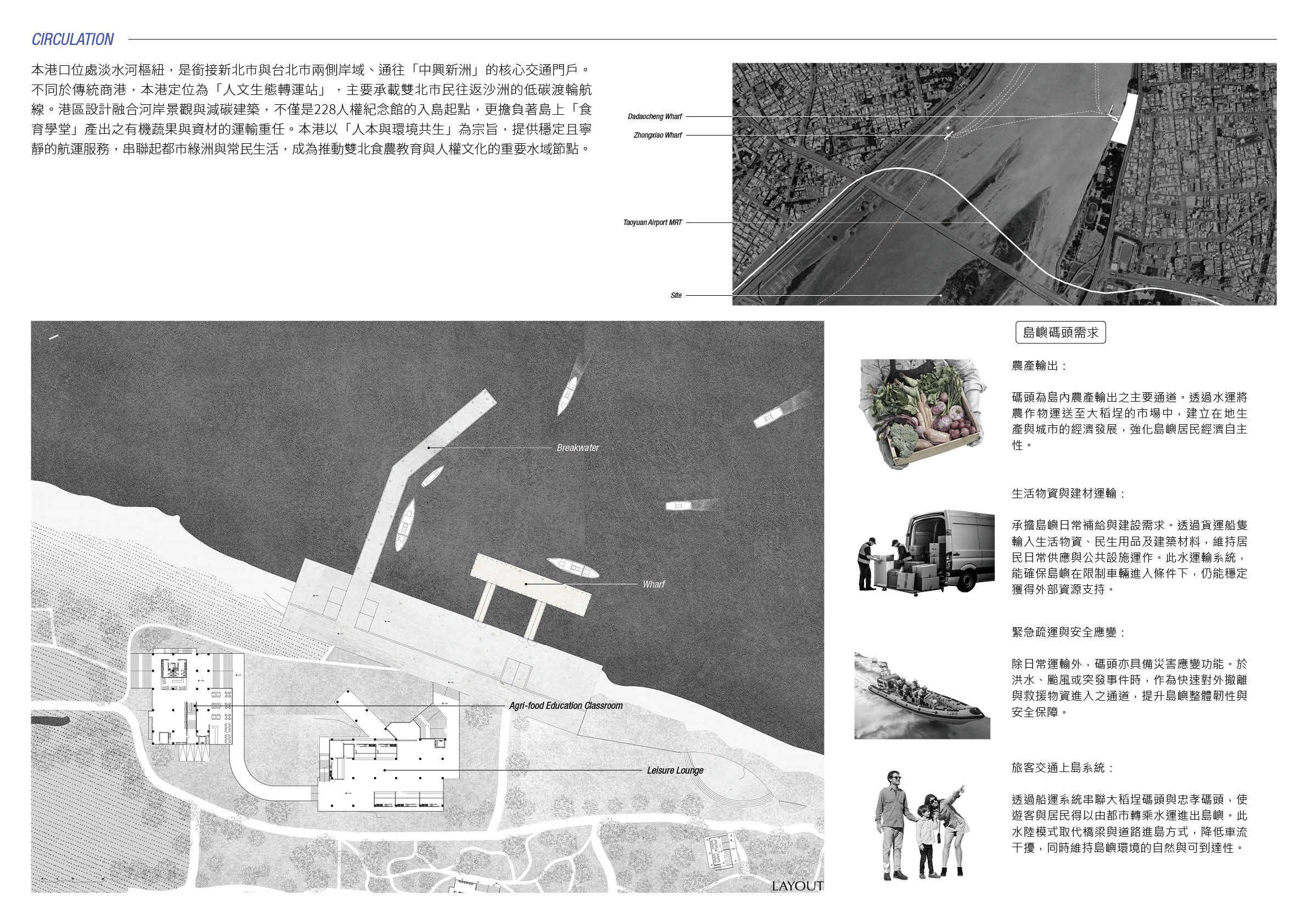
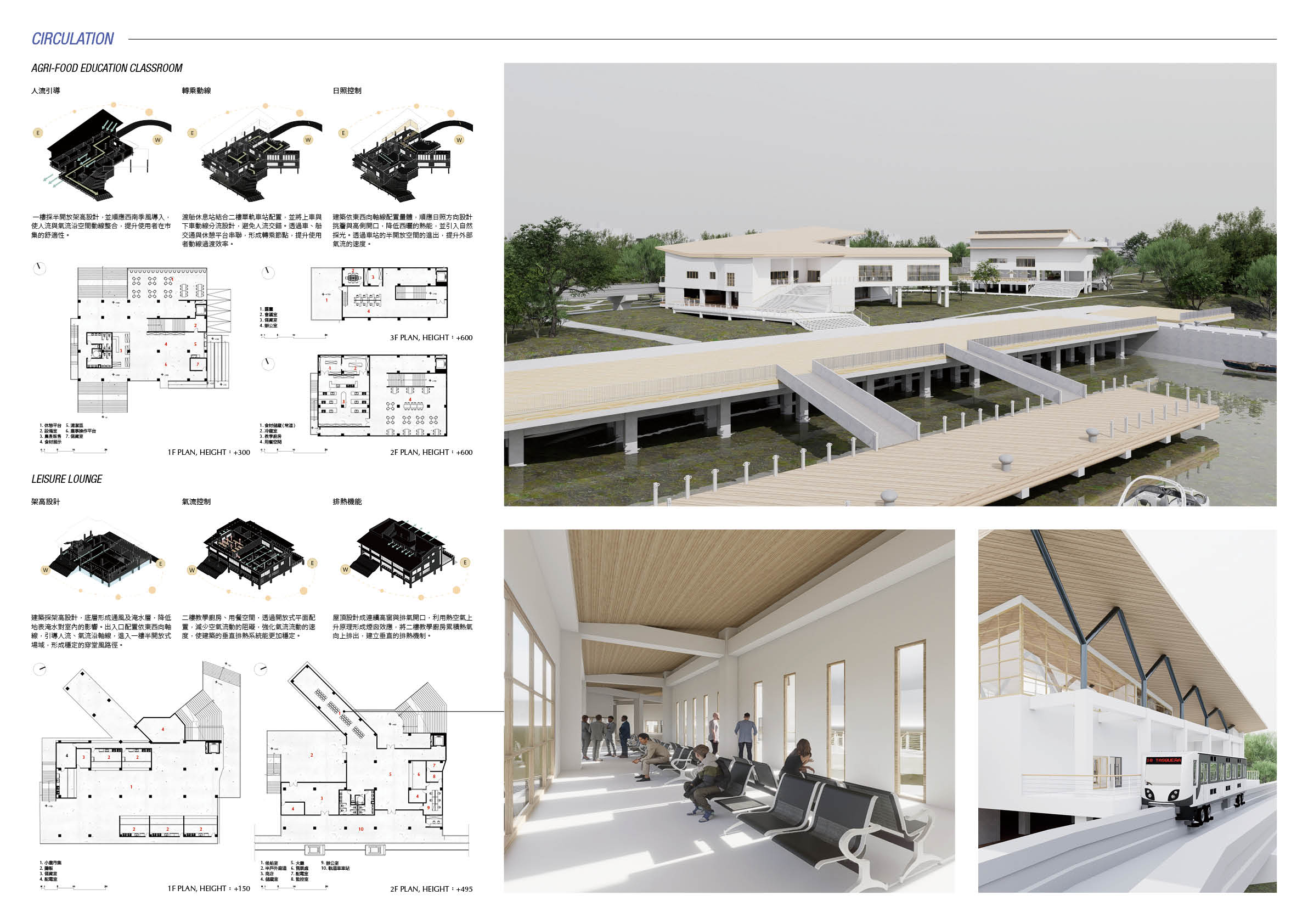
全區規劃採取「雙門戶、低碳轉運、食農實踐」的配置邏輯。對外透過捷運站與港口休憩轉運站銜接雙北人流與物流;對內則以單軌纜車與步行系統取代燃油車輛,營造靜謐的環境氛圍 。
核心建築「228 人權紀念館」依歷史主軸線配置,透過建築體的高度變化與採光控制,與散落在都市中的紀念公園形成跨時空的呼應。周邊配置「食育學堂」與「小農市集」,採用半開放架高設計,順應氣流與日照控制,提供蔬菜種植、採摘與烹飪教學的自然場域。這不僅是一座交通轉乘點,更是一處讓人在勞動中與土地重新連結、在省思中找回和平意象的文化生態島嶼 。
Two Islands : Opposition, Retreat , Reimagine
Design Origin & Project Description
Modern society faces collective anxiety from urban pressure and war threats. This reflects Taiwan’s historical trauma—the 228 Incident and White Terror—fragmented by city growth. Zhongxing Xinzhou, a forgotten sandbar, serves as a "heterotopia" for psychological refuge and peace.
The plan uses "Dual Gateways" and low-carbon transit to ensure serenity. The "228 Human Rights Memorial" aligns with a historical axis, creating urban dialogue. Through agri-food labor and farming, visitors reconnect with the land. This cultural-ecological island helps individuals rediscover peace through historical reflection and the rhythm of nature.
正修科技大學 建築與室內設計系
(四年級)
卿O瑋
正修科技大學 建築與室內設計系
(四年級) 指導老師 夏O霖